Tarek Chouiref
29 May 2026•Update: 29 May 2026
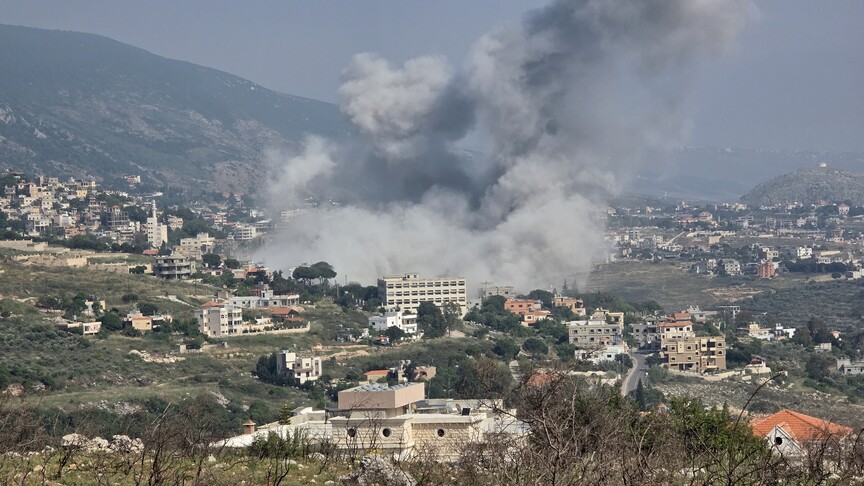
Lebanese Prime Minister Nawaf Salam said Thursday that ongoing Israeli attacks on the southern cities of Tyre and Nabatieh along with the destruction of their historic landmarks and threats against residents amount to “collective punishment” condemned under international law.
“Nothing can justify the continued attacks targeting the regions of Tyre and Nabatieh and the destruction of their historic landmarks, nor the ongoing threats against our peaceful residents there, nor the repeated calls for them to leave their homes and livelihoods,” he said in a statement.
Salam said the developments reinforce Lebanon’s commitment to an “immediate ceasefire, full Israeli withdrawal from our country, and extending state authority over all Lebanese territory,” allowing displaced residents to return home “safely and with dignity.”
He added that the Lebanese government is continuing efforts to mobilize Arab and international support to achieve these goals.
“This is our national duty and our unwavering right that we will not compromise under any circumstances,” he said.
Separately, Lebanese Culture Minister Ghassan Salame said he had contacted his counterparts around the world and international organizations to protect archaeological sites in southern Lebanon, particularly in Tyre and Beaufort Castle.
He said several of the sites enjoy enhanced protection status under the United Nations Educational, Scientific and Cultural Organization (UNESCO) and should be safeguarded from Israeli aerial or artillery attacks.
Earlier, Lebanese Foreign Minister Youssef Raggi also called for an immediate halt to Israeli attacks on the historic city of Tyre.
The remarks came amid intensified Israeli strikes on the southern Lebanese city, which is home to several historic and archaeological sites recognized internationally for their cultural significance.
The attacks are part of continued Israeli violations of a ceasefire agreement that came into effect on April 17 and was later extended until early July.