Mohamed Sabry Emam Muhammed
22 March 2016•Update: 22 March 2016
By Rachid al-Jarai
TUNIS, Tunisia
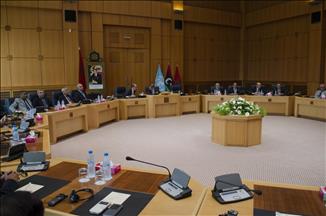
Foreign ministers from Libya's neighbors met in Tunisia on Tuesday to discuss possible means of resolving the five-year-long conflict in the North African country.
Speaking at the meeting, Tunisian Foreign Minister Khamis al-Jheinawi called for empowering Libya’s UN-backed unity government with a view to averting foreign military intervention in the war-torn nation.
"Regional and international support for the UN-backed political process is a powerful incentive for accelerating implementation of the political accord [signed last December between Libya’s rival camps] and empowering the unity government with a view to averting foreign military intervention," al-Jheinawi said.
Tunisia’s top diplomat also warned that the recent rise of militant groups posed a threat to Libya’s political process and the security of neighboring states.
Tuesday's meeting was attended by the foreign ministers of Algeria, Egypt, Sudan, Tunisia, Chad and Niger, as well as representatives from the African Union, the Cairo-based Arab League, the European Union and Libya.
Libya has remained in a state of turmoil since 2011, when a bloody rebellion ended with the ouster and death of longtime strongman Muammar Gaddafi.
Since then, the country’s stark political divisions have yielded two rival seats of government, one in Tobruk and one in capital Tripoli, each of which boasts its own military capacity and legislative assembly.
Late last year, Libya's rival governments signed a UN-sponsored agreement to form a unity government in an effort to resolve the country’s five-year conflict.
However, Libya’s Tobruk-based parliament has so far failed to endorse a cabinet lineup proposed by Fayez al-Sarraj, the prime minister-designate and a former member of the Tripoli-based parliament.
- Parliamentary approval
Al-Sarraj, for his part, called on Libya’s rival camps to resolve their differences.
"The unity government will work with neighboring states to bring Libya and the region to safety," he said, going on to reiterate his government's determination to fight "terrorism".
Earlier this month, Libya’s Tunis-based Presidential Council, which produced the unity government, called on Libyan institutions to begin transferring authority to the unity cabinet.
It also called on the international community to stop dealing with third parties inside Libya.
The move, however, has sparked fears of creating further divisions in the crisis-hit country.
Speaking at Tuesday’s meeting, UN envoy to Libya Martin Kobler underlined the need for the Libyan parliament to approve the unity government.
He went on to warn that the presence of Daesh militants in Libya called for the redoubling of international efforts to fight the terrorist group.
December’s UN-backed agreement calls for a one-year transitional phase to last until elections can be held.
Under the terms of the deal, the unity government would run the country's affairs during the transitional period.