Abderaouf Arnaout, Ikram Kouachi
09 September 2026•Update: 09 September 2026
Three Israeli rights organizations said on Wednesday that settlement expansion and land seizures are extending deeper into the occupied West Bank, isolating Palestinian communities from their lands.
A joint report by Yesh Din, Bimkom - Planners for Planning Rights and HaMoked documented the expansion of land seizure policies, occupier violence and movement restrictions, saying such measures have spread from small Palestinian communities in Area C to towns and wider areas across the West Bank.
Area C, which is under Israeli security and civil control, accounts for more than 60% of the occupied West Bank.
According to the report, what may appear to be separate measures – settlement expansion, pastoral outposts, occupier violence and movement restrictions – form a “continuous process” that pushes Palestinians away from their lands and confines them to increasingly smaller areas.
The report examined four cases, including the Al-Rummana community in Jericho in the eastern West Bank, where it said Palestinians face attacks, harassment and movement restrictions.
It also documented the case of Sinjil in the central West Bank, where settlement outposts, fences and closures have contributed to isolating residents from their agricultural lands.
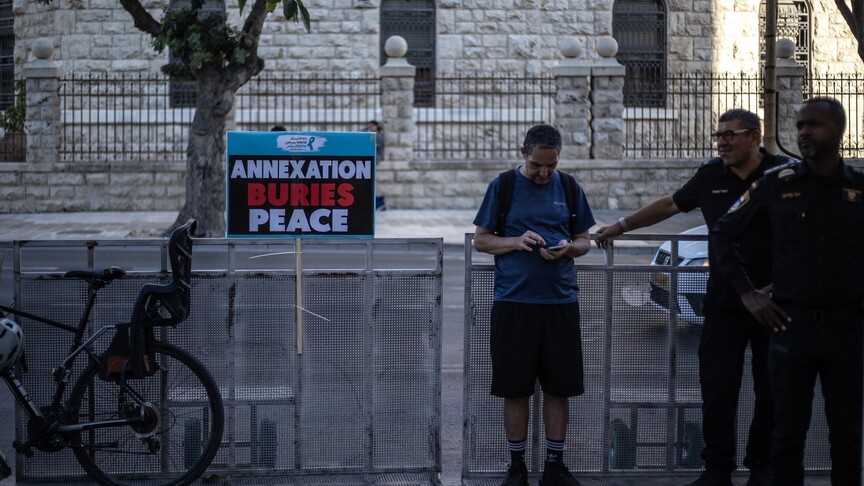
The organizations said the “seizure of Palestinian land, isolation of communities from their lands and fragmentation of Palestinian geographic contiguity collectively constitute part of a process of de facto annexation taking shape on the ground.”
They said measures implemented for years against small communities in Area C are now extending to entire towns and areas deep inside the West Bank.
“The Israeli government is no longer hiding its goal: annexing as much land as possible with as few Palestinians as possible,” the report said.
The organizations added that settlements, outposts, occupier violence and movement restrictions “work together to achieve the same goal,” describing the developments as a “shift from a political project to a reality imposed on the ground.”
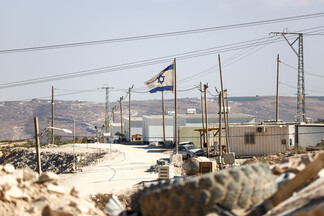
Since taking office in late 2022, the current government led by Prime Minister Benjamin Netanyahu has approved the establishment of 104 new settlements, while 160 agricultural settlement outposts have been established in the West Bank, according to Palestinian data.
In the first half of 2026, Israeli occupiers carried out 3,488 attacks in the West Bank, according to the Palestinian government’s Colonization and Wall Resistance Commission.
The attacks killed 17 Palestinians and fully or partially displaced 26 Bedouin and pastoral communities, while 42 new settlement outposts were established, the commission said.
Around 750,000 Israeli occupiers live in 194 illegal settlements and 400 illegal outposts across the occupied West Bank, including East Jerusalem, according to Palestinian figures.
Israel has occupied the West Bank, including East Jerusalem, since 1967. The international community considers Israeli settlements in the occupied territories illegal under international law, a position Israel rejects.