Adel Abdel Rahim and Sahin Demir
13 August 2026•Update: 13 August 2026
Local authorities in Sudan’s Blue Nile State said Thursday that the Sudanese army continues to repel attacks by the paramilitary Rapid Support Forces (RSF) and its ally, the Sudan People’s Liberation Movement-North (SPLM-N), on the border town of Kurmuk.
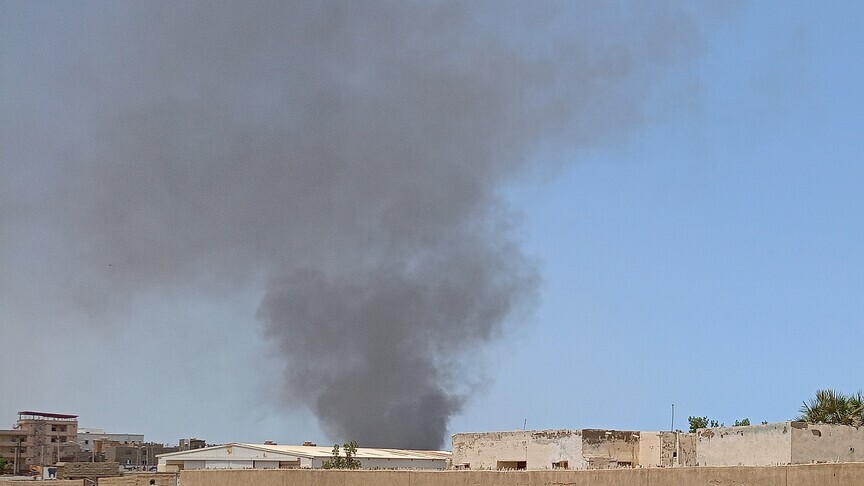
In a statement, the local administration in Kurmuk said the town had come under intensive attacks over the past three days involving drones, suicide drones and artillery shelling, which it said originated from “the regional neighborhood.”
The statement said the Sudanese Armed Forces continued to confront the attacks “with steadfastness and bravery” in defense of the town, its residents and public institutions.
The local administration also reaffirmed its support for the Sudanese army in confronting what it described as attacks targeting the region’s security and stability.
The statement came in response to an earlier RSF announcement Thursday claiming that its forces had captured Kurmuk following clashes with the Sudanese army.
The RSF said it had taken control of the “strategic” town after inflicting casualties and equipment losses on army forces.
There was no independent confirmation of either side’s claims.
Kurmuk is one of the largest towns in Blue Nile State after its capital, Damazin. Located near the Ethiopian border, it holds strategic importance because of its position along military supply routes and road links to Ethiopia and South Sudan.
On July 8, the Sudanese army announced that it had recaptured Kurmuk after the RSF and the SPLM-N had controlled the town for nearly three months.
The army controls large parts of Blue Nile State, while the SPLM-N has waged an armed insurgency against the Sudanese government since 2011, seeking self-rule for South Kordofan and Blue Nile states.
Sudan has been engulfed in conflict since April 2023, when fighting erupted between the Sudanese army and the RSF over plans to integrate the paramilitary force into the regular military.
The war has killed tens of thousands of people and displaced or forced nearly 15 million others to flee their homes, according to UN figures, local authorities and academic estimates.