GENEVA / ANKARA
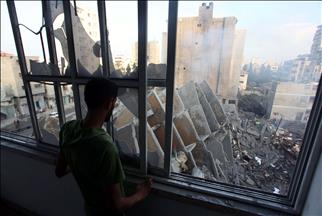
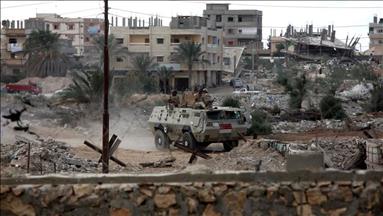
The continuation of Israel's occupation in Gaza and the risk of large-scale conflict make proper reconstruction efforts extremely difficult, according to UN Special Rapporteur on the Right to Housing Balakrishnan Rajagopal.
Speaking to Anadolu on the sidelines of the 58th session of the UN Human Rights Council in Geneva, Rajagopal addressed Gaza’s rebuilding and US President Donald Trump’s reported plan to "take over" the territory and forcibly displace Palestinians.
"The idea that Palestinians living in Gaza can be collectively expelled is basically a fantasy," Rajagopal stated.
"It was never going to happen, and if something like that ever happens, that would be among the grossest violations of international law in the last several hundred years," he warned.
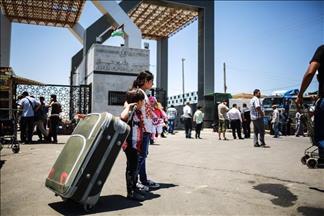
He further said that such a scenario would exacerbate the suffering of Palestinians, who have already endured mass expulsions through the Nakba, decades of apartheid policies, and genocide committed in Gaza.
"Rightfully, these fantasies have been rejected by all countries which aim to have any level of decency and compliance with international law," he added.
Arab League's reconstruction plan welcomed
As an alternative to Trump's proposal, the UN official welcomed the Arab League’s adoption of a plan for Gaza’s reconstruction at its Extraordinary Summit.
"I hope that whichever plan proceeds at this point, it proceeds in a way that fully involves the Palestinians meaningfully to shape the nature and the direction of rebuilding," he said.
"It's a very essential part of their right to self-determination that they should be in charge of rebuilding their own lives," he suggested.
Rajagopal emphasized that rebuilding Gaza without its people is not feasible, even if done with good intentions. "Clearly, mass expulsion of Palestinians from Gaza cannot be done unilaterally, even by the most powerful countries of the world,” he stressed.
He expressed doubt over the likelihood of another foreign intervention in Gaza, stating: "I don't see that as a realistic possibility for another intervention led by the US or other countries in the region."
"If the US opposes the Arab League plan, it can put forward its own proposal for Gaza’s reconstruction," Rajagopal said.
However, he insisted that such efforts must be "based on the human rights of Palestinians, with their full engagement and participation," rather than on "fantasies of expelling the people and converting Gaza into some sort of Riviera in the Middle East."
Call for continued ceasefire, humanitarian aid
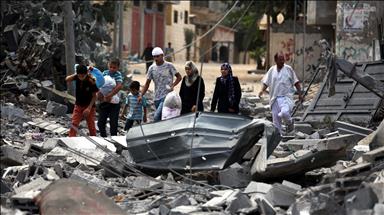
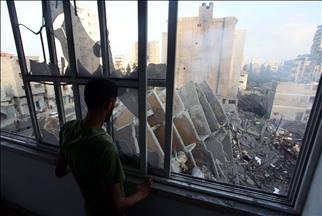
Rajagopal highlighted that the destruction in Gaza is still ongoing.
While a ceasefire agreement has been reached, negotiations are underway for its second and third phases.
"I hope that the ceasefire holds and that steps are taken towards the next stages of the ceasefire," he said.
"The ceasefire has to hold, the destroyed Palestinian lives must be recovered, and the first requirement there is the immediate provision of humanitarian aid, which unfortunately has been cut off by Israel most recently," the rapporteur said.
He criticized Israel's blockade on humanitarian aid, calling it a "gross violation of international law" and a direct breach of the International Court of Justice's interim ruling, which mandates unimpeded access to humanitarian supplies.
Uncertainty over long-term reconstruction
Rajagopal stressed that any reconstruction effort must ensure Palestinians’ right to self-determination. "The groundwork needs to be laid for a more participatory process for rebuilding Gaza with full respect for the right to self-determination of the Palestinians.”
Such an approach, he argued, could "end the conflict and give assurances to other countries that want to contribute financially, that the money they will put into rebuilding Gaza would not be wasted because yet another war will break out one or two years down the road."
He warned that past attempts to secure funding from neighboring countries had failed due to the lack of assurance that fighting would not resume.
"As long as the occupation continues, and there is a risk of large-scale armed conflict breaking out, it is very hard to see proper reconstruction proceed in the right way," Rajagopal concluded.
Since Jan. 25, Trump has been promoting the idea of relocating Palestinians from Gaza to neighboring countries such as Egypt and Jordan, both of which have rejected the plan, along with other Arab nations and international organizations.
More than 48,400 Palestinians have been killed, mostly women and children, and over 111,800 others injured in a brutal Israeli war since October 2023. The onslaught, which left the enclave in ruins, was paused under the ceasefire agreement that took hold on Jan. 19.
Last November, the International Criminal Court issued arrest warrants for Israeli Prime Minister Benjamin Netanyahu and his former Defense Minister Yoav Gallant for war crimes and crimes against humanity in Gaza.
Israel also faces a genocide case at the International Court of Justice for its war on the enclave.