- Dr. Adam McConnel is an American scholar.
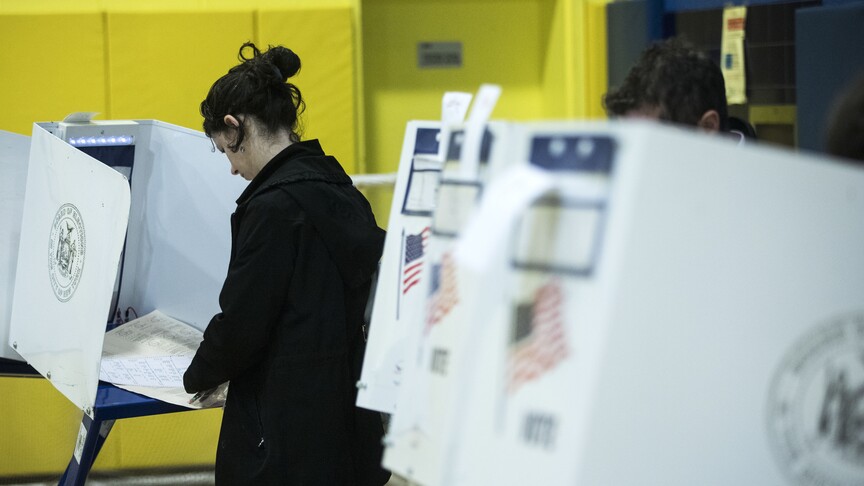
With less than two months to go, hyperbole seems to characterize every major American election cycle in our era, but the 2026 US midterm elections are fraught with exceptional tensions.
US presidents and their parties generally fare badly in midterm elections, and Donald Trump's popularity ratings are some of the lowest ever recorded for a president at this point in his second term [1]. Moreover, the first year of Trump's second term progressed even more wildly than the same period during his first term. The revolving door for top-level administration posts is once again spinning. Trump's unpredictable policy decisions – often tweeted in the early morning or blurted out impromptu to the press – whipsaw markets and societies around the world.
In the US, Trump unleashed DOGE [2] on the "administrative state" and immigration enforcement agency ICE [3] on the general population. Despite claiming to have ended, at last count, eight wars, Trump is more known for extracting Venezuelan President Nicolas Maduro from Caracas in early January and teaming up with Israeli Prime Minister Benjamin Netanyahu to attack Iran on Feb. 28. The ongoing wrestling match with Tehran – now six months old – has exacerbated the US economy's inflationary trends, especially for everyday costs such as groceries and gasoline. If Trump and the Republicans emerge from November’s polls with control of Congress, Trump will feel justified and vindicated in his choices. And Congress, already paralyzed for the past 20 months, will remain comatose until 2029 at least.
All is not well
However, neither of the major US political parties appears poised for victory in November. President Trump's erratic, personalized decision-making looks like a double-edged sword for his party. His base stands fervently behind him despite the increasingly ominous poll numbers, and his hand-picked candidates tend to do well [4]. But different candidates face their own specific election landscapes, and some understand that distancing themselves from Trump may result in more favorable election outcomes [5]. Just as importantly, a significant bloc of former high-profile Trump supporters has broken with Trump over US policy toward Israel, and a large section of the Republicans’ younger voter demographic seems to have followed them [6].
The Democrats, for their part, are in even worse condition. Throughout their 2024 election debacle, the Democrats appeared lost and leaderless. Riven by a generational split pitting younger, emerging figures against a cohort of old-guard stalwarts (usually close to the Clintons, Bidens, or Obamas), the Democratic National Committee [7] (DNC) decided to stay the course. The result was President Joe Biden's reelection bid, subsequent late exit, and Vice President Kamala Harris' taking his place, which was decided by the party’s leadership, not the party faithful. Not only did the Democrats lose the presidency, but they also lost control of the House of Representatives.
Finger-pointing started immediately, but now, only two months before the 2026 midterms, no clarity has emerged, nor has reorganization been implemented. The Democrats’ generational discord over issues and tactics continues unabated, their leadership remains elderly and ineffectual, and the DNC’s refusal to honestly dissect what went wrong in 2024 casts a pall over the party [8]. Instead of benefiting from the Republican Party’s Trumpian disorder, the Democrats struggle on a daily basis to project an image of unity.
As with the Republicans, US policy toward Israel has become the key issue driving the Democrats’ internal dissent: older and moderate Democrats want to continue the party’s traditional support for Israel, while younger and progressive Democrats want to end US aid for Israel [9]. That also means that American policy toward Israel has emerged as a dominant issue across the entire US political spectrum.
A fundamental shift in US politics?
The last time both of the major US political parties concurrently experienced such ideological chaos was the 1920s. During that decade, the Republicans, once America’s progressive party, under the Warren G. Harding and Calvin Coolidge administrations, became the conservative party of industrialists and big finance. President Herbert Hoover could then do nothing but watch helplessly as the US economy cratered in October 1929.
That disaster paved the way for New York Governor Franklin Delano Roosevelt’s rise to the national stage, where, as president, he cemented the once-conservative Democratic Party’s metamorphosis into a more liberal party of the working classes and common people during the 1930s. The Democrats began focusing on socioeconomic issues that comprised traditional politics and policy, while the Republicans have increasingly relied on culture wars and charismatic figures for votes since that era.
Israel dominates the American political moment
US policy toward Israel, though often defined as a foreign policy issue, is intricately enmeshed in both parties’ histories. Democratic President Harry S. Truman initiated US recognition of Israel, largely because he needed votes in 1948. The Republican Party's evangelical base has long seen the modern state of Israel’s existence as fundamental to its beliefs.
US policy toward Israel has thus been a prominent issue in US politics for many decades, but never has it played such a central role in the nation's current political climate. Both parties are now wracked by dramatic infighting because of Israel, and Israel has become a major source of tension in American society as the November midterms approach. Which party will successfully engineer a fundamental redefinition of its stance on Israel, a subject that includes vital cultural, military, political, and religious elements? The answer to that question may well determine who controls Congress during the coming decade.
[1] https://www.reuters.com/world/us/trump-approval-drops-35-republican-support-softens-reutersipsos-poll-finds-2026-05-19/
[2] The unofficial Department of Government Efficiency. DOGE was apparently absorbed into other government agencies in late 2025: https://time.com/7336327/doge-disbanded-elon-musk/
[3] Immigration and Customs Enforcement. ICE is an agency within the Department of Homeland Security, which was established in the wake of the Sept. 11, 2001 attacks on New York City and the Pentagon.
[4] https://www.nytimes.com/interactive/2026/08/26/us/politics/trump-primary-midterms-endorsements.html
[5] https://apnews.com/article/midterm-elections-republicans-trump-popularity-disapproval-95f59e3ab09f5ee0e68349530ff8c8ea
[6] https://thehill.com/opinion/congress-blog/politics/6072170-conservative-shift-israel-generation/
[7] Democratic National Committee, the party’s central leadership body.
[8] https://www.nytimes.com/2026/05/22/opinion/dnc-autopsy-ken-martin.html
[9] https://www.nytimes.com/2026/08/06/us/politics/democratic-party-socialists-moderates.html
*Opinions expressed in this article are the author's own and do not necessarily reflect the editorial policy of Anadolu.