Juraj Majcin is a policy analyst with the European Policy Centre in Brussels.
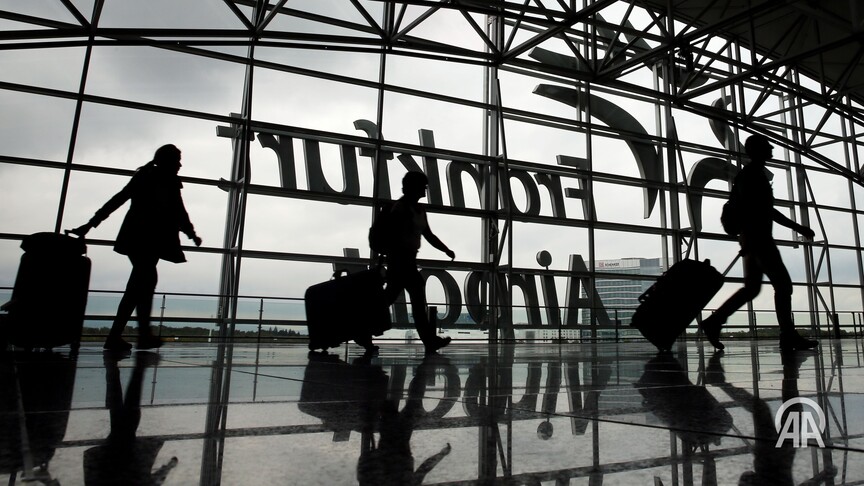
The recent series of hoax bomb threats targeting schools, airlines, airports and media organizations has caused widespread disruption across Europe. Flights have been diverted, buildings evacuated, and thousands of pupils sent home. Authorities are still investigating who is behind the threats and whether the incidents are connected. They have yet to publicly attribute the campaign to a terrorist organization or a state.
Russia has nevertheless emerged as a suspect in political debate and commentary. Its involvement would fit a broader pattern of hybrid operations against European countries, including disinformation, cyberattacks, GPS interference, sabotage and arson. Such activities seek to weaken Western societies, undermine confidence in public authorities and discourage support for Ukraine, whose resistance Moscow has still failed to break. That context gives investigators reason to examine possible Russian involvement, but it does not establish responsibility for these threats.
French Interior Minister Laurent Nunez has raised the possibility of foreign interference, naming Russia among the potential suspects. French President Emmanuel Macron, however, has stressed that the available evidence is insufficient to assign responsibility.
Although responsibility for the current threats remains unproven, the campaign resembles the bomb threats that disrupted Czech and Slovak schools in September 2024. Czech intelligence later assessed that the suspected perpetrator’s activities were most likely financed by an actor from Russia.
Bomb threats as a cheap form of psychological warfare
Hybrid warfare seeks to weaken an opponent’s willingness to resist or pursue its political objectives, often at a fraction of the cost of conventional military operations. New technologies and increasingly connected societies have lowered the barriers further, creating countless opportunities to spread fear and disruption with limited resources.
Russia has shown considerable ability to adapt its methods and circumvent the restrictions imposed by European countries. Rather than relying solely on its own operatives, as in the Skripal poisoning in the United Kingdom, it can recruit individuals through Telegram and other online channels and pay them in cryptocurrency. Some recruits may not even know that they are working for the Russian state. This so-called "uberization" of hybrid warfare makes hostile operations cheaper, expands the pool of potential perpetrators and complicates efforts to identify those directing them.
If the current bomb threats prove to be a Russian operation, their likely purpose would be to spread fear and turn that fear into political pressure. The intended message is simple: supporting Ukraine brings insecurity at home, while reaching an agreement with Moscow promises stability. Schools and airlines are particularly sensitive targets because threats against children and air traffic generate immediate anxiety and force authorities to respond, even when the warnings lack credibility.
This pressure would fall on societies already divided over support for Ukraine. Parties opposing further assistance could exploit the disruption to argue that governments are putting their own citizens at risk. Using this argument, Germany’s AfD has called for an end to military assistance for Ukraine. In France, Marine Le Pen, a leading contender for the presidency, has pledged to halt financial aid to Kyiv. In Italy, a September poll found that around 55% opposed further weapons deliveries to Ukraine.
A coordinated campaign requires a coordinated response
A hostile state or terrorist organization can direct a campaign across several European countries, while the response remains divided among national authorities. Despite its considerable political and economic integration, the EU still relies on a patchwork of police forces and intelligence services that do not always share information seamlessly.
Europe can no longer afford to respond through disconnected national actions, with some governments taking decisive measures while others do little. Speaking recently to the European Parliament, NATO’s Supreme Allied Commander Europe (SACEUR), Gen. Alexus Grynkewich, warned that separate national responses could collectively send the wrong signal to an adversary, either escalating more than intended or appearing too weak. Countries must therefore consult one another and consider the combined effect of their actions.
In other words, Europe’s fragmented response keeps the costs of intimidation low and the rewards high. European Commission President Ursula von der Leyen’s proposal for an Emergency Security Protocol could help close this coordination gap. Modeled on NATO’s Article 4, it would allow member states to consult and coordinate their response to security threats.
However, von der Leyen’s proposal still needs the backing of member states, which closely guard their sovereignty over security and defense. Even if adopted, it could struggle to move beyond consultation. Measures requiring unanimity, such as sanctions, would remain vulnerable to a single government’s veto, forcing countries back into separate national responses when joint action is needed most.
*Opinions expressed in this article are the author's own and do not necessarily reflect the editorial policy of Anadolu.