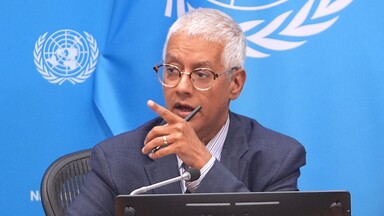
- Dr. Ali Bakir is an assistant professor of International Affairs, Security, and Defense at Qatar University and senior nonresident fellow at the Middle East Council on Global Affairs.
When the Israel/US-Iran war began on Feb. 28, the Houthis offered largely nothing but statements of support. The restraint had nothing to do with a shortage of missiles or of will. They were waiting for Tehran to decide when and how to best use its regional militias. That decision has now come. Over the past few days, Houthi forces overran Mocha and Dhubab and seized Perim Island (Mayyun), which splits the Bab el-Mandeb Strait. They now hold Yemen's Red Sea coastline and the gate to it.
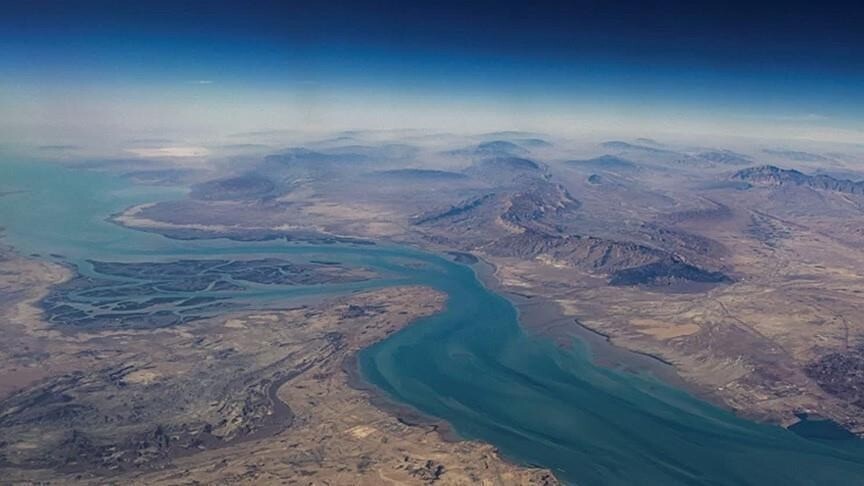
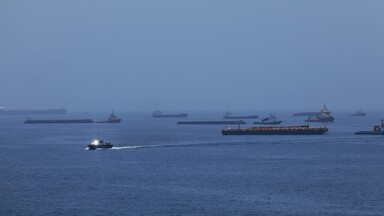
The strait carries roughly 12% of global trade, 11% of seaborne oil, and 8% of LNG. On their own, those figures are survivable. Ships can go around the Cape, freight costs rise, and the world absorbs it. What makes this moment different is that the other great oil chokepoint has been effectively closed during the war. With the Strait of Hormuz shut and Bab el-Mandeb under threat, Saudi Arabia has lost its fallback.
Calculated strategic shift
For years, the Houthis targeted Riyadh as part of the Saudi-Iranian contest across the region. After the two countries normalized relations, the Houthis scaled down their operations and moved to an entirely different theater. They focused their attacks on Israel before deciding to shift their focus and target Saudi Arabia, its infrastructure, energy facilities, and export routes. Seen from inside Yemen, this cycle of escalation, retreat, silence, and sudden redeployment makes little sense. Seen as one arm of Iran's regional network, it makes perfect sense.
Missiles, drones, and guided shells have always given the Houthis more reach than a conventional army of their size. They can strike Saudi energy sites, southern cities, and shipping cheaply and with very little warning. Control of the coast and Perim now adds weapons that are hard to counter. Artillery, anti-tank missiles and mines all work at close range and line of sight.
The implications of the Houthis' move are already visible. Riyadh has shut its East-West Pipeline after drone attacks. Jazan, Abha, and Najran are under repeated alert. Seventy-three civilians have been wounded in strikes on civilian and economic sites. Read from Tehran, the move serves three purposes.
First, it gives Iran a second lever over energy flows without committing its own forces to another high-intensity front. Houthi gains narrow Saudi export options, raise the political cost of American operations against Iran, and show that Tehran still has cards to play while it is under pressure. This returns to Iran's opening plan, which was to drive oil prices to levels the global economy cannot absorb and force Trump to stop the war under pressure from home and from the major importers and exporters.
Second, it weakens Saudi Arabia's standing and widens the split inside the Gulf Cooperation Council over Yemen, the Strait of Hormuz, and the war itself. Iran has been distributing the financial, human, and infrastructural costs of the conflict selectively among the Gulf States. At one point, the UAE carried the heaviest exposure, then Kuwait took its place, and now Saudi Arabia will bear the largest share. The Emiratis are already implicitly blaming Riyadh for the Houthis' progress in areas that were held before by pro-UAE forces. This comes at a time when Iran and the United Arab Emirates have agreed – according to the Iranian president – to turn the page and rebuild strained relations.
Defining test for the alliance
Third, it undermines the Mecca defense alliance. Ironically, the first test to the alliance has come from Iran rather than Israel. Saudi Arabia now faces three fronts at once: the Houthis in the south, Iraqi militias in the north, and Iran to the east. Iran using the Houthis against Riyadh acts as a catalyst for Pakistan and Türkiye to solidify their commitments. Tehran hopes to create an illusion for smaller states that this alliance lacks practical force, aiming to present appeasement as the safer alternative.
Throughout the war, Saudi Arabia has pushed for de-escalation while both belligerents preferred the opposite. By using the Houthis as a claw, Iran risks turning every one of its neighbors against it. The paradox is that Israel started this war and is the one state Tehran avoids. Israel's defense minister boasted recently that Iran knows American jets take off from Israeli soil to bomb it and still does not dare respond, which he offered as proof that Israeli deterrence holds.
The move in Yemen ends up serving Israel. Israeli Prime Minister Netanyahu has been pressing Saudi Arabia to join the Abraham Accords, and when the Houthis moved, he presented himself as a savior whose services are available on request. A wider war and higher oil prices also strain Türkiye and Pakistan and pull their attention elsewhere. For Türkiye in particular, the Israeli threat is not something that can set aside.
The open question is whether the Houthis can hold what they have taken, or whether their newly acquired positions will leave them highly vulnerable if Saudi Arabia and its allies decide to push back decisively.
*Opinions expressed in this article are the author's own and do not necessarily reflect the editorial policy of Anadolu.