Dr. Khaled Mohammed Batarfi is an assistant professor at Saudi Arabia’s Al-Faisal University.
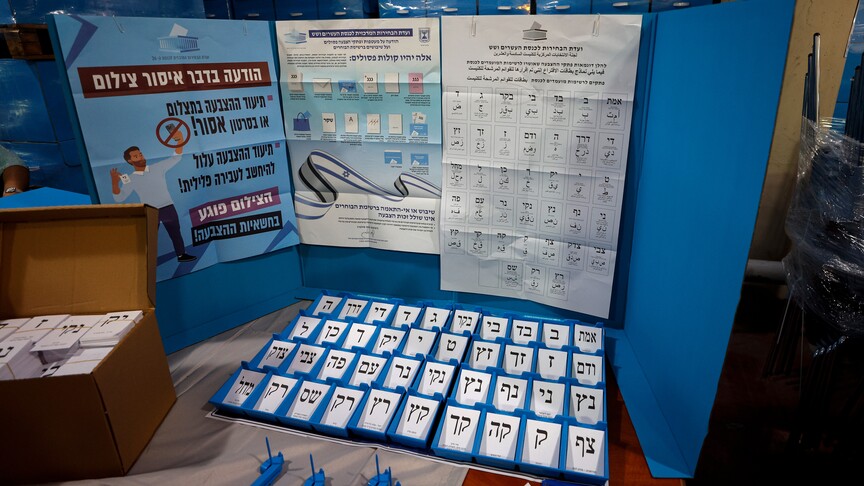
For Israel’s neighbors, the central question in the approaching election is whether its next government will change the policies that make their region less secure. Israeli Prime Minister Benjamin Netanyahu’s departure could create an opening. It would not, by itself, constitute a peace initiative. Regional capitals should distinguish between welcoming a less confrontational interlocutor and believing that a change of leadership will resolve conflicts rooted in occupation, contested sovereignty, and denied Palestinian rights.
The electoral arithmetic counsels caution. A recent poll reported by Anadolu placed both Netanyahu’s bloc and the opposition below the majority required to form a government outright [1]. Coalition bargaining will therefore matter as much as the identity of the leading candidate. A prime minister’s room for compromise depends partly on which partners can bring down the government. Winning an election against Netanyahu does not necessarily mean winning a mandate for Palestinian statehood.
The region is not a monolith. Cairo and Amman both have immediate interests in preventing Palestinian displacement and further instability along their borders. Beirut and Damascus need sovereignty and space to rebuild. Riyadh seeks a durable settlement that reconciles regional integration with Palestinian rights. Ankara views developments through the dual lenses of the Palestinian question and Syrian security. Their priorities overlap, but their exposure to Israeli decisions differs.
Measures of change
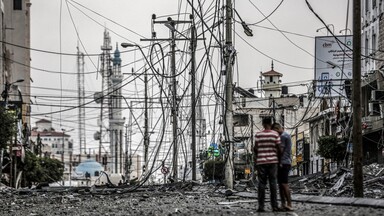
For Gaza, a successor could make consequential decisions: facilitate humanitarian access, honor ceasefire commitments, permit reconstruction and negotiate withdrawal arrangements. Such changes would save lives and should never be dismissed as merely cosmetic. Yet reconstruction without a political settlement risks merely financing temporary recovery between recurring rounds of destruction. September’s joint statement by eight Arab and Muslim-majority countries demanded implementation of existing commitments and linked Gaza’s future to a sovereign Palestinian state [2]. That is a substantive test for any incoming government.
The West Bank provides an even sharper measure. Will the next government stop settlement expansion, confront settler violence, and reverse measures that fragment Palestinian territory? Or will it preserve those policies while describing them more diplomatically? A quieter approach to the same territorial outcome would offer little reassurance. Netanyahu’s opponents should be judged by what they are prepared to change, rather than by their opposition to him.
On the Lebanese and Syrian fronts, a change in Israeli leadership could influence the frequency of military action, willingness to negotiate, and respect for agreements. A government less dependent on permanent confrontation might offer practical opportunities for de-escalation. But Israel’s neighbors cannot build security on an Israeli leader’s temperament. They need verifiable arrangements, respect for sovereignty, and an end to the assumption that Israel can indefinitely determine its neighbors’ security conditions through unilateral force. Israeli civilians also deserve security; durable agreements must protect civilians on every side.
Red lines for Saudi Arabia and Türkiye
For Saudi Arabia, normalization remains conceivable as part of a credible peace settlement. It cannot substitute for one. Riyadh has publicly tied diplomatic relations to Palestinian statehood. Changing the Israeli prime minister does not remove that condition, nor does it erase the political and moral consequences of Palestinian suffering [3]. Any prospective government would need to demonstrate that its offer goes beyond improved messaging or another open-ended negotiating process.
A Netanyahu-led coalition dependent on opponents of Palestinian sovereignty would face an obvious contradiction in pursuing normalization. A successor coalition might have greater flexibility, but its composition and program would remain decisive. Saudi Arabia should keep the diplomatic door open while requiring measurable commitments. Regional acceptance is valuable precisely because it can help secure a just settlement; offering it without substantive movement would diminish that influence.
Ankara’s reading is likely to be similarly conditional. The intensity of its confrontation with Netanyahu gives his departure potential diplomatic significance. Yet Türkiye’s concerns extend beyond personal hostility. Its October statement condemning Israeli actions in Syria reaffirmed support for Syrian sovereignty and territorial integrity. A new Israeli government could lower tensions, but rapprochement would require changes in conduct in both Syria and the Palestinian territories [4]. A different tone could start a conversation; it could not by itself repair bilateral ties.
If regional capitals conclude that the election offers limited practical change, their response should be coordinated diplomacy, not resignation. They should agree on benchmarks, link further integration to compliance, strengthen Palestinian institutions, and press Washington and European partners to support enforceable commitments. Existing diplomatic channels can serve those purposes.
The election matters because governments make choices, and different choices can prevent suffering. But the region cannot put its interests on hold until Israeli politics produces an ideal partner. Regional states must test whichever coalition emerges, reward genuine progress, and resist attempts to substitute a more acceptable public image for genuine policy change. The decisive question is what the next government will do with power.
[1] https://www.aa.com.tr/en/middle-east/israeli-opposition-leads-netanyahu-bloc-by-5-seats-3-weeks-before-election-poll/4079110
[2] https://www.mfa.gov.tr/joint-statement-by-the-foreign-ministers-of-turkiye-egypt-indonesia-jordan-pakistan-qatar-saudi-arabia-and-uae-22-september-2026.en.mfa
[3] https://english.wafa.ps/Pages/Details/154315
[4] https://www.mfa.gov.tr/no_-190_-israil-in-suriye-topraklarindaki-ihlalleri-hk.en.mfa
*Opinions expressed in this article are the author's own and do not necessarily reflect the editorial policy of Anadolu.