- Marcus Vinicius De Freitas is visiting professor at the China Foreign Affairs University and a senior fellow at the Policy Center for the New South, based in Morocco.
Brazil's voters have issued warnings that neither Brasília nor foreign capitals can afford to ignore. Senator Flavio Bolsonaro's first round lead over President Luiz Inacio Lula da Silva reflects frustration with the cost of living, insecurity, debt, and institutions, particularly the Supreme Court. Foreign endorsements featured in the campaign, but the discontent was Brazilian. Defending sovereignty cannot excuse failing to govern.
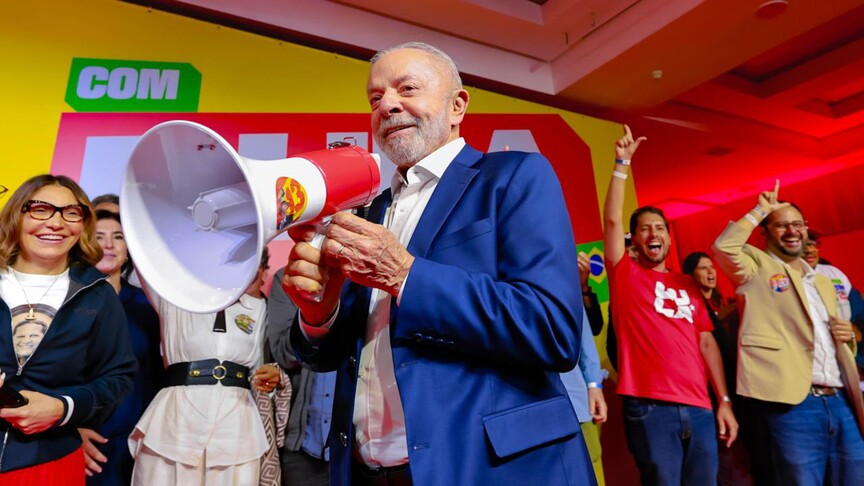
Lula's most formidable opponent is his own record. His political camp has held the presidency for roughly 16 years since 2003, with a brief interruption. It cannot indefinitely present itself as the answer to problems that persisted under its watch. Earlier achievements remain relevant, but political memory does not pay today's supermarket bill. The difficulty is convincing voters that familiar leadership can produce a different future. Political exhaustion cannot be overcome by invoking past accomplishments alone.
Diplomacy or sponsorship?
Yet domestic disappointment does not entitle foreign governments to realign Brazil's loyalties. Benjamin Netanyahu's video endorsement, Javier Milei's appearance at Bolsonaro's campaign launch, and Donald Trump's reception of the candidate revealed explicit preferences. A presidential audience alone proves little; Trump also met Lula. Together, however, these gestures raise a question about where diplomacy ends and political sponsorship begins.
Economic pressure makes that boundary harder to defend. Washington offered trade and diplomatic justifications for tariffs and visa restrictions. Yet official terminology does not erase political consequences. Trump publicly linked earlier tariffs to the treatment of former President Jair Bolsonaro, while members of the Bolsonaro family claimed credit for mobilizing American pressure. A country subjected to economic punishment cannot expect those imposing it to be disinterested observers.
On Oct. 2, two days before the first round vote, the United States suspended in-person consular services, and Australia closed its embassy, citing security concerns. Brazilian police reported finding no concrete evidence of an attack plan. The episode fueled online speculation about a coup, although claims of an official coup warning were false. Whatever the intentions, such measures risk reinforcing a narrative of instability at a politically sensitive moment.
The larger issue is Washington's understanding of the hemisphere. Trump's revival of the Monroe Doctrine recalls a persistent historical confusion: the belief that excluding outside powers gives the United States authority over its neighbors. Latin American independence was not achieved to exchange European tutelage for an American entitlement to obedience. Geography creates shared interests and responsibilities; it does not establish a hierarchy of sovereignty.
Viewed through this lens, pressure on Brazil also advances Washington's ambition to reduce Chinese influence. Brazil's markets, infrastructure, and critical minerals, including rare earths, make its partnerships strategically significant. Lula has defended the country's right to maintain those partnerships without seeking permission. Whatever his administration's shortcomings, that principle serves the enduring national interest. Brazilian diplomacy must turn international competition into development opportunities while resisting demands for exclusive loyalty. Brazil needs access to competing sources of investment, technology, and markets, and the freedom to negotiate.
A change of government may legitimately alter diplomatic priorities. It should not mortgage the country's future to foreign leaders' preferences. Mineral wealth must underpin Brazil's development. Alignment that narrows commercial and diplomatic possibilities carries costs long after the applause at campaign rallies has faded.
Israel, the Arab world, and partisan diplomacy
Israel's involvement has a distinct political logic. Netanyahu's endorsement resonates with evangelical and conservative voters for whom Israel holds religious and civilizational significance. In February 2024, Israel's foreign minister declared Lula persona non grata after Lula compared Israel's actions in Gaza to the Holocaust. Bolsonaro's promised embassy relocation to Jerusalem would mark a diplomatic reversal.
Brazil's relationships across the Arab world matter both commercially and diplomatically. A country aspiring to speak across regional divisions weakens its credibility when partisan affinity becomes the organizing principle of its foreign policy. Friendship with Israel need not require abandoning independent judgement about its government's misconduct.
The BRICS group of countries, a quintessential platform for Brazil's global ambitions, poses another test. Bolsonaro's willingness to consider withdrawal warrants scrutiny, but Brazil's economic structure constrains ideological freedom. Fellow member China is deeply embedded in trade and production, and influential domestic constituencies favor preserving those ties. A political downgrading of involvement appears more plausible than withdrawal: less commitment to the grouping and less ambition to organize the Global South.
None of this relieves Lula of responsibility for the frustrations driving the vote. Nor does Bolsonaro's domestic support render foreign pressure politically innocent. A serious account must acknowledge both.
The coming Oct. 25 runoff will demand answers that neither foreign endorsements nor sovereignty speeches can provide. Lula must explain what another mandate would change. Bolsonaro, whose undistinguished political career has also been marred by controversy, must explain what closer alignment would cost. Brazil's partners must recognize that cooperation confers no right to dictate Brazil's political direction. The choice belongs to Brazilians, including their right to disappoint Washington, Tel Aviv, or any other capital. Whoever wins will receive a temporary mandate to govern a sovereign country, not a license to place its future in someone else's hands.
*Opinions expressed in this article are the author's own and do not necessarily reflect the editorial policy of Anadolu.