ANKARA
News Analysis
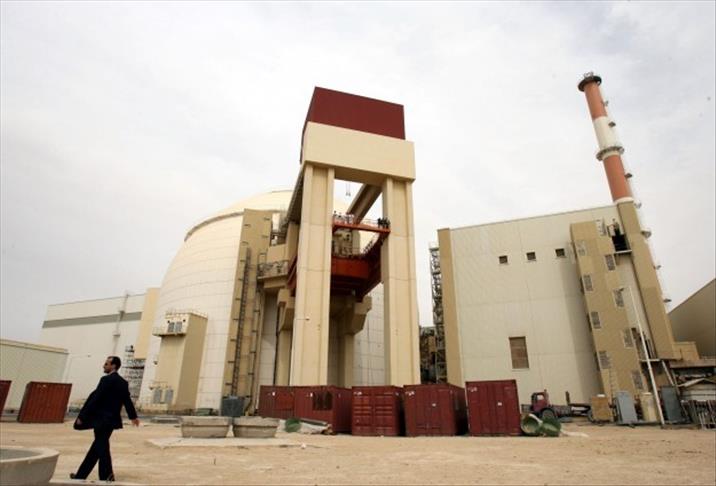
Iran is adamant to complete the construction of the Arak heavy water reactor, which they call their "red line". However, the fact that Iran would acquire the capacity to produce enough plutonium to build two nuclear bombs a year once the reactor is completed, is of great concern for Western countries.
Under the framework agreement signed in November between Iran and International Atomic Energy Agency (IAEA), IAEA experts are going to inspect the heavy water production plant, which is a part of the Arak nuclear complex. The inspection scheduled for December 8 will be made under the control of Iranian authorities. There is no permission yet to inspect the heavy water reactor which is the heart of the complex and the source of concerns. IAEA is conducting separate negotiations with Iran, on the sidelines of negotiations the 5 permanent members of the United Nations Security Council and Germany (P5+1) have had with Iran.
Arak nuclear complex was one of the main topics of negotiation with both IAEA and P5+1; and Iran had previously permitted IAEC experts to conduct occasional inspections in Arak.
- What is the significance of Arak?
Arak has been one of the most contested issues in Iran's nuclear program since the decision to build it was taken in 1980s. The biggest reason for this controversy is the fact that it is one of the ways leading to atomic bombs.
Essentially, either enriched uranium or plutonium is used to build atomic bombs. However, the enrichment process is quite long, expensive and hard to conceal.
An alternative method is producing plutonium through using natural uranium as a fuel in a heavy water reactor. Since this method does not require uranium enrichment process, it is much easier to execute in secrecy since the circulation of natural uranium is not controlled by IAEA, and hence, the reason why North Korea, India and Israel have preferred this method to make nuclear weapons.
Iran's Arak nuclear complex is basically comprised of two sections including a heavy water production plant and a heavy water reactor. The plant is known to have been in operation since 2006, whereas the reactor is still under construction, and there is yet no definite date for its completion. Before the deal with P5+1 was signed, Iranian authorities had said that the reactor could be finished in 2014. The reactor, which is also known as IR-40, will be able to produce 9 to 10 kilos of plutonium per year once completed. This means Iran would have the necessary nuclear materials to build two atomic bombs a year.
This is why the Western countries demand that the nuclear reactor is either dismantled completely, or converted to a light water reactor which comprises the majority of nuclear reactors around the world. The international community was made aware of the presence of the heavy water production plant upon the 2002 report of National Council of Resistance in Iran (NCRI), a coalition of Iranian opposition groups. The plant has since been the focus of, and closely monitored by western nuclear observation posts.
Iran, on the other hand, denies these allegations, and claims that they built the reactor to produce isotopes for agricultural, medical, and industrial purposes. However, the Western experts argue that a 40-megawatt reactor is unnecessarily big for such purposes, and such isotopes could also be produced in a light water reactor.
Speaking to Parliament the week before, Iranian Foreign Minister Javad Zarif said that the construction work on the nuclear reactore would go ahead. "The capacity at the Arak site is not going to increase. It means no new nuclear fuel will be produced and no new installations will be installed, but construction will continue there," Zarif said.
Ali Akbar Salehi, head of Atomic Energy Organization of Iran has said Tehran will never abandon the Arak heavy water reactor, considering it a "red line" in talks with world powers, and defending Iran's right to enrich uranium.
The deal signed with P5+1 contains an article regarding the prevention of any further progress in Arak. The footnote of the article says that the reactor shall not start operating, there shall be no fuel or water additions, or related tests, and the missing parts shall not be completed. Yet, there is no mention of stopping construction work.
Jen Psaki, spokesperson for the United States Department of State said they were not sure exactly what Salehi meant by 'construction,' but it could continue as long as he was referring to the construction of roads or buildings.
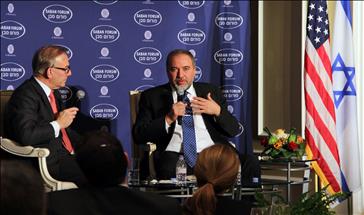
Israel, on the other hand, has said that the ink on the deal is still wet, calling such statements "provocative steps" by Iran.
Although there are some experts who see Zarif's statements as an effort of appeasing anti-Western groups in Iran, there is another group which believes that Iran is benefiting from the afore-mentioned loophole in the article.
In the post-interim agreement period where both parties test mutual goodwill, such a step taken by Iran indicates that the negotiations for a final agreement are going to last a long time.
englishnews@aa.com.tr