by Mohamed Hedi Abdellaoui and Felix Nkambeh Tih
DOUALA, Cameroon
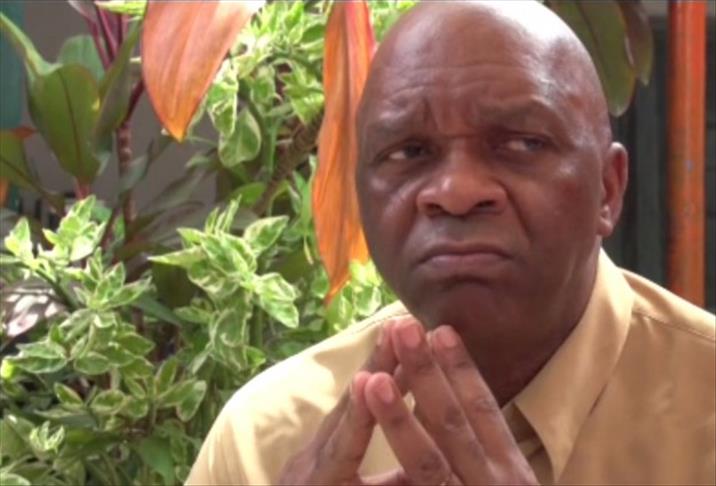
Boko Haram is a western tool to block economic growth in Africa, the region that is the future of the world's economy, Simon Tedga, a Cameroonian politics and strategic defense consultant in Paris told The Anadolu Agency in an exclusive interview in Douala, Cameroon.
The geo-strategist said that the emergence of Nigeria as the first power on the continent, as well as continuing growth in Africa, has frightened western countries "who are using all available means to hold them back. Boko Haram is of great use to them."
"In recent years, people have been talking about the rise of Africa as an economic power. This perspective cannot please the world's great powers who want Africa to remain a reservoir of raw materials," Tedga said.
To neutralize the Nigerian terror group, Tedga called on countries who claim that they are friends with Nigeria, Chad, Cameroon and Niger to stop financing and furnishing weapons for Boko Haram."
"The backbone of Boko Haram's power comes from the world's military powers who fund and sell them arms, Abubakar Shekau's group cannot make war without support and allies," the expert said.
He added in the same perspective: “At first Boko Haram was a cult, thats what we were told. Then a nebulous entity. Now it is an armed force that has conquered considerable territory in Nigeria. With such power, the group certainly receives support from military and financial powers."
From this point of view, Tedga points to Middle-Eastern countries or parties who do this for religious reasons. This view that has never been denied, he claims.
Tedga said that the weapons mostly come from “western countries" as Middle-Eastern nations do not "produce arms."
He indicates a recent declaration of Cameroon's Ministry of Communications which said that "40 percent of the arms seized from Boko Haram militants were French-made." This statement was officially denied by the French government last week.
But Tedga maintains his point of view, and argues it with care: "It is not surprising that France -- one of the countries that sells a large part of the world's weapons -- given the economic crisis it is going through, does not stop selling arms regardless of the place or origin of the orders."
"I think that there is a triangular relationship. Middle-Eastern countries that support Boko Harm give money to countries that produce arms and these, of course, deliver them to Boko Haram," he said.
As for the strategy to be implemented by Cameroon, Chad, Nigeria and Niger, Tedga recommends the establishment of a surveillance plan.
Boko Haram "is a stealthy enemy that appears and disappears. Therefore, there is a need for a means of surveillance to track its movements and activities 24/24 without them noticing it. This will provide a powerful means of surveillance," Tedga said.
Author of the book "The 50th Anniversary of African independence in France, an analysis of a controversial relationship" said that this surveillance must be provided by Nigeria and countries that have satellite coverage over the area."
According to Tedga, the establishment of a force of 8,700 men cannot solve the problem.
"How do they determine the size of this force of 8700 men, since the number of the troops should match with the number of men on the other side?" Tedga asked. "I think that nobody knows the number of people in Boko Haram. There are some who say 15,000 and others say 6,000 men."
In order to effectively fight Boko Haram, the geo-strategist recommends that Boko Haram's resources should be eliminated in order to weaken and neutralize them. This means cutting off funding to Boko Haram.