By Joshua Carroll
YANGON, Myanmar
Political parties began their election campaigns Tuesday for what is expected to be the most credible ballot in Myanmar for more than half a century, and the first since direct military rule ended in 2011.
Millions will go to the polls Nov. 8 -- almost five years after the junta stepped aside for a reformist government that befriended western nations and ended decades of economic and political isolation.
"For the first time in decades, our people will have a real chance of bringing about real change,” opposition leader and Nobel Peace laureate Aung San Suu Kyi said in a video on her party’s Facebook page.
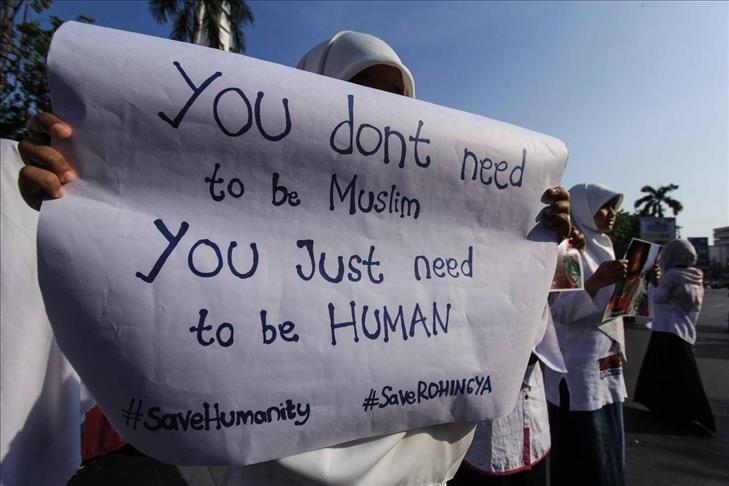
But the election has already been marred by allegations of vote-buying and a populist Buddhist nationalist movement that has succeeded in its push to exclude large numbers of Muslims from taking part.
The government earlier this year withdrew temporary citizenship cards from hundreds of thousands of Rohingya Muslims, a move that stripped them of their voting rights.
In recent weeks dozens of Muslim parliamentary candidates have been rejected by the election commission for failing to meet strict citizenship criteria, though many deny they have breached the rules.
Others have been turned away by their own parties, including the opposition National League for Democracy (NLD), in what appears to be an attempt to appease a powerful anti-Muslim movement led by Buddhist monks.
Suu Kyi, who spent the best part of two decades under house arrest for leading a pro-democracy movement, will face off with the ruling Union Solidarity and Development Party for seats in the two-chambered parliament.
She said in her video message that a “smooth” transition from military rule is almost more important than free and fair elections.
Under the current constitution Suu Kyi will not be allowed to become president even if her party wins a majority, as is widely expected, because she has two foreign sons.
But the NLD will be able to choose a presidential candidate to stand in her place if it wins enough seats.
Newly elected MPs will meet early next year to nominate three presidential candidates. One is chosen by the Upper House, where ethnic parties are likely to hold sway and the second by an unelected bloc of military MPs, who make up a quarter of seats in both houses.
A third candidate will be nominated by the larger Lower House, where the NLD is likely to have the most seats.
The entire parliament will then vote on the three nominees. The two runners up will become vice presidents. The new president will then appoint a cabinet.
Because the Lower House is the largest, the NLD’s candidate has a good chance of winning if the party does as well as expected. There is no polling data, but in both a 2012 by-election and an annulled general election in 1990 the party won landslide victories.