By Alex Jensen
SEOUL
The latest installment in a long-running saga concerning the possible deployment of a U.S. missile-defense system in South Korea arrived Monday, as a senior Beijing foreign ministry official held talks in Seoul.
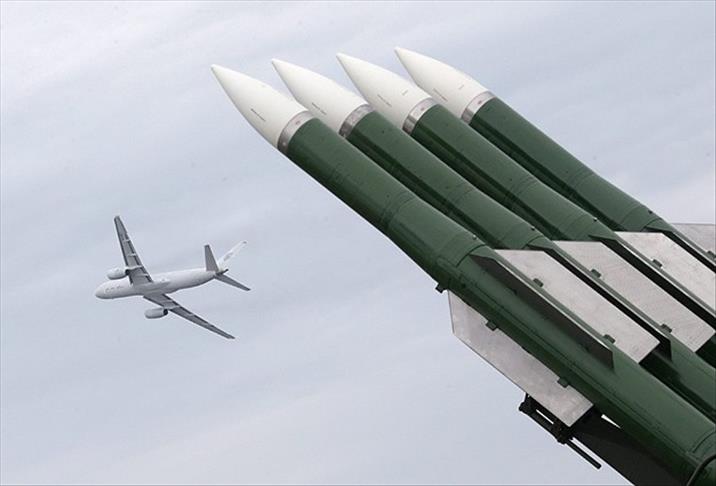
The system in question, known as the Terminal High-Altitude Area Defense or THAAD, has been a controversial issue even among South Korean lawmakers, with conservative and liberal parties arguing over its merits and whether it would undermine Seoul's sovereignty.
But Beijing's representative was clear after Monday's meeting in the South Korean capital.
"We had very candid and free discussions over the THAAD issue," Chinese Assistant Minister of Foreign Affairs Liu Jianchao told reporters. "It would be appreciated if Seoul takes account of China's concerns and worries."
The official line from both Seoul and Washington is that there have been no formal talks, but South Korean media has widely reported since Sunday on the U.S. making the missile-defense system available to Seoul in emergency situations.
A key decision on Seoul's part will be whether to agree to -- or even push for -- the full-time deployment of U.S. missile-defense system.
The U.S. already has nearly 30,000 military personnel stationed in South Korea as a legacy of the 1950-53 Korean War -- after which the two Koreas have technically remained in a state of conflict as they never signed a peace treaty.
Liu also "expressed hope again" that South Korea will become a founding member of the China-led Asian Infrastructure Investment Bank, which is seen as a rival to the U.S.-led Asian Development Bank.
With Beijing setting a deadline for a decision on that by the end of March, and with Britain breaking the western mold by planning to join the new bank, Washington may aim to exert additional pressure on Seoul during their own talks Tuesday.
U.S. Assistant Secretary of State Daniel Russel was expected to arrive in South Korea Monday for a two-day stay.