by Ayhan Simsek
BERLIN
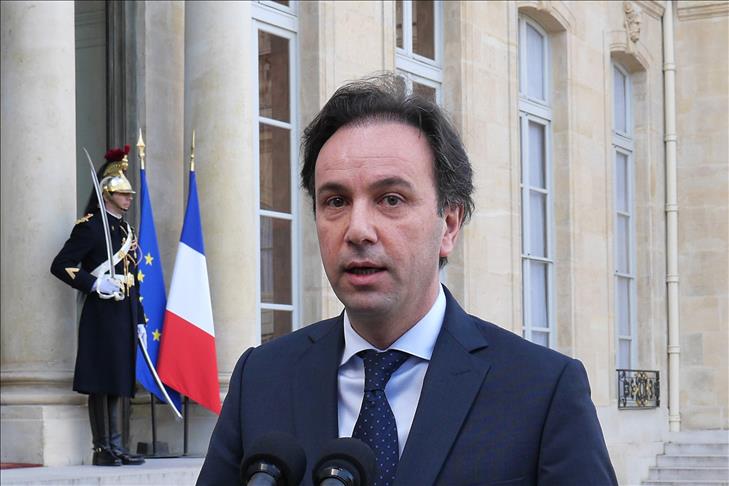
Germany will host a second round of talks between Syria’s main exiled and domestic opposition groups in Berlin within two weeks, Syrian opposition leader Khaled Khoja told The Anadolu Agency in an interview.
“I have asked the support of German Foreign Minister Frank-Walter Steinmeier for holding a second round of talks in Berlin. He has welcomed and accepted our proposal,” Khoja told AA Tuesday.
Khoja, who leads the largest wing of the opposition, the Syrian National Coalition, said: “Germany will facilitate the process as a venue for the talks. But it will not intervene in the talks.” He stressed that the dialogue would remain a Syrian-owned and led process.
He underlined that Berlin talks would build on the significant progress achieved in the first round of talks held in Paris last month.
Khoja spoke optimistically about reaching a final agreement in the next round of talks and stressed that they would also like to invite other opposition groups to join the process. “We have already reached an agreement on almost 90 percent of the issues during our first round of talks in Paris,” he said.
“If we can agree on a new framework among us, then we will also invite other groups to back this process. But this will not lead to the formation of a new opposition group, it would rather develop a united stance,” he added.
Khoja gave the interview after holding talks with German officials on the volatile situation in Syria in Berlin Tuesday.
First round
The Syrian National Coalition had reached a broad agreement with the largest domestic Syrian opposition group, the National Coordination Committee, on a draft roadmap for a political solution to the civil war in Syria, during the talks held in Paris on Feb. 26.
The draft document from the first round stipulated that the reference of any political settlement must be the relevant UN Security Council resolutions, and Statement of the Work Group for Syria issued in June 30, 2012, which is also known as the Geneva Statement.
The document said, “The primary goal of negotiations with the Assad regime is to establish a civil, democratic, pluralistic system that ensures equal rights and duties for all Syrians. It stresses that a regional and international consensus is needed for negotiations to succeed.
“The two sides also agreed to continue their efforts to hold more intra-opposition consultations for the purpose of reaching a common vision and a plan of action towards reaching a political settlement,” it added.
The talks are seen as an effort to unite the disjointed Syrian opposition, which is currently split into various groups.
The Syrian National Coalition is considered the largest wing of the Syrian opposition. By 2013, at least 20 states and international organizations, including the U.S., Turkey, Germany, the EU and the Arab League, had recognized the Syrian National Coalition as the legitimate representative of the Syrian people.