JERUSALEM
In a volte face from the usual rhetoric, Israeli premier has indicated a commitment to a two-state solution to the Middle East conflict that has left tens of thousands of people, mostly Palestinians, dead.
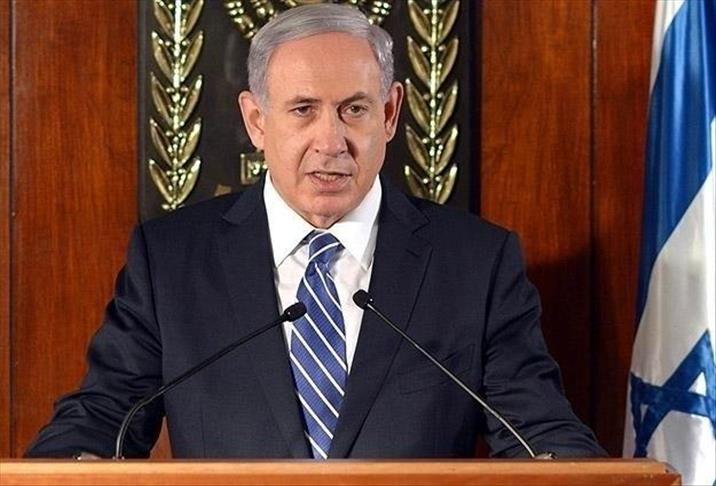
Addressing a joint conference with Czech Foreign Minister Lubomír Zaoralek in Jerusalem on Monday, Prime Minister Benjamin Netanyahu said: "We want two states for two peoples, Israel as a state for Jewish people and a demilitarized Palestinian state."
Netanyahu, however, blamed the Palestinian side for allegedly running away from the path of negotiations.
"They ran from [negotiations with previous Israeli leaders] Ehud Barak, they ran from Ariel Sharon, they ran from Ehud Olmert and now they run from me," he said.
He alleged that Palestinians had refused U.S. Secretary of State John Kerry’s framework over the crisis and instead approached Hamas and the UN to impose sanctions on Israel.
"The international community should stop giving the Palestinians a free pass," he added.
Meanwhile, Avigdor Lieberman, chairman of the Israeli right-wing Yisrael Beiteinu party, predicted a new violent summer between Israelis and Palestinians.
Last year in the summer, Israel launched a weeks-long offensive on the Gaza Strip, with the stated aim of staunching rocket fire from the blockaded coastal enclave, which left thousands of Palestinians, mostly civilians dead and thousands of Palestinian homes destroyed.
“No one can prevent the confrontation next summer,” Lieberman told the Israeli channel 7, adding that after a year since Israel’s Operation Protective Edge in Gaza, there was what he described as a “complete loss of deterrence”.
"The State of Israel has given a tacit approval for Hamas to works seven days a week, 24 hours a day to build tunnels and produces more lethal missiles" he alleged.
Lieberman added that the current Israeli coalition was very weak and would not last until the end of 2015.
Over 2,160 Palestinians, mostly civilians, were killed -- and some 11,000 injured -- in the Gaza offensive last summer, which finally ended with a cease-fire deal signed in August. At least 73 Israelis -- 68 soldiers and five civilians -- were also killed during the offensive, which also saw 2,522 Israelis injured, including 740 military personnel.
Peace talks between Israeli and Palestinian negotiators ground to a halt one year ago over Israel's refusal to release a group of Palestinian prisoners despite earlier pledges to do so.
The roots of the Palestine-Israel conflict date back to 1917, when the British government, in the now-famous "Balfour Declaration," called for the establishment in Palestine of a national home for the Jewish people.
In 1948, with the expiry of a UN "mandate" awarded earlier to Great Britain, a new state -- Israel -- was declared inside Palestine.
As a result, some 700,000 Palestinians fled their homes, or were forcibly expelled, while hundreds of Palestinian villages and cities were razed to the ground by invading Jewish forces.
Israel went on to occupy East Jerusalem and the West Bank during the 1967 Middle East War. It later annexed the holy city in 1980, claiming it as the capital of the self-proclaimed Jewish state -- a move never recognized by the international community.
Palestinians want their own independent state in the Gaza Strip and West Bank, with East Jerusalem as its capital.