20 March 2016•Update: 28 March 2016
By Zahid Rafiq
SRINAGAR, Jammu Kashmir
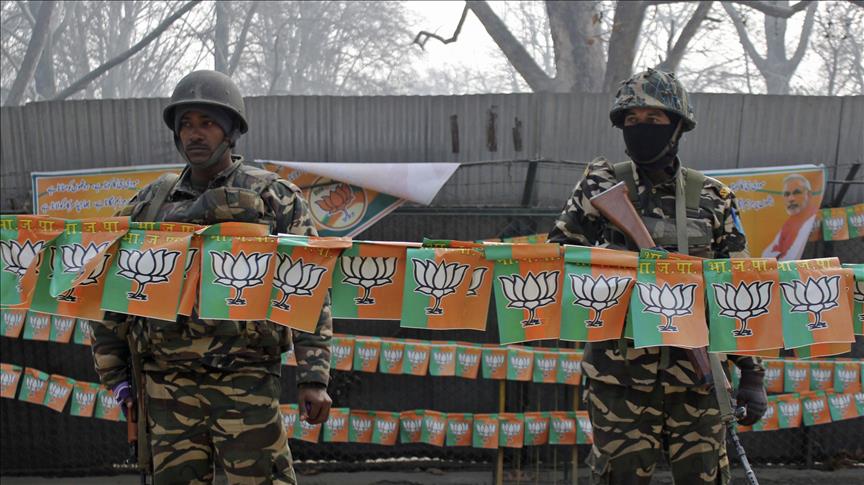
With fresh assembly elections around the corner in Indian-held Jammu Kashmir, the People's Democratic Party (PDP) and India’s rightwing Hindu Bharatiya Janata Party (BJP) appear to have failed to re-stitch their earlier alliance.
The region’s one-year-old PDP-BJP coalition government ended earlier this year with the death of Mufti Mohammad Sayeed, PDP leader and chief minister of the region.
Following Sayeed's death in January, his daughter and political heir, Mehbooba Mufti, refused to be sworn in as new chief minister until the BJP -- now in power in India -- promised to fulfill promises made when it entered into its earlier alliance with the PDP.
After over six months of deliberations, BJP leaders on Friday said talks had broken down, asserting that they were in "no mood" to entertain conditions set by their former coalition partners.
"No new demand is acceptable to us," the BJP official in charge of deliberations said. "If there are new demands [by the PDP], they can be taken up once a new government takes over."
PDP leaders, for their part, were visibly upset by the snub from New Delhi.
"We had only asked for the fulfillment of earlier promises within a stipulated timeframe," a senior PDP leader, requesting anonymity, told Anadolu Agency. "No new conditions were put forth."
According to PDP sources, the party merely wanted the BJP to lay out a timeframe for delivering on promises made when the two entered into their earlier alliance.
"There is a promise to return two hydro-power projects to the state; to redeploy army troops from pre-agreed and designated spots; to develop the cities of Jammu and Srinagar as ‘smart cities’; and to enhance remunerations for flood relief," the PDP leader said.
In the absence of a functioning government, the region is currently being administered by NN Vohra, an Indian-installed governor.
The assembly, meanwhile, will be dissolved on April 18 unless a combination of parties can come together -- with a minimum of 44 members -- to form a new government.
Jammu Kashmir’s pro-independence leadership, for its part, refuses to participate in upcoming polls held under Indian rule, calling them "a masquerade intended to give the impression that a democracy exists in the region" and a "sly waste of time and energy".
Kashmir, a Muslim-majority Himalayan region, is held by India and Pakistan in parts and claimed by both in full. A small sliver of Kashmir is also held by China.
Srinagar is the summer capital of the Indian-held portion of Kashmir (Jammu Kashmir).
Pakistan and India have fought three wars -- in 1948, 1965 and 1971 -- since the partition of the latter in 1947. Two of the conflicts were fought over Kashmir.
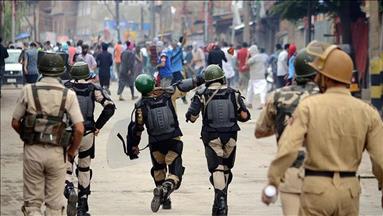
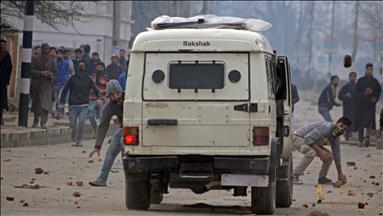
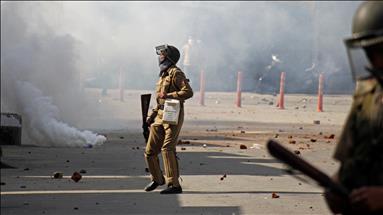
Since 1989, Kashmiri resistance groups in Jammu Kashmir have fought Indian rule to demand independence or unification with neighboring Pakistan.
Tens of thousands of Kashmiris have reportedly been killed in the violence, most of them by Indian forces.
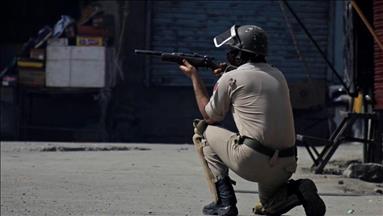
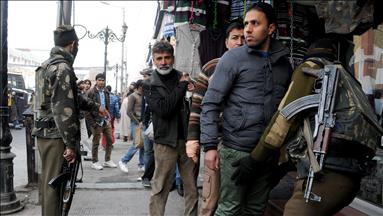
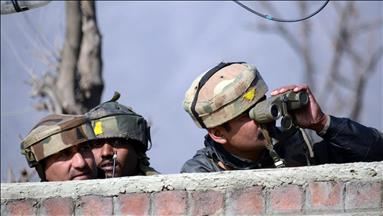
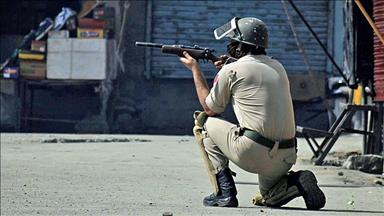
India currently maintains an estimated half-million troops in Jammu Kashmir.