No clear solution to Europe’s migrant crisis
Turkey has received more people than any other state -- almost 2 million -- with little international help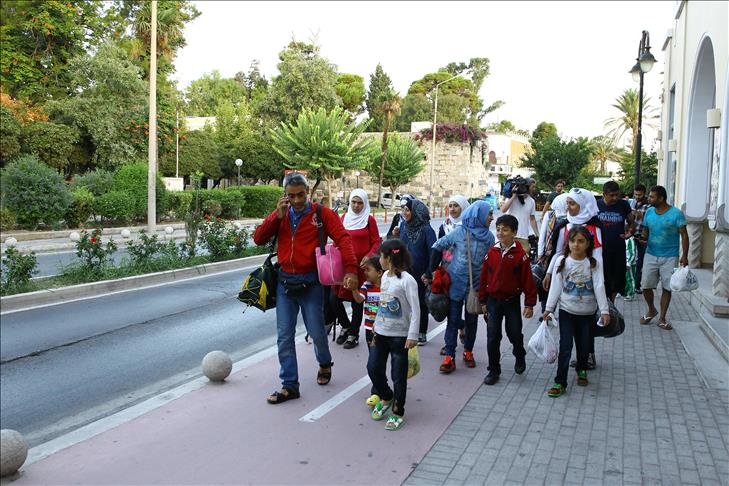
By Andrew Jay Rosenbaum
ANKARA
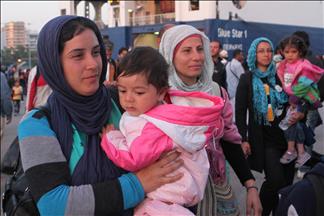
The vast wave of migration from developing countries has become a tremendous challenge to European states which migrants seek to enter -- and experts see no clear way forward.
It is a crisis of unparalleled proportions.
- Turkey has already accepted more migrants than any other country; a total of 1,905,984 million, according to its Directorate General of Migration Management;
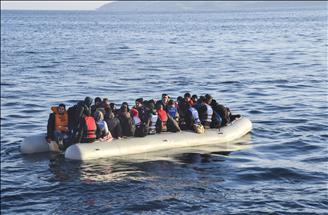
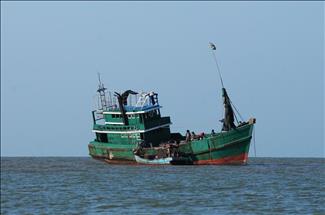
- Nearly 250,000 migrants have already crossed the Mediterranean Sea to Europe this year, more than in all of 2014, according to the International Organization for Migration;
- There are 626,000 applications for asylum across 28 EU member states;
- About 2,000 migrants are camped at the Calais Eurotunnel terminal in northern France, many waiting to stow away in trucks crossing underneath the English Channel;
Faced with this, authorities around the region are struggling to cope.
"There are no easy solutions, and there is little understanding of the issue by most governments. It’s easy to complain about the problem without taking worthwhile action," commented Professor John Salt, head of the migration research unit at University College London.
"We need to urgently address the current strategies Western governments are using to deal with migration," warned Ellie Mae O'Hagan of the U.K. Center for Labour and Social Studies, in an article published in The Guardian on Tuesday.
Turkey goes it alone
Salt told Anadolu Agency on Friday that that there has been little international understanding of the efforts made by Turkey to house the many migrants coming from war-torn Syria:
"You look at the problem in Calais, and you see that it involves about 2,000 migrants -- yet it has been blown up into a crisis of vast proportions. Turkey, with 10 times that number, has not received the attention it deserves. The countries that border on conflict areas are seen as far away from Europe."
The burgeoning numbers of refugees in Turkey are putting the country’s reception capacity under strain, said Ahmet Icduyugu, dean of the College of Social Sciences and Humanities at Koc University, Turkey, in a study published in April 2015.
"The Turkish state, which provides both camp-based services and assistance to urban refugees, finds itself shouldering a significant financial burden: By 2015, the cost had reached $5 billion, of which the international community paid only about 3 percent," Icduyugu said.
"The Syrian refugee crisis demonstrates the limits of the international asylum and protection system, and presents an opportunity for the international community to put the concept of ‘burden sharing’ into practice," Icduyugu pointed out.
UN High Commissioner for Refugees Antonio Guterres has expressed dismay about the silence in the international community about Syrian refugees:
"It is terrifying that on the one hand there is more and more impunity for those starting conflicts, and on the other there is seeming utter inability of the international community to work together to stop wars and build and preserve peace," he said in a speech on Aug. 2.
Migrants face criminalization in Hungary
Salt called attention to the "aggressive" reaction by the Hungarian authorities to migrants at the country’s Serbian border.
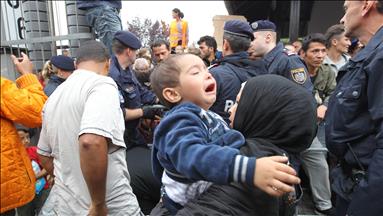
Migrants arrive at the border from Syria, Iraq and Afghanistan, according to human rights officials. More than 120,000 have traveled north from Turkey through Greece and Macedonia to arrive finally at Hungary -- many are smuggled through Serbia by gangs.
At the border, they are met by a barbed wire fence and a massive police presence; Hungary has deployed more than 2,000 police on the 175 kilometer [108 mile] frontier with Serbia. Hungary is also planning to enact new criminal laws which would make illicit border crossings punishable by up to four years in jail.
"The actions of the Hungarian government are the result of a policy failure," Salt says, adding: "Turning migrants into criminals simply extends the scope of the problem."
'Media circus'
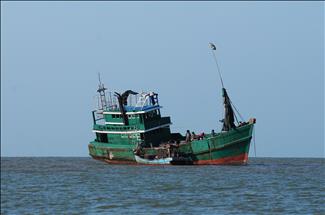
Meanwhile, close to 100,000 migrants arrive every month at the Greek border, according to government statistics. More than 50,000 have tried to reach Italy by boat, officials for Doctors Without Borders, working in the country said in June.
Given the numbers that are gathered at borders regions of Turkey, Hungary, Italy and Greece, the 2,000 migrants camped at Calais are generating a “media circus” that their numbers do not warrant, according to Salt, as political motives hold sway over humanitarian concerns.
Amnesty International said Thursday that the U.K. should work alongside EU member states to protect “desperate people”. The organization called for the establishment of services to process and integrate migrants.
Instead, the British and French governments are building a ‘control center’ at Calais, and are reinforcing security around the tunnel, intending to keep migrants out, French Interior Minister Bernard Cazeneuve announced Thursday.
"Could the situation at Calais be different?," asked Amnesty International in a note published in July. "Yes, there are solutions. With true solidarity among the nations of Europe, a workable humanitarian solution could be found."
‘Dublin Regulation’ and European responsibility
The problem in Europe is made worse by antiquated regulations, experts say.
With 626,000 asylum-seekers at its borders, one might think that the EU would rethink its rules governing the process.
At present, the relevant legislation is EC law No. 604/2013, which is often referred to as the ‘Dublin Regulation’.
This rule places the responsibility to deal with asylum requests with Europe’s border states, where migrants most often first enter the EU. This means that migrants who travel away from borders to other countries are deported back to the EU member they first entered.
As Amnesty International pointed out in a report published in July, the border states often have markedly less resources to process migrants than do other countries in Europe.
So the burden is placed squarely on the countries least able to bear it.
In August, the European Commission approved 23 multiannual national programs under the Asylum, Migration and Integration Fund (AMIF) and the Internal Security Fund (ISF).
The total funding for the agreed programs is approximately €2.4 billion ($2.7 billion) for the period 2014-2020.
“Money will now be able to flow to frontline member states such as Greece and Italy, and to other EU member states also dealing with high migratory flows,” the Commission said in a statement published on Aug. 10.
With this allocation of funds, the Commission has proposed immediate search-and-rescue proposals, an emergency relocation mechanism and a resettlement program based on the size and ability of each country to take a modest number of refugees.
Germany has offered to receive up to 800,000 people; at the other end of the spectrum, Slovakia has offered to accept 200 migrants but apparently only if they are of the Christian faith, according to media reports.
There are also proposed policies to immediately address the issue of people smuggling and to develop partnerships with the origin countries and ‘launch points’ of mass migration.
“But there is a widespread belief that key parts of EU migration law and intergovernmental agreements are not working or have been ignored for national advantage,” said Claude Moraes, chairman of the European Parliament's Civil Liberties Justice and Home Affairs Committee in an article published on Al-Jazeera’s website on Aug.7.
"The main problem preventing EU state cooperation is the national political pressure generated inside of each country. Many sitting governments are concerned by effects of austerity and constantly look over their shoulders at far right populist parties or are, in some cases, actually in coalition with them -- past or present," Moraes explained.
"To break out of this cycle, leadership is critical," he added.