By Mohammed Amin
KHARTOUM
As the world celebrates the World Press Freedom Day, many journalists in Sudan decried continued restrictions under which they struggle to operate.
"The Sudanese press witnesses its worst situation as the authorities hijack the press, creating a serious intimidating atmosphere among the journalists," award-winning journalist Abdel-Moniem Suleiman told The Anadolu Agency.
In 2009, the government replaced the highly-restrictive 2004 Press and Printed Press Materials Law with a revised version, which media freedom organizations criticized as falling far short of international standards.
Critics say the law allows for restrictions on the press and allows security agencies to shut down newspapers under the pretext of national security.
"Restrictive laws have made it difficult to maintain any freedom of expression in the country," said Suleiman, who heads the Hurriat (Freedoms) news website.
"Unless the Sudanese journalists take a decisive stand against these laws, more restrictive ones could follow," he warned.
According to the local Journalists for Human Right (JHR) watchdog, authorities have confiscated 66 editions of various papers between May 20, 2014, and April 20 of this year, a number that was described by the local watchdog as "unprecedented."
Sudan has been for years on the blacklist of Reporters without Borders in terms of freedoms of press violations, a label that the country's journalists say is well justified.
The country is now ranked 174 out of 180 countries on the World Press Freedom Index.
The government, for its part, has repeatedly denounced the criticism, suggesting that press freedoms are "good" compared to the surrounding Arab and African nations.
Gagging critics
Many journalists accuse the government of banning journalists from travelling abroad; pressuring media outlets not to publish articles by specific columnists and confiscating newspapers copies.
One of those who say they are banned from writing in Sudanese newspapers is Faiz al-Silaik, the former editor in chief of the Freedom Bells.
The newspaper was shut down by security agencies in 2011 over alleged links to the Sudan People's Liberation Movement - North Sector (SPLM-N) rebel group.
Al-Silaik, who has been living in exile since the closure of his paper, accused the government of systematically cracking down on journalists.
"Sudanese journalists are working under serious conditions of intimidations all the time," he told AA.
"But our voices have reached our people inside Sudan through online and social media," insisted al-Silaik.
"Despite the bad experience of being in exile because of the government practices, but we still manage to write freely about the deteriorating situation in Sudan," he added.
Khartoum has lifted and imposed media censorship several times since 2005.
It first lifted the censorship in 2005 following the signing of the Comprehensive Peace Agreement (CPA), which ended a decades-long civil war with the south.
The censorship was imposed again after an offensive on capital Khartoum by the Darfur-based Justice and Equality Movement (JEM) in 2008.
It was lifted yet again before the presidential election in 2010, only to be imposed a year later after the secession of South Sudan.
And just months before the just-ended presidential elections, the security crackdown on Sudanese press became even fiercer.
In one day – Feb. 16 - the authorities confiscated a total of 13 newspapers, according to the JHR,
Reporters without Border (RWB) has considered that day as the "worst day" in the history of Sudanese media.
The pro-opposition Sudanese Journalist Network described the mass confiscations as "a massacre for the press."
Dos and Don'ts
The government, meanwhile, stands accused of placing restrictions on what the media can cover.
"Different kinds of malpractices to stifle media are practiced in Sudan," reporter Ahmed Younis told AA.
"The journalists have even been told what to cover and what to ignore," he lamented.
"The authorities have always summoned journalists to security offices to order them what to be published," added Younis, who works as the Khartoum correspondent for the London-based Al-Sharq Al-Awsat.
A reporter, who asked for anonymity for security reasons, told AA that security agencies had distributed a list of topics that should not be raised.
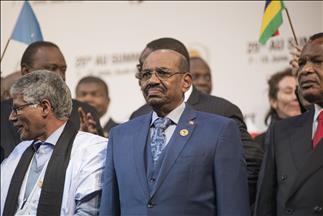
Among those are the International Criminal Court's arrest warrant against President Omar al-Bashir; the activities of army and intelligence; divisions within the ruling party; and corruption scandals involving government officials, which are widely circulated in social media, he added.
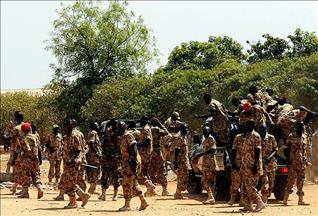
The war-torn region of Darfur has also been a no-go area for journalists since the eruption of the conflict in 2004 between the government and rebel groups.
The same reportedly applies to the situation in the South Kordofan and Blue Nile states, where rebels groups have been fighting government troops for years.
According to the JHR watchdog, the two states have been inaccessible for reporters and aid organizations over the past three years.
"The general atmosphere of the deterioration of the political and security conditions is proportionally reflected on the freedom of the press," said Faisal al-Bagir, the chairman of JHR.
The pro-governmental Sudanese Journalists Union, however, has downplayed the allegations of systematic press freedom violations.
It urged the government, meanwhile, to reform the regulations organizing the press in Sudan.
"We should reach some understanding to the old argument between responsibilities and freedom to create a more healthy atmosphere for media in Sudan," the union's chairman Sadig al-Rizaigi told AA.
Obied Morwah, the secretary general of the National Council for Press and Publications, has refused to comment.
Alaa al-Din Mahmoud, the chief of the Sudanese Journalist Network, expects more decline in press freedoms, especially with the recent reelection of al-Bashir for another term in office.
"The situation is very alarming and all indications show that the Sudanese press is in a big dilemma," he told AA.
"On World Press Freedom Day, we cannot but look pessimistically to the future of the press in Sudan," said Mahmoud.