ANKARA
Britain’s center-right Conservative government set out its legislative program on Wednesday, including plans for an in-out EU referendum and increased devolution to Scotland.
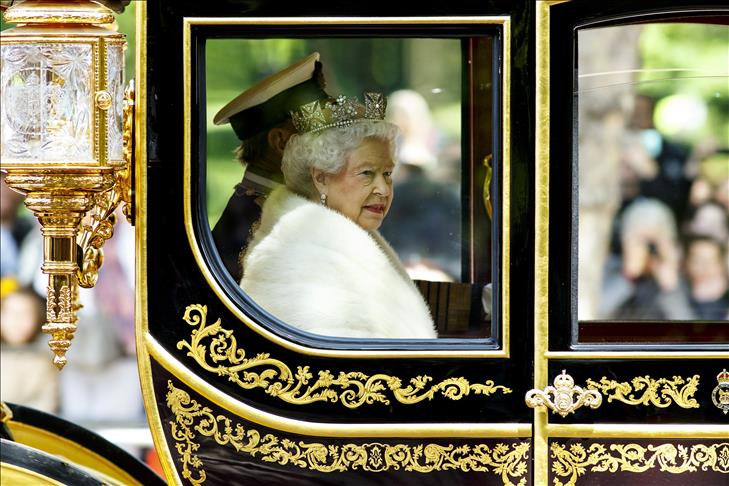
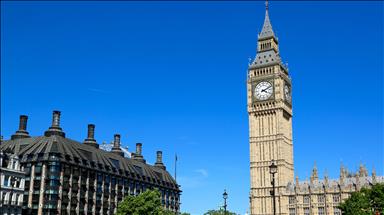
The proposals were laid out in the Queen’s Speech, which marks the official opening of parliament, where the sovereign lists the government’s legislative program for the next five years.
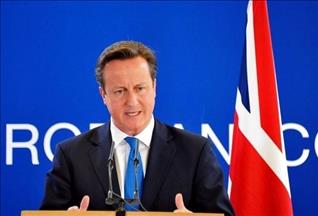
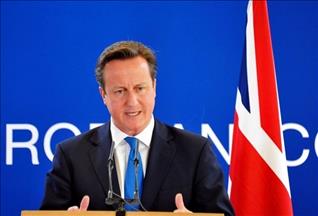
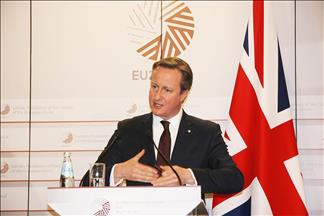
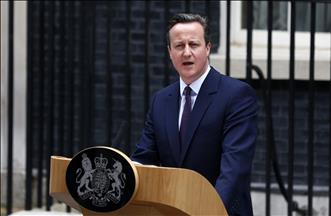
British Prime Minister David Cameron said his government’s program would ensure that "wherever you live, you can have the chance of a good education, a decent job, a home of your own and the peace of mind that comes from being able to raise a family and enjoy a secure retirement."
Other plans set out in the speech were: A five-year lock on income and sales tax rises, exempting those working at least 30 hours on the minimum wage from income tax, a counter-extremism bill to deal with radicalization and requiring higher turnouts for union members voting to go on strike. Plans to repeal the Human Rights Act were delayed after the policy provoked a backlash.
Acting Labour leader Harriet Harman claimed the governing party wanted to threaten "basic rights at work" with the restrictions on union strike votes.
Former Liberal Democrat leader Nick Clegg, whose centrist party formed a coalition with the Conservatives in 2010, said it was “dispiriting” that the government was turning its back on liberalism.
The Liberal Democrats, who lost all but eight of their seats in this month's election, said they would “fight any attempt to weaken the fundamental rights of our citizens. We will stand up for the poorest and the most vulnerable.”
This was the first Queen’s Speech by a Conservative government since 1996. It is current sovereign Queen Elizabeth II’s 62nd personal opening of parliament.
The headline policy is the Conservatives’ manifesto commitment to hold an in-out referendum on Britain’s membership of the EU by 2017, giving Prime Minister David Cameron time to renegotiate the terms of the U.K.’s membership of the 28-nation bloc.
The BBC reports that while the final phrasing of the referendum question is yet to be decided, the 'yes' option will be to stay in the EU.
The increased powers to be devolved to Scotland include control of income and sales tax, but the Conservatives also pledged to give greater authority to English MPs with regard to solely English issues -- this would mean that MPs from Scotland and Wales would not be allowed to vote on laws regarding England alone.
The left-wing separatist Scottish National Party won all but three of the 59 seats in Scotland, making the anti-austerity party the third-largest in parliament.
"In terms of more powers for Scotland, it is an early test of the U.K. government's good faith that the Scotland Bill lives up to both the spirit and the letter of the Smith Commission,” SNP parliamentary leader Angus Robertson said.
The Smith Commission was set up after the defeated Scottish independence referendum last year to set out what powers should be devolved to Scotland.
"The Scottish government has already set out the shortcomings of the draft legislation published in January, and submitted detailed amendments to the UK government to bring their original proposals into line with Smith, so there can be no excuse,” he said.
Controversial plans to scrap the Human Right Act and replace it with a British bill of rights were put on hold to allow a wider consultation to take place.
“The Human Rights Act gets a bad press but has ensured that deaths in police custody are properly investigated,” said Andy Burnham, shadow health secretary and Labour leadership candidate. “We have seen far too many examples in recent times of the state riding roughshod over the vulnerable.”
The Human Rights Act incorporates the European Convention on Human Rights into the British legal system, meaning the European Court of Human Rights in Strasbourg, rather than the U.K. Supreme Court, is the final court of appeal regarding human rights issues – a source of ire for British Eurosceptics.
“The Tory (Conservative) government’s priority is ending human rights, and we will work across party lines and with colleagues in the Scottish Parliament to stop them scrapping the Human Rights Act,” Robertson said.
"It just indicates that a majority of 12 in Parliamentary terms is actually very little,” former SNP leader Alex Salmond said about the delay in attempting to scrap the Human Rights Act.
“There's going to be a range of key votes where the government comes under real pressure and will find themselves in headlong retreat,” he told BBC Radio 4.
"We will absolutely do it,” Environment Secretary Liz Truss said on the same program. “It is a manifesto commitment.”