03 October 2015•Update: 03 October 2015
By Mohamed Sheikh Youssef
ISTANBUL
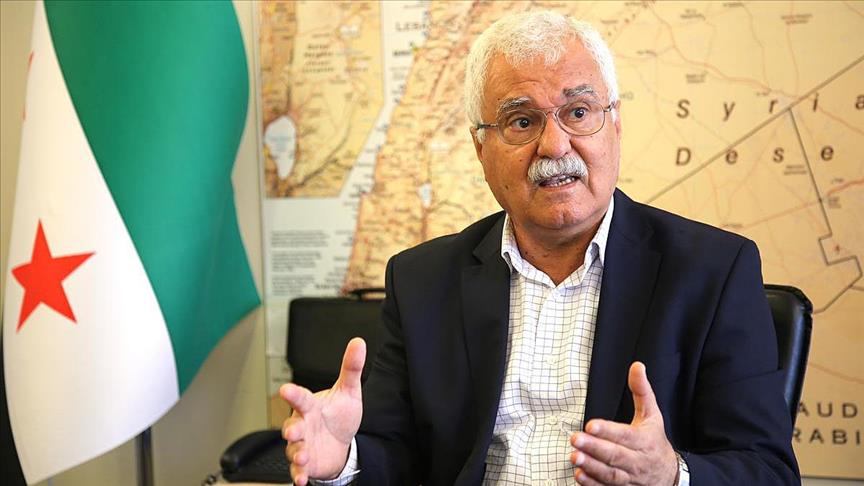
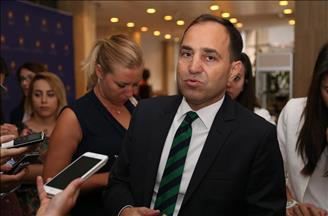
George Sabra, head of the Syrian National Council, which opposes the Syrian regime of President Bashar al-Assad, says that stepped-up Russian intervention in the war-torn country is aimed at undermining a political solution to the years-long conflict.
“The 70th session of the UN General Assembly, now underway in New York, is being held under the shadow of stepped-up Russian intervention in Syria, including the deployment of Russian troops on the ground,” Sabra said in exclusive statements to Anadolu Agency.
“But it is also a political counter-attack intended to undermine a political solution to the conflict based on the Geneva-1 statement of June 2012, which led to last year’s Geneva-2 summit,” he added.
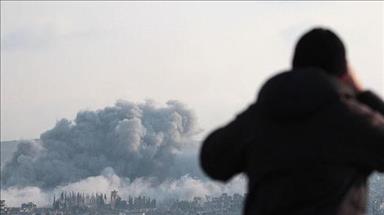
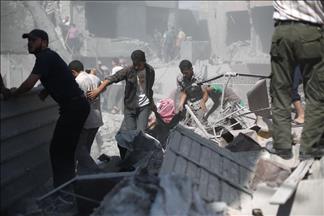
On Wednesday, Russian warplanes struck targets inside Syria for the first time. According to a Russian Foreign Ministry spokesman, the strikes had targeted positions held by the Daesh militant group.
But according to Sabra, this week’s Russian aggression in Syria was not aimed at degrading Daesh’s military capacities, but at “propping up the Syrian regime and derailing the prospect of a political solution that does not include Assad”.
“Russia wants the Assad regime to play a role in any future political solution,” he said.
“But the international community cannot accept this,” he added, “because Assad himself is the one who opted for a military solution, while Iran -- Assad’s main ally -- did not recognize the Geneva-1 statement.”
Sabra went on to urge participants at the ongoing UN General Assembly session to take a stand against Russian military intervention in Syria by “building a political solution based on the 2012 Geneva-1 statement.”
Russia-Syria axis
As for the reasons behind Moscow's close alliance with Damascus, Sabra said this was based on national, regional and international factors.
On the national level, Sabra said, Russia enjoyed considerable historical ties with the Syrian people.
“More than 35,000 Syrians have graduated from Russian universities,” he noted. “And there was a substantial military relationship between the two countries during the period of conflict with Israel.”
“There is also the issue of Syrian oil -- both on Syrian territory and in its territorial waters -- that Russian companies salivating over,” said Sabra.
On the regional level, meanwhile, according to Sabra, “Iran now controls large swathes of Syrian territory, and here Russia -- which knows the regime is in a state of collapse -- doesn’t want to leave everything to Iran.”
“In this respect, Russia decided to intervene more forcefully in order to take its share of the Syrian pie,” he said.
In Sabra’s opinion, the recent Russian buildup in Lattakia in western Syria “is intended primarily to offset Iranian influence.”
New Cold War
Finally, on the international level, Sabra believes the Syria conflict is also largely related to Russia's ongoing conflict with the West.
“Stepped-up Russian intervention in Syria must also be seen in light of recent events in Ukraine, which led to the imposition of Western sanctions -- and an economic boycott -- on Russia,” he explained.
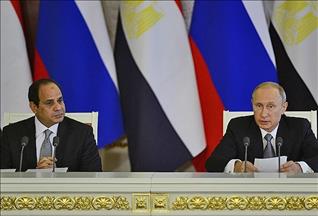
Sabra added: “This is related to old Soviet-era ambitions, which President Putin appears to want to revive, of making his country a superpower again; a force to be reckoned with in all affairs of the region.”