By Dilrukshi Handunnetti
COLOMBO, Sri Lanka
Sri Lanka has been left with a hung parliament Wednesday after the ruling United National Front (UNF) political alliance failed to secure the working majority it had sought to pave the way for political reforms in Tuesday's election.
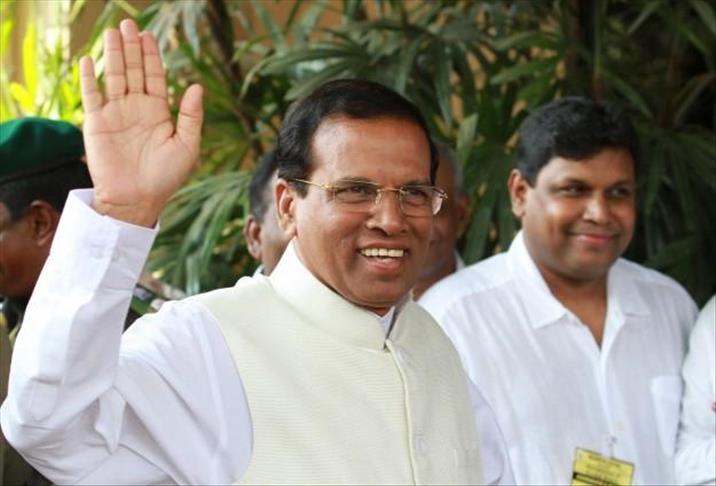
Prime Minister Ranil Wickremesinghe is expected to be sworn in Thursday as he retained his post, fighting off an attempt by divisive ex-president Mahinda Rajapaksa to make a political comeback as prime minister.
His UNF alliance obtained 106 seats from the 225 in parliament while Rajapaksa's United Peoples' Freedom Alliance took 96, with the remaining going to fringe and minority parties including the Tamil National Alliance from the ethnic Tamil dominated north of the country.
The result was not surprising for many; the UNF had been considered the favorites to win despite the strong push to return Rajapaksa to power only months after he was voted out in the January presidential election.
Current President Maithripala Sirisena, who reduced the powers of the executive presidency previously enjoyed by Rajapaksa, had hoped a fresh election would help him push through a campaign of political reforms that had stalled under the previous parliament.
According to former Cabinet spokesman Dr. Rajitha Senaratne, however, the results are an endorsement of Sirisena's political vision.
"We campaigned for a mandate that will help us establish a national government to work on national priorities. The people have endorsed that," Senaratne told Anadolu Agency.
Rajapaksa had previously rejected Sirisena's call for a unity government that cut across parties but Senaratne claimed the result showed that Sri Lankans wanted the two main alliances to work together on key issues.
Political analyst Dr. Gamini Viyangoda said the new government will need to "take forward the process of democratic reforms."
"The challenge before the new administration will be to do a fine balancing act of developing the economy, ensuring rapid democratic reforms, curbing corruption and introducing a process of reconciliation," Viyangoda said.
The focus of the election had been on Rajapaksa's attempt to return to power and what it would mean for Sirisena's reforms. Rajapaksa rejected many of Sirisena's policies, including his call for a unity government.
Rajapaksa has remained popular with much of the country's majority Sinhala Buddhist population but not with minorities, including the large ethnic Tamil minority and Muslims.
Under Sirisena, Rajapaksa and his family have been investigated for corruption while numerous deals struck with China have been scrutinized. Pressure has also increased for a probe into war crimes allegedly committed under Rajapaksa's leadership during the final stages of the 27-year civil war, which ended in 2009.
According to Mavai Senathirajah, a senior member of the Tamil National Alliance, the voting reflected the changes people hope to see in the future, as attempts to forge reconciliation continue.
"Six years after the war, in January, people voted for a specific change and this in many ways, is a continuation. It is the intention of the people of the North and the East that a process can now begin, which is inclusive and just, so that the political issues can be addressed and there could be reconciliation," said Senathirajah.