By Dilrukshi Handunnetti
COLOMBO, Sri Lanka
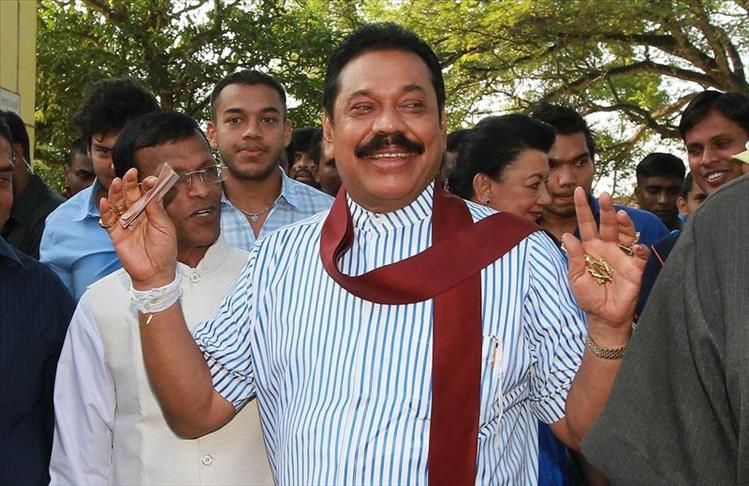
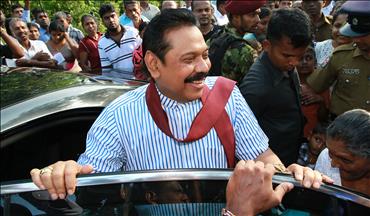
Sri Lanka's divisive ex-president Mahinda Rajapaksa has conceded defeat in Monday's parliamentary election.
Rajapaksa had been hoping for his Sri Lanka Freedom Party and its allies to win a majority in the election, but conceded on Tuesday that his attempt to return to power, this time as prime minister, had failed.
A spokesman for Rajapaksa said initial results showed his party's United Peoples' Freedom Alliance (UPFA) would not form the next government but claimed his entry into the fray has made it "an extremely close fight" and offered people a political alternative to the national unity government offered by the ruling coalition.
"He was the campaign leader of the UPFA, still the strongest political alliance in the island. He may not be becoming the next prime minister but he will take his place as a senior parliamentarian," the spokesman said.
Sri Lankan President Maithripala Sirisena had sent out strong indications that he was unwilling to appoint Rajapaksa, his predecessor, as the island's next prime minister, even if Rajapaksa had led the UPFA to an electoral victory.
On August 14, when campaigning concluded, Sirisena wrote to Rajapaksa stating that he would not be considered as the next premier, irrespective of the electoral outcome.
Sirisena followed up by suspending over 20 central committee members of the Sri Lanka Freedom Party, the main constituent party of the UPFA, which both Sirisena and Rajapaksa represent.
Rajapaksa's son, Namal, who contested from the family electorate in Hambantota, in Sri Lanka's deep south, had however topped the party's preference list, indicating the persisting popularity of the Rajapaksa family.
While many from Sri Lanka's ethnic Sinhala Buddhist majority admired Rajapaksa for ending a decades-long civil war in 2009, he was also accused of war crimes, mistreating minorities, corruption and authoritarianism.