WASHINGTON
The U.S. is weighing an increase in the number of Syrian refugees that it resettles, but no decision has yet been made as Europe continues to wrestle with the human cost of the Syrian conflict.
“No decisions have been made about how we're going to do this going forward,” State Department spokesman John Kirby told reporters. “I do think it's safe to assume we'll continue to take them in. What it's going to look like going forward? I just don't know.”
The U.S. settled some 70,000 refugees from around the world this year, Kirby said, adding that the U.S. continues to be the largest aid donor for the Syrian crisis with over $4 billion spent in the relief effort to date, including $25 million to assist resettlement efforts in Europe.
"Resettlement is one option, but it's only one option," Kirby said.
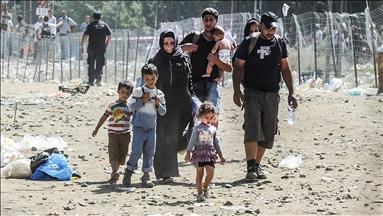
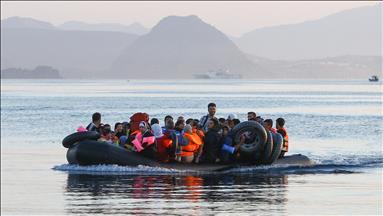
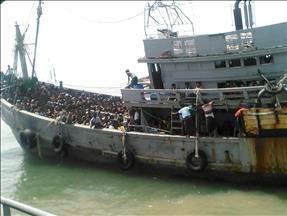
Europe is facing its biggest refugee since the Second World War, with thousands of asylum seekers from Middle Eastern and African countries trying to reach Western Europe.
The continent has continued to be a heavily-sought destination for hundreds of thousands of Syrians fleeing their country’s conflict.
The U.S. has faced criticism for the relatively paltry number of Syrian asylum seekers that it has accepted since the conflict broke out more than four years ago.
Since that time, the U.S. has resettled 1,500 Syrian refugees, with an additional 300 likely to be taken in before the end of the month, Kirby said, noting resettlement efforts should be balanced by a screening process.
"We also have to balance that against the proper vetting procedures to make sure that, particularly when we're bringing in people from that part of the world that we're doing it safely and securely. The American people would expect that," he said.
Some EU members states, including Slovakia, Hungary and the Czech Republic, have said they do not want to accept additional Muslim migrants seeking refuge within their borders, preferring instead to take in only Christians.
Kirby said that the U.S. wants countries to share in the effort to help.
"We'd like to see that the safety of these individuals fleeing conflict is preserved, that they are treated humanely and in accordance with international law," he said.
In a controversial op-ed, Hungarian Prime Minister Viktor Orban claimed that Muslim refugees pose a threat to Europe's Christian character.
"We should not forget that those coming here have been raised in another religion, and represent a fundamentally different culture. Most of them are not Christians, but Muslims. This is an important question, as Europe and Europeanness have Christian roots," Orban wrote.
Remarks like Orban's drew strong condemnation from American-Muslim leaders who said rejecting Muslim refugees in preference for their Christian counterparts is tantamount to discrimination.
“I think it is pretty clear that if you deny someone refugee status, or deny them assistance as a refugee based on their faith, that is a result of bigotry and intolerance," said Council on American-Islamic Relations spokesman Ibrahim Hooper.
Oussama Jammal, the Secretary General of the U.S. Council of Muslim Organizations, said, "there is a bias and imbalance for the Syrians by the European countries, especially the NATO countries."
But even as the U.S. and the West face mounting calls to do more, resource-rich Arab Gulf states Saudi Arabia, Qatar and the United Arab Emirates have not officially resettled any refugees to date, though they have contributed significant humanitarian aid.
Kirby emphasized the need to find a political solution to Syria's crisis to stem the flow of refugees, saying residents there need a home to call their own.
“What has to really happen is a political transition in Syria that gives them the security and stability to be at home where they want to be,” he added.
The total number of Syrian refugees alone exceeds 4 million worldwide.