Esra Kaymak
29 March 2016•Update: 22 April 2016
By Esra Kaymak Avci
WASHINGTON
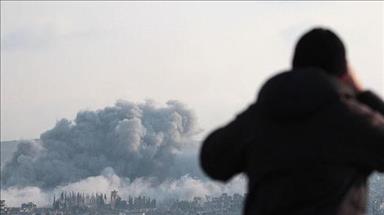
It is "good" that Daesh no longer controls Palmyra it is too early to say if that will affect Geneva talks on Syria, the U.S. said Monday.
"It's too soon to know the degree to which the Palmyra operation is going to affect it one way or the other"said State Department spokesman John Kirby.
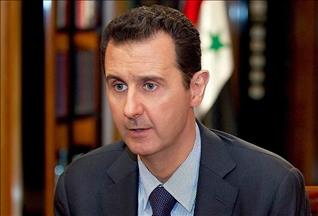
Saying the U.S. did not forget how Daesh destroyed the UNESCO heritage and beheaded a renowned archeologist in the ancient city, Kirby said the Syrian army under command of President Bashar al-Assad could not bring peace to Syria in the long-term.
Russian Foreign Minister Sergey Lavrov told Secretary of State John Kerry that his country wants to try to help UNESCO get into the city and take a look around, according to Kirby.
"I don’t foresee nor I am aware of any discussion about the United States participating in demining exercise there in Palmyra to allow UNESCO to get in," he said.
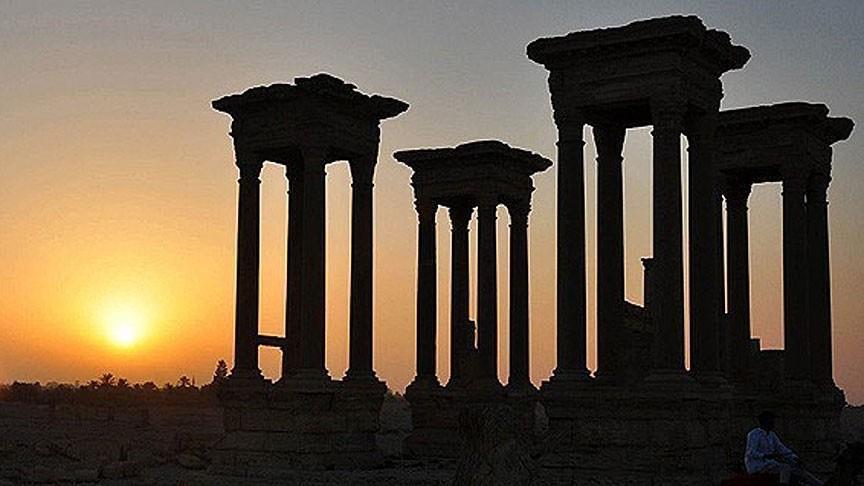
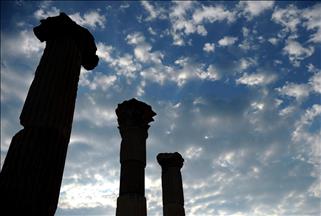
But the U.S. said it would support UNESCO to go inside Palmyra to check historic sites. Syrian regime forces, with Russian air support, recaptured the city of Tadmur, or ancient Palmyra, in Syria’s western Homs province from the Daesh terrorist group on Sunday.
Daesh had destroyed ancient monuments in the city since it had taken control last May. These monuments were designated a UNESCO World Heritage site.
Meanwhile, Kirby said the "first real set of talks in Geneva" were finished currently though there was not a concrete proposal that came out of it to show how the political process was going to take shape.
"While we welcome Daesh being kicked out of Palmyra, we still want to make sure and want to see, both sides: the opposition and the regime, continue to stay at this political process and move forward with it," he added.
The U.S. on Monday announced $20 million in additional aid to the UN and the International Federation of the Red Cross (IFRC) "to respond to increased protection, shelter, and other lifesaving assistance throughout Europe, including in Greece, Western Turkey, and the Balkans," according to the State Department.
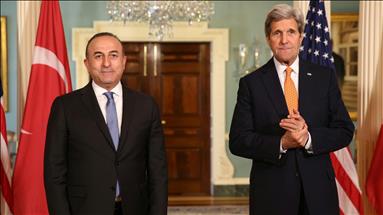
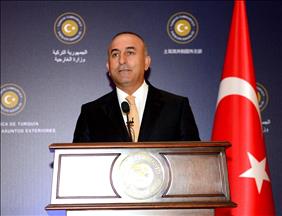
During a joint press conference with the Turkish Foreign Minister Mevlut Cavusoglu before holding a bilateral meeting, Kerry said that the U.S. respected that Turkey was trying to manage the lives of migrants fleeing their country through the Aegean Sea.
"That's an enormous cost," Kerry said while praising Turkey for hosting 2.7 million refugees.
Cavusoglu said Turkey did its best to host the migrants by spending more than $10 billion since the civil war began in Syria in 2011. "We made a deal with European Union to strengthen our cooperation," he added.
"Hopefully, we will be implementing that deal soon."
According to the recently reached landmark deal, Turkey agreed to take back any refugees who went to Greece via Turkey.
In return, Europe will get a like number of refugees.
The deal aims to close the Aegean smuggling route where more than 850,000 migrants reached Greece from Turkey last year alone.