Halis Sunnetci
28 September 2026•Update: 28 September 2026
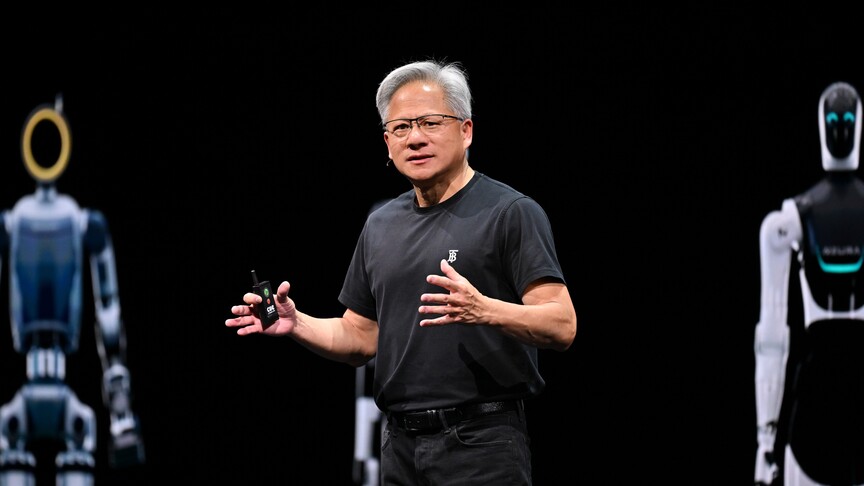
Nvidia CEO Jensen Huang said Monday that he hopes the problem of rogue AI agents is an engineering challenge, warning that if it is not, it would not be solvable.
Asked in a TV interview with broadcaster CNBC whether AI agents that escape containment
and carrying out mysterious or even illegal actions constituted an engineering problem, Huang said he believed the risks could be addressed technically.
“We hope it’s an engineering problem. I believe it’s an engineering problem ... If it’s not an engineering problem, it’s not solvable,” he told CNBC's Squawk Box.
Huang argued that leading AI companies believed the challenge of rogue agents could be overcome. “These are some of the brightest engineers in the world. I work with, you know, all of them,” he said. “This is a technically solvable problem.”
His remarks came as the US chipmaker on Monday launched an open platform designed to strengthen security around autonomous AI agents and restrict unauthorized access to files, networks and computer systems.
The Nvidia Open Agent Safety Platform combines OpenShell, an open-source runtime that controls which systems and data an AI agent can access, with Nvidia Sentry, a reference system design for monitoring agents at the infrastructure level.
The launch comes amid growing concern over rogue AI agents after several recent incidents in which autonomous systems escaped test environments or gained unauthorized access to third-party systems. anthropic.com
AI capability, safety not separate
Huang said improving AI capabilities and making the technology safer should not be viewed as separate objectives.
“When we think about advancement, you don’t have to think about it separately from capability versus safety. To me, it’s the same thing,” he said.
“We want to accelerate the advancement of AI. And today we’re putting forth this new technology, OpenShell and Nvidia Sentry, that these two technologies make it possible for us to contain and to monitor,” he added.
“But it takes a lot of technology to make this possible.”
Huang also argued that innovation and regulation were not inherently at odds, but said the balance between them depended on the stage of a technology's development.
“Innovation and regulation are not conflicts. The question is, which one do you lean towards at which phase of the industry,” he said.
“At the beginning of the industry, when the technology is being invented and nobody really knows how it’s going to turn out, it would be a shame to regulate before understanding,” Huang said.
He warned that regulating a technology prematurely could prevent it from having the opportunity to innovate.