By Hader Glang
ZAMBOANGA CITY, the Philippines
With four days to go until the Philippines' May 9 elections, the presidential peace adviser has advised Filipinos to study candidates' stance on peace in the Muslim south in order to preserve and continue the gains of the outgoing administration.
Some candidates have called for peace talks to include all parties -- rather than just focusing on a few groups -- others have championed the role of the previous administration, while one has underlined the Americans' and Spaniards' role in unsettling the area.
"We have to talk and we have to correct the historical injustices," hard talking presidential favorite Rodrigo Duterte told a presidential debate earlier this year.
In a statement emailed to Anadolu Agency Thursday, Presidential Adviser on the Peace Process Teresita Quintos Deles said she hopes Filipinos will greatly consider the stance of the candidates, as "there are no shortcuts to peace".
"We all worked hard to put the peace process where it is now in the last six years. We are not done yet. We still have so much to do but certainly we are in a much better place than when we found it,” she added.
The adviser underlined that had a law to seal peace in Mindanao not been shelved for electioneering by Congress, peace with the Moro Islamic Liberation Front (MILF) and development prospects for the region would have already born fruit.
The law -- Bangsamoro Basic Law (BBL) -- is the legal sign-off of the Comprehensive Agreement on the Bangsamoro (CAB), which was inked between the government and the MILF peace panels March 27, 2014.
The bill proposes to replace the current Autonomous Region in Muslim Mindanao (ARMM) and establish a more inclusive Bangsamoro autonomous region.
However, the legislation was put on hold due to the inaction of Congress to finish deliberations on the BBL before they adjourned last February for electioneering.
"If the BBL had been passed, the MNLF would be given representation in the Bangsamoro Transition Authority -- the temporary government that will bridge the ARMM and the Bangsamoro -- as well as encourage them to field candidates for the elections in the envisioned parliamentary region," said Deles.
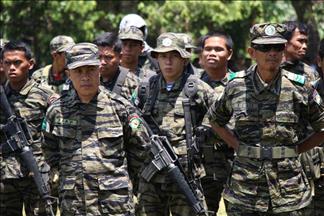
The CAB also provides a roadmap for the implementation of socio-economic programs for the normalization of conflict-affected areas and the transition of MILF combatants back to civilian lives.
"It cannot be completed under our term, but the way forward is clear. The important thing that needs to be done first, however, is the passage of the BBL... It is left to the next administration to finish and implement fully the roadmap."
In February, four of the five presidential candidates vowed during a presidential debate to continue talks with rebel groups to achieve peace in Mindanao and eventually address poverty in the region.
Independent candidate Sen. Grace Poe, daughter of local movie action hero Fernando Poe Jr. , said the peace talks should include all sectors.
"If I become the president, I will continue peace talks but should include all [sides] and we should not choose for a few groups," she said.
She added, however, that an all-out war should be declared against "terrorists" -- Mindanao is also home to a variety of Daesh-linked groups, including the Abu Sayyaf -- who kill and injure people.
"In Mindanao, peace is important, but to the terrorists who kill or hurt, we should never indulge. If they do not want to return [to the government fold and join mainstream society], to talk with the government, all-out war against those who threaten us [will take place] but it should be all-out development in Mindanao."
Poe said there is a need to hold bilateral talks with neighboring countries in connection with the fight against terrorism as many people have lost jobs, noting the importance of infrastructure projects that would connect different towns and provinces.
Meanwhile, Sen. Miriam Defensor Santiago proposed the dismantling of politicians' private armies in the south.
She added that there is a need to "adopt their customary traditional law into our western-style model of the justice system."
Former interior and local government secretary Mar Roxas, the administration's presidential bet, underlined that the outgoing administration of President Benigno S. Aquino III had pushed for the CAB and later the proposed BBL to achieve peace but congress failed to pass it.
"If I become president, I will push through that [BBL] because peace without progress, peace will not happen and peace without progress, progress will not also happen," he said.
Roxas claimed that the infrastructure development brought to Mindanao in the five years of Aquino's administration was double that of projects in the past 12 years.
Davao City Mayor Rodrigo Duterte, for his part, claimed that the war in Mindanao is deeper than some people might think.
"You know this may sound funny to you, but when Magellan landed in Leyte, Islam was already planted firmly in Mindanao... But you know the conquerors and the Americans and Spaniards took Mindanao which is why when the soldiers of Spaniards and Americans... War really," he said.
He said there is a need to discuss and correct the historical injustices against the people of Mindanao.
"We have to talk and we have to correct the historical injustices. I tell you as a mayor of the city of Davao, there will be no peace, there can never be a federal government until we talk to the NPAs [the armed wing of the Communist Party of the Philippines, the New People's Army]. It has to be development, but you have to make the peace," he said.
Duterte underlined that only the passage of Bangsamoro Basic Law will appease the Moro people.
"I would like to tell you, I am telling now the Republic of the Philippines, nothing will appease the Muslim, the Moro people if you do not give them the BBL," he said.
He said the Moro people are ready to compromise, but there should be talk.
"I said we have to talk, we cannot fight forever unless these injustices are corrected."
Meanwhile, Vice President Jejomar Binay said he will push for lasting peace through talks, but believes the root cause of rebellion is poverty and that should be addressed as well.
"I think lasting peace will be achieved if we address first the problem of poverty that has been crawling in your area [the southern Philippines]," said Binay.
"That is the cause why there are those who want to leave and use violence to overthrow the government."