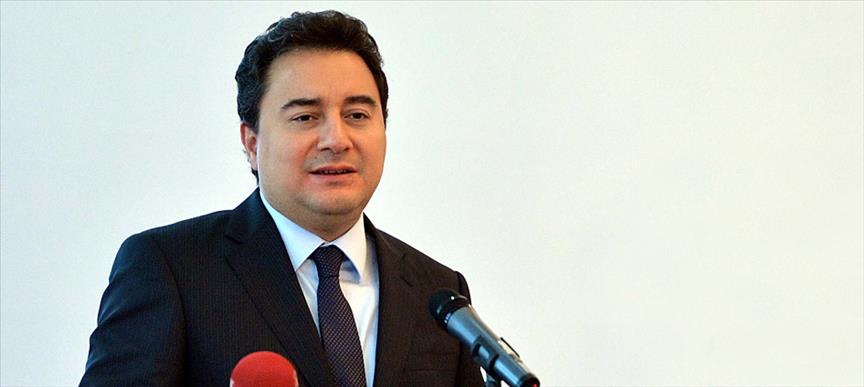
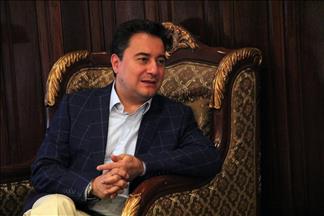
Turkish Deputy Prime Minister Ali Babacan on Friday said that the International Monetary Fund (IMF) had to solve the problem of representation within its organization so that IMF becomes more influential in dealing with the global economic crisis.
In opening remarks made for the Tokyo meetings and those published on the IMF's web site, Ali Babacan said that "it has been more than four years since the onset of the global financial crisis".
"However, global economy is still facing many interrelated risks including debt sustainability, weak growth prospects, persistently high unemployment levels, and commodity price fluctuations," Babacan said.
"Lack of political will to bite the bullet, unresolved structural problems, decelerating competitiveness, and fragile banking system all contributed to the deterioration in the sentiment," Babacan noted.
"Major central banks' efforts were instrumental in averting another financial meltdown. However, sole liquidity injection is not sufficient to turn the tide as the fundamental problems remain unsolved. Governments should make the best use of the opportunity window provided by central banks' liquidity operations," Babacan stated.
"There is no simple solution for all these setbacks. Yet, this does not mean that these challenges are impossible to resolve. The way out from the crisis requires prudence, forwardlooking and long-term policies, as well as timely action. In this regard, without wasting time, political leaders should shoulder the responsibility and find the right balance and justice between today's and future generations," Babacan underlined.
"In the period ahead, maintaining macroeconomic stability and financial stability concurrently remains a major challenge for policymakers. New policies as well as new policy tools might be needed to achieve both stability targets," Babacan indicated.
"Considering the fact that the cost of preventing a financial crisis is much lower than the cost of the crisis itself, it is high time to incorporate macroprudential measures into the toolset of monetary policies. In the meantime, we should pay attention to global policy coordination which will be a determining factor for the global economic and financial stability," Babacan expressed.
"International financial institutions, especially the IMF, have a pivotal role to help us implement coordinated policies. In this regard, I believe that new decision on the "IMF Surveillance" is a critical step that will enable the early detection of risks and provide timely policy advise. This decision will provide a basis for the Fund to engage more effectively with members on domestic economic and financial policies," Babacan said.
"Meanwhile, in order to increase the effectiveness of the Fund, we should also solve the long lasting representation problem, which is critical for its legitimacy. Therefore, we call for the timely completion of 2010 Quota and Governance Reform together with its forward-looking elements. We have achieved noteworthy success by approving these reforms and we should not undermine them by delaying the implementation. All member countries should do their part in this regard," Babacan stated.
"While the winds of change are blowing in the world and some of our neighbors are experiencing severe difficulties, Turkish economy has proved to be resilient and achieved strong growth built upon solid macroeconomic premises. Structural reforms and our prudent policy approach paved the way for growth, development and strong job creation," Babacan noted.
"Several years before the global crisis, we took significant steps to restructure and rehabilitate our banking sector, boost our economy's competitiveness and put our fiscal balance on a sound and sustainable path. During a period of skyrocketing debt stocks, ballooning budget deficits and deteriorating credibility, Turkey managed to differentiate itself by announcing a fiscal consolidation plan very early in the process. In 2009, when many political leaders around the world were declaring fiscal stimulus programs, we did not fall into the trap of responding to popular demands for more government spending and government involvement. We followed a different and politically hard path and implemented a fiscal consolidation program," Babacan said.
"Last but not the least, during the G20 Leaders Summit held in Los Cabos, we declared that we will contribute to the IMF resources by USD 5 billion," Babacan also said.