VALLETTA, Malta
The reinstatement of Hakan Fidan as Turkey's intelligence chief has pleased everyone, Turkish Foreign Minister Mevlut Cavusoglu said Tuesday.
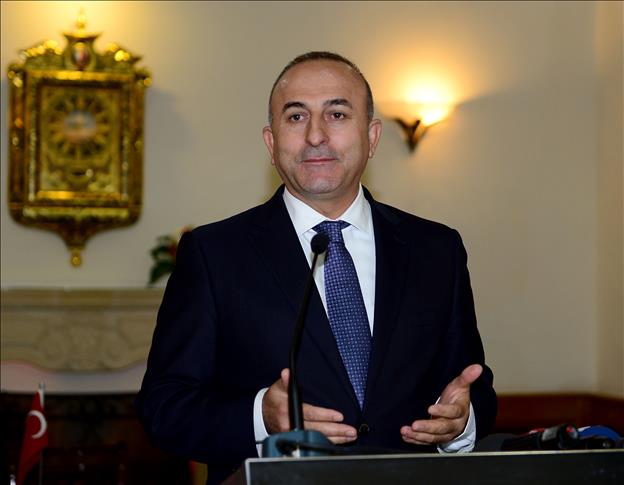
Addressing a joint press conference with his Maltese counterpart in Valletta, Cavusoglu said, "The decisions of a person are important, but it may not be always possible to decide alone on important issues in bureaucracy."
Opposition parties criticized the reinstatement of Fidan, saying he could not be reinstated as the intelligence chief since his association with a political party had allegedly made him partisan.
The foreign minister rejected the criticism. "Whichever position you assign Fidan to, he will objectively and fairly do it," he said.
Fidan was reinstated to his post as head of Turkey’s intelligence agency, or MIT, after he withdrew his nomination for the ruling Justice and Development, or AK, Party's candidacy in the upcoming June 7 elections.
He had earlier resigned from his post on Feb. 6 reportedly to participate in the polls. However, President Recep Tayyip Erdogan objected to his candidacy. "I do not have a favorable opinion of (Fidan's) candidacy; let me say that very clearly. I have also said this to Mr. Prime Minister before," the president said on Feb. 8.
Allegations on supplying weapons to Libya
About allegations that Turkey supplied weapons to Libya, Cavusoglu said "This is completely false allegation. Turkey has never transferred weapons to Libya or other countries."
Previously, Tobruk-based Libyan government's Prime Minister Abdullah al-Thani alleged that Turkey was supplying weapons to militant groups in Libya.
Turkish Foreign Ministry rejected Thani's remarks as "misleading"
Cavusoglu said Turkey backed a cease-fire in the country and added that any military intervention to Libya from outside or inside would be "dangerous."
In the four years since the ouster and subsequent death of the Libyan ruler, Muammar Qaddafi, rival militias have wreaked havoc in Libya's main cities, namely in the capital Tripoli and in the eastern city of Benghazi.
Austria's Islam law
About the controversial bill that redefines the status of Muslims in Austria, Cavusoglu said, "It should not give the impression that the state takes measures or makes law against Islam."
The Austrian parliament voted by majority to approve a bill on Feb. 25, which aims to revise a historic law on the status of Muslims in Austria. Islam has been an official religion in Austria since 1912. The Islam law, known as "Islam Gesetz," was introduced by Austria's last emperor, Franz Josef, after the Austro-Hungarian Empire annexed Bosnia-Herzegovina.
The new Austrian law will now require sermons inside mosques to be conducted in German and prohibits foreign financing for Muslim organizations and structures. It also contains provisions that allow Muslims to take time off during Friday prayers and go on holidays during certain religious festivals.
Turkey-Malta relations
Cavusoglu thanked his counterpart George Vella for his support for Turkey's EU membership.
Turkey applied for EU membership in 1987 and accession talks began in 2005. "Turkey is ready to fulfill its obligations for EU membership, as long as the political obstacles are removed," he said.
To gain membership, Turkey must successfully conclude negotiations with the EU in 35 policy chapters, which involve reforms and the adoption of European standards. So far, 14 chapters have been opened, while 17 remain blocked and another four have yet to be discussed.
Cavusoglu added although Turkey was not yet a member of the EU, it contributed to foreign and security policy of Europe.
The Maltese foreign minister Vela appreciated Cavusoglu for being the first Turkish foreign minister to visit Malta. Both foreign ministers discussed bilateral ties as well as the current regional and international issues during the visit.