Furkan Naci Top
27 November 2015•Update: 28 November 2015
ANKARA
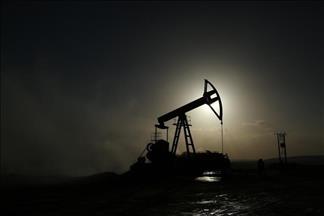
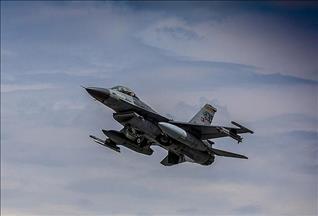
Russian claims that Turkey was operating on Daesh oil trade delivery from Daesh in Syria, following Turkey's downing of its jet on Tuesday, are manipulative and ridiculous, energy experts affirmed Thursday.
Russian officials claimed that the Russian jet was operating on a Daesh oil trade delivery to Turkey before it was downed.
"The Russian Minister reminded his counterpart about Turkey’s involvement in ISIS’ illegal trade in oil," a statement by Russian foreign ministry said.
The statement also said oil was being transported through the area where the Russian plane was shot down, and claimed that terrorist infrastructure, arms and munitions depots, and control centers were also located there.
Matthew Bryza, a senior fellow at Atlantic Council and former U.S. ambassador to Baku, refuted such claims asserting that it was ridiculous to lay the blame for Turkey's actions on Tuesday on an incorrect assumption of oil trade from Daesh to Turkey.
"That is a ridiculous claim. That sort of a claim by the Foreign minister strikes me as conspiracy theorists' allegations, which are heard very often in the West, that oil drives all geopolitics. Oil is important, but it doesn’t drive all geopolitics," Bryza added.
Noting that Russia repeatedly infringed on NATO territory previously, Bryza said that "It was only a matter of time that one of these Russian provocations led to one of its aircraft getting shot down."
According to a recent report by the European Leadership Network, Russia has caused some 40 incidents in 2014 alone including airspace violations, narrowly-avoided mid-aid collisions and close encounters at sea with NATO member countries.
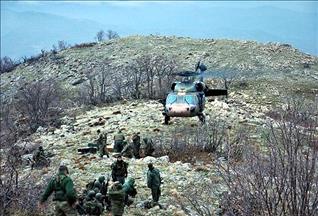
Bryza also countered that Russian airstrikes were targeting Daesh in the region as he claims the actual aim was in defeating Turkmen fighting against the Assad regime in and around the southern part of Turkey's Hatay province.
"We know Turkmen were under attack," he said, emphasizing that Turkmen were basically ethnic Turks, who live along the Syrian border with Turkey.
"Imagine what the Russian response would be if Turkey was bombing ethnic Russians somewhere in a country along the Russian border? Russia would go crazy and would engage all sorts of military action," Bryza added.
"There is no evidence to prove that the Turkish government is involved in oil trade with Daesh," Bryza stressed. He acknowledged, however, that some Turkish smugglers may have been involved in the illegal trade, which the Turkish border security is trying to combat.
"The Turkish government implemented a new policy last year to stop the flow of goods and people across the Turkish Syrian borders," he said.
Mehmet Ogutcu, chairman of Bosphorus Energy Club, also said the Russian claims were "unfair."
According to Ogutcu, such claims are meant to mislead the international community by inferring that Turkey's support to Assad's opposition is one and the same as supporting Daesh.
He also called on Russia to put forward any evidence they have to support their claims.
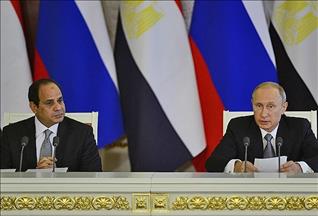
Russian President Vladimir Putin alleged that oil from areas controlled by Daesh is being carried to Turkey via pipes and trucks. He said that it is hard to believe that this trade is been undertaken without Ankara's knowledge.