Anadolu Ajansı © 2026


ANKARA
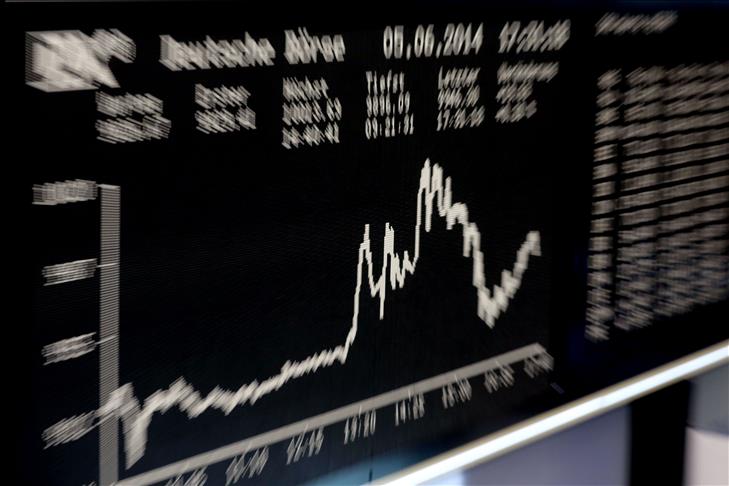
While foreign direct investment dropped slightly on an overall basis in Turkey in 2014, investor interest in specific sectors remains strong.
Foreign direct investment in Turkey was at $12.14 billion last year, according to Economy Ministry statistics, a small drop from the $12.70 foreigner investors placed in the country in 2013.
But it is notable that 3,833 foreign-funded new companies were established in 2014, up from the 2,960 firms registered in 2013 -- an increase of 29 percent.
And opportunities abound, experts say.
"Turkey remains a strong target for foreign investment," the World Bank said in a report published in December 2014, which cited productivity growth increases in sectors like mining, manufacturing, finance and agriculture.
Ernst & Young wrote in a report published in December 2014: "Turkey is growing into a preferred destination for FDI in CEE, owing to its enormous market potential, skilled workforces and improving business conditions.
"Between 2009 and 2013, the number of projects in Turkey increased by 129 percent, and this was accompanied by a 162 percent increase in job creation."
- Turkish dairy 'tren geliyooo...'
When a train comes in to an Ankara metro station, a cow appears on a television monitor in an advertisement for the Turkish dairy producer Sutas; the cow’s moo ("geliyooo...") tells you the "train is coming."
It is clever branding of this kind, along with savvy management, that analysts say has made the Turkish dairy industry an attractive target for foreign investment.
Pinar Hosafi, a food industry analyst with Euromonitor in a note published in March 2014, said: "About 65 percent of dairy products in Turkey are sold unpackaged from small producers. This gives packaged food producers a large market opportunity, which they are taking.
"They are good at branding, and this is helping them gain market share."
Turkey’s domestic dairy market is expected to grow from €5.2 billion in 2013 to €9.7 billion in 2018, according to a report from Rabobank analyst Matthew Johnson published in July 2014.
Johnson said: "Increasing urbanization together with growing disposable incomes has seen value added products grow with a high level of local branding evident.
"However, traditional dairy products and processing structures sit alongside this leading to a high degree of fragmentation. Therefore, consolidation through M&A activities will be possible although doing so without investing in a Turkish brand, which are highly respected, may be somewhat challenging."
Although yoghurt and milk are traditionally consumed throughout Turkey, dairy consumption in the country is only a third of the EU average -- statistic noted by the European Bank for Reconstruction and Development which took a stake in the Turkish dairy producer Yorsan in January 2014.
In other words, Turkish dairy train "geliyooo…".
- Pensions see growing interest
The Turkish government reformed the laws governing pensions in 2013.
Previously, Turkey's pension industry had remained small and largely impenetrable to foreign asset management firms.
But in January 2013, the Turkish state began making limited contributions to private pension schemes in a bid to boost domestic saving, and this led to a 50 percent increase in the numbers of people participating in pensions, according to a report from credit agency Fitch Ratings published in March 2013.
According to a report from consultancy Oliver Wyman released at the end of 2014, Turkish private pension funds are still only 3 percent of the deposit market.
It said: "The growth observed in pensions was precipitated by the recent pension reform, effectively implemented in order to increase the structurally low savings rate in the country.
"Given that the impact of this subsidy has not yet been fully realized, we believe high growth will be maintained over the next five years."
The report went on: "In light of these drivers, we expect the pensions industry to grow to around a quarter of the size of bank deposits by 2018.
"As pensions and insurance markets are both underpenetrated, we would expect the essential levers for players in these markets to be distribution, marketing and management of customer value."
A number of foreign banks have already entered the market, but there is considerable opportunity given the low level of pension penetration.
Turkish Institutional Investment Managers’ Association Chairman Gur Cagdas said in a recent interview that mutual funds, pension funds and investment trusts had the potential to draw in a lot more investors.
He cited the fact that the investment made in these funds in Turkey is only about 4 percent to 4.5 percent of GDP, while the world average is 40 percent.
- Mining investors find gold in Turkey
Another sector that continues to attract considerable foreign investment in Turkey is mining.
Turkish mines and quarries continue to attract increasing amounts of foreign direct investment, data from the country’s Ministry of Economy showed at the end of 2014.
Turkish mining enterprises attracted $446 million of FDI from January to October 2014, an increase of 114 percent from the same period in 2013.
Paul Mansouri, a mining expert with the Norton Rose Fulbright law firm in Dubai, told The Anadolu Agency: "Turkey benefits from a highly varied geology: it holds 2.5 percent of the world’s industrial mineral resources and produces some 50 different metals and minerals that are commercially viable for exploitation.
"Healthy commodity prices and changes in the Turkish investment regime, together with new mining laws enacted in 2005 and 2010, have resulted in an increase in mining and in mineral exploration activity in the country with a particular emphasis on copper, gold, nickel and zinc."
For example, Turkey is the leading producer of gold in Europe today, Mansouri said.
The country hosts some of the world’s largest gold deposits with reserves of 800 tonnes and predicted resources of 5,700 tonnes, he pointed out.
Of the known deposits there are currently seven active gold mines.
Turkey’s gold mining sector has grown consistently over the past 10 years and now leads production in Europe.
To make the sector even more attractive, the Turkish parliament has passed laws this year reforming the mining sector, streamlining profit-taking and improving safety regulations.
- Turkey ranks high in world automotive industry
The Turkish automotive industry is now among the 17 countries which are able to produce more than 1,000,000 vehicles per year, according to the International Motor Vehicle Manufacturers Association.
In terms of motor vehicle production, Turkey is the 15th-biggest producer in the world and the fifth-largest manufacturer in Europe.
In terms of commercial vehicle production, Turkey is the ninth-biggest producer in the world and the second-largest manufacturer in Europe, while it is the number one bus producer in Europe, according to association statistics.
"Investors are focusing on this sector," wrote Suna Gunbergi, a consultant with the TMF group in Istanbul, in a note at the end of 2014.
The automotive sector was the single largest contributor to overseas sales in 2014, generating $22.3 billion in exports, a 4.5 percent increase on the previous year, according to a report published by the Oxford Business Group consultancy on Jan. 29.
Since the beginning of the 1990s, incentives have been provided to promote foreign investment in the manufacturing of new, current model vehicles, according to the consultancy Continuous Development Services in London.
A note from CIP reported: "During this period, the importing of technology and foreign capital partnerships were made easier and supported. Contemporary manufacturing techniques were applied after intense training programs, especially through the establishment of quality management systems.
"As a result, foreign partners included their facilities in Turkey within their own global strategic development projects. This process enabled facilities in Turkey to manufacture goods for sale in international markets across the world."
There are already 256 companies working in the sector in Turkey, all financed by foreign capital, according to the Economy Ministry.
The volume of domestic production was 1.1 million vehicles in 2013, of which 54 percent are passenger cars and 39 percent are trucks and buses.
"There is an increasing amount of foreign participation in the sector," according to the Turkish Automobile Association. Toyota, for example, on Jan. 24, announced an additional $500 million investment in Turkish automotive.
- Turkey's 'shopping mall heaven'
Turkey became a “shopping mall heaven” in 1988 when the first shopping mall was built in Turkey, according to a note from property consultancy Cushman & Wakefield in London, published in January 2015.
"The shopping mall sector is now 25-years-old, and has an effective acceleration. The shopping mall industry had turnover of 50 billion Turkish liras ($19.28 billion) annually in 2013. And Turkey has now a dominant position in Europe as second highest number of shopping malls in Europe (after Russia)," the note said.
"There are continuing and increasing investments in shopping malls by funds, banks and foreign investors," Cushman & Wakefield added.
Among them, private-equity giant Blackstone Group in October became the country's largest owner of shopping centers by acquiring Multi Corp., a Netherlands-based developer, for €500 million ($687 million).
"There is still room for growth for shopping center development in Turkey, as currently there are 17 cities with more than 1 million population in addition to the 3 main cities," wrote Deloitte in a report on Turkish Real Estate for 2014.
"Istanbul and Ankara are reaching their limits in terms of shopping center growth, but there are many heavily populated cities in the provinces where development is still possible," the report said.
- 'Clear' outlook
Despite the troubled world economy, Turkey continues to lure foreign investors.
"While FDI declined in many countries, Turkey was a clear exception to this decline," wrote Ernst & Young.
"The country had a successful year in 2014, with 98 projects started (up from 95 in 2012). Affirming itself as Europe’s new hot spot for large manufacturing projects, the country drew several large investments in the automotive sector," Ernst & Young wrote.
This explains why Turkey has gained four points in E&Y’s FDI attractiveness ranking last year.
The research suggests no reason why this should change.
news_share_descriptionsubscription_contact

contact_the_ombudsman
is_there_an_error_in_this_story