ANKARA
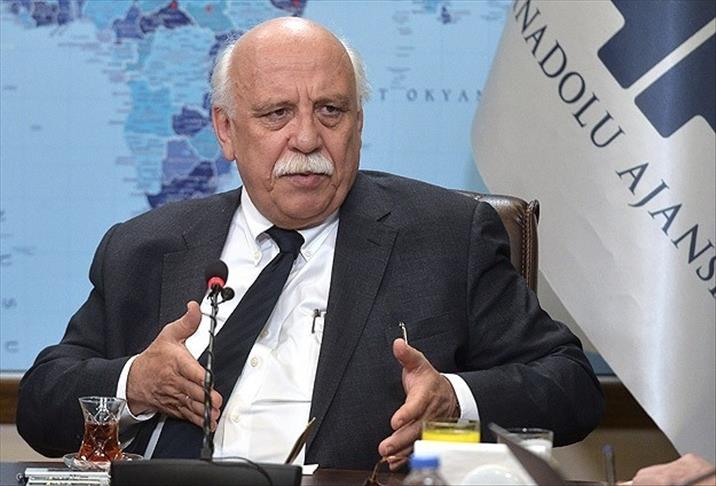
There are strong indications that Turkey’s education ministry was targeted in a conspiracy that led to organized cheating in the 2010 civil service exam, Education Minister Nabi Avci said Thursday.
"We are aware that the Ministry of National Education was one of the targets in a conspiracy," he told The Anadolu Agency's Editor's Desk, referring without giving names to the so-called "parallel state" -- a network of bureaucrats and senior officials embedded in the country's institutions, including the judiciary and police, which the Turkish government claims are trying to undermine it.
Following a 15-month assessment, Turkish police moved last Friday to detain dozens as part of a cheating probe in the KPSS exam in 2010 and allegedly found involvement of "parallel state" members.
"The ministry has initiated administrative action against 14 ministry staff who are among the detainees," Avci said, adding that all necessary actions would be taken against all employees who are proven to have been hired and placed in civil service positions within the ministry through cheating and fraud.
"We need to clear them all. With that, I mean remove from service and take action against them," he said.
Police have so far detained 75 people -- 40 of whom are civil servants -- in simultaneous operations in 19 provinces, including Istanbul, Bursa, Isparta, Samsun, Sakarya, Sivas, Eskisehir, Corum, Batman and Izmir.
The suspects face charges of membership in a criminal organization, document fraud, illegal and harmful activity in public institutions, destroying criminal evidence and abuse of power.
Some of the suspects police sought to detain were abroad.
Six people were released from the police department and seven others by the court, while the remaining 62 were arrested and referred to court last Thursday.
The prosecutor said the detentions were due to a "strong suspicion that the suspects have indeed committed the crimes they have been charged with."
Thirty-two of the 62 suspects were held by the court, while the rest were released under judicial monitoring.
Four suspects confess to crimes
The detained suspects reportedly denied the charges against them. When asked how they achieved the perfect score in the exam, most of them said: "We worked hard on our own and succeeded."
Meanwhile, four suspects confessed to the crimes. Drawing from their testimonies, police concluded that all of the suspects were in touch with one another through an association in Ankara. The investigation found that the questions of the KPSS exam were brought to this association and distributed.
Some of the suspects acquired cellular phone lines using the IDs of senior citizens and used these lines to cheat in the KPSS exam. Those using the lines were later found to be affiliated with the association.
It was discovered that four people among the suspects collected money and funds for the "parallel state" under the name of fraternal contribution toward the Hizmet movement, led by U.S.-based preacher Fetullah Gulen, who the Turkish government accuses of forming and governing the "parallel state."
The contributions also included more than 1,800 sheep, sources said.
The suspects included a police chief suspected of meddling with computers examined by police and deleting traces of KPSS exam content.
Ankara prosecutor's office has issued a two-page written statement, saying that the parallel state presented a "great threat" to the Republic of Turkey by working to infiltrate government institutions and illegally obtaining and using public examination content and thereby usurping the rights of millions of people.
The statement said that while no candidate received the perfect score -- 120 out of 120 -- or even had 119 correct answers, the 2010 KPSS exam boasted 350 test-takers who responded to all 120 questions correctly. Of them, 70 were spouses, 23 related, and 52 living in the same building, site, or neighborhood.
Another statement by the prosecutor's office in Ankara said that there were 3,227 people who scored 100 or more, and 616 of them were currently in office as public servants.