WASHINGTON
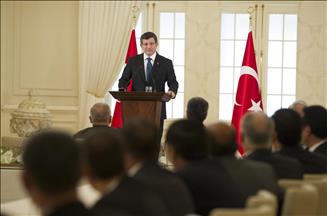
Turkish and American diplomats on Saturday vowed to fight international threats together, as they spoke at the 35th Annual Convention of the Assembly of Turkish American Associations, or ATAA, in Washington.
Ambassadors from both countries said the relationship between the two nations has never been more important than it is today.
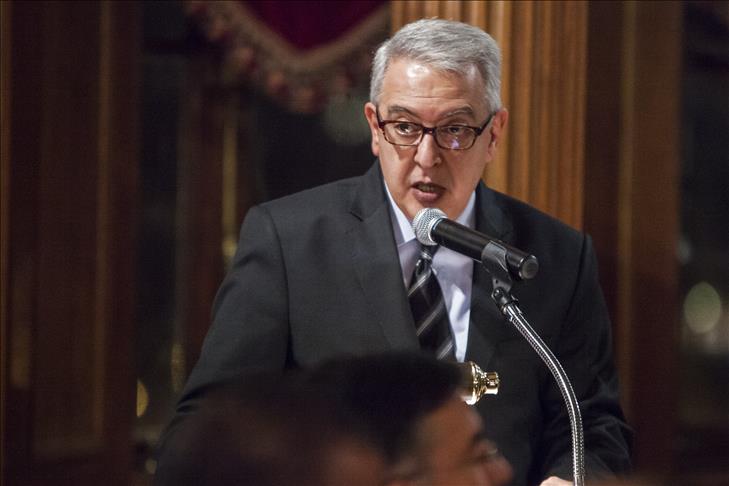
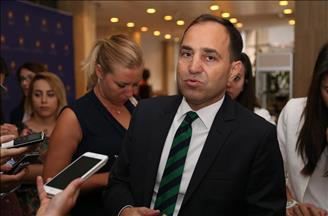
"There is a long list of common threats, risks and challenges that require a strong U.S.-Turkish partnership, including the civil war and humanitarian tragedy in Syria," said Turkey’s ambassador to the U.S., Serdar Kilic.
The Syrian conflict is "the worst humanitarian tragedy of the 21st century, having claimed the lives of 300,000 Syrians and left 6 million Syrians as refugees and approximately 10 million as internally displaced persons," he added.
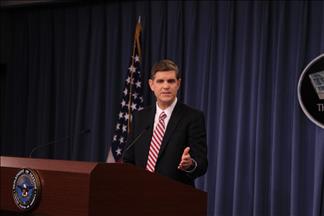
U.S. ambassador to Turkey John R. Bass, who addressed the convention via video conference from Ankara, said the two countries were working to support moderate Syrian opposition groups, including units in Turkey, in order to help them defend their communities against Daesh and other groups.
"Turkey now hosts more refugees from any other country," he said. "Turkey’s generosity is also sign of leadership, thanks to Turkey's support to Syrians in Turkey.”
The international community has turned a “blind eye to the Syrian people,” said Kilic. "In the streets of Syria, humanity is being assassinated."
According to the Turkish diplomat, while Turkey hosts 2 million Syrian refugees and has invested $6 billion in the effort, the international community has offered just $250 million to help Turkey shoulder the cost of hosting Syrian refugees, which Kilic said was "negligible."
He also criticized an article published Friday in the New York Times that claimed Turkey is not doing anything to stop the flow of foreign fighters through the country on their way to join Daesh.
"It is a shame." Kilic said. "The article is simply ignoring Turkey's efforts."
While Turkey has a list of 10,000 individuals who could potentially join Daesh via Turkey, other countries' intelligence services have contributed just 18 percent to the information sharing effort, he said.
"Countries are not sharing enough information with Turkey to stop foreign fighters. On the other hand, they are putting the blame on Turkey. It is selective morality, and selective morality is immorality," Kilic said.
The speakers also highlighted the Turkey Armenian issue. "Washington supports reconciliation between Armenia and Turkey, which the U.S. believes will bring even more stability and prosperity to the region."
He added that, "with the 100th anniversary of tragic events of 1915 just a week ahead, the U.S. believes the full and frank acknowledgement of facts will be of interest to both Turkey and Armenia as well as to the descendants of those who are affected by the tragic events."
"I encourage more dialogue with Armenians and American Armenians can help promote this kind of reconciliation," he said.
U.S. congressmen Brendan Boyle, who represents a large constituent of Turkish Americans in his district in the state of Pennsylvania, also addressed the conference.
"I am very concerned that last year there were nine resolutions that were anti-Turkish nature in U.S. Congress. This is wrong, and counter productive and bad for U.S.-Turkey policy," he said. "We have to reject those who try to divide while the goal is to unite U.S. and Turkey," he added.