Can Efesoy and Busranur Keskinkilic
02 June 2026•Update: 02 June 2026
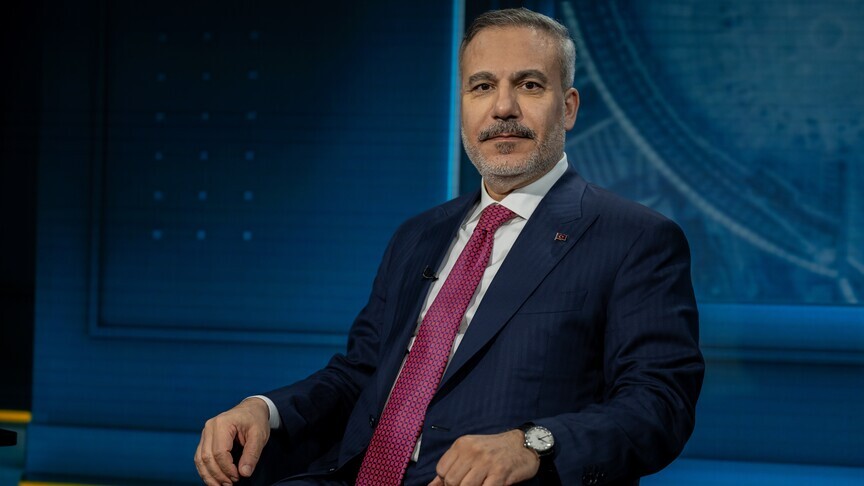
US President Donald Trump plans to attend the NATO summit set for July 7-8 in Ankara, Turkish Foreign Minister Hakan Fidan said on Tuesday.
Asked by Bloomberg TV during a visit to Singapore whether Trump would attend the NATO summit in the Turkish capital, Fidan said: “As far as we know, yes, he plans to attend.”
He said Turkish President Recep Tayyip Erdogan spoke by phone with Trump several times last month and that the US president indicated on each occasion that he would attend the summit.
Stressing that the US remains committed to the alliance despite political rhetoric, Fidan said there are no signs that Washington intends to act on warnings that it could withdraw from NATO.
Fidan also said he had received no indication from US Secretary of State Marco Rubio during last month’s informal NATO foreign ministers meeting in Sweden that Washington was considering leaving the alliance.
He noted that the US State Department and the Pentagon continue to cooperate closely with NATO member states.
“The US is constantly pressing allies to increase defense spending and take greater responsibility for their own security,” he stated. “Europeans have received the message and have already taken steps to increase defense budgets within NATO.”
“When leaders come together, we will review the progress achieved,” he said.
US and Iran
Fidan also underscored Ankara’s support for negotiations between the US and Iran, saying both sides are making “sincere” efforts to extend the ceasefire.
Despite the ceasefire, he warned that Israeli attacks targeting Hezbollah in southern Lebanon pose “a significant risk” that could undermine the talks.
“I am sure the Americans and the Iranians are sincere. They want a ceasefire and the reopening of the Strait of Hormuz, but I am not sure about Israel’s intentions,” Fidan said.
He said he recently discussed Israel’s expanded military operations in Lebanon during a phone call with Iranian Foreign Minister Abbas Araghchi.
According to Fidan, Iran believes it reached an understanding with the US on a ceasefire across all fronts and therefore continues to participate in negotiations.
He said Tehran views Israel’s recent intervention, occupation, and military operations as clear violations of the ceasefire arrangement and warned that such developments could make it “extremely difficult” for negotiations to continue.
Fidan also cited a social media post by Trump following a phone call with Israeli Prime Minister Benjamin Netanyahu which said the parties had agreed not to attack each other.
Asked about the possibility of renewed US attacks on Iran, Fidan said he hoped such a scenario would not materialize, citing the global economic consequences witnessed during the previous escalation, particularly in energy, security, and inflation.
He said mediators are making every effort to help the parties reach a genuine compromise and lasting agreement, while warning that any renewed conflict could result in further loss of life, destruction of infrastructure and the risk of the war spreading to other parts of the region.
Tensions in the Middle East have escalated since the US and Israel launched strikes on Iran in February. Tehran retaliated with attacks targeting Israel and US allies in the Gulf, alongside the closure of the Strait of Hormuz.
A ceasefire took effect on April 8 through Pakistani mediation, but subsequent talks in Islamabad failed to produce a lasting agreement. Since then, the two sides have continued exchanging proposals and counterproposals in an effort to resume direct talks and end the conflict.
Regional crises
Fidan further said regional crises continue to place pressure on Türkiye’s economy and trade, noting that the country’s economy is driven by exports, tourism, and industry rather than oil wealth.
He said the war in Iran, following the COVID-19 pandemic and the Russia-Ukraine war, has imposed additional burdens on Türkiye, particularly through rising energy prices.
While Türkiye benefits from pipeline supplies from Russia, Azerbaijan, and Iran and does not face immediate energy supply problems, he said higher oil and natural gas prices continue to fuel inflationary pressures.
Fidan stressed that diplomats are working to stop wars and create an environment conducive to peace, stability, development, and trade.
Asked whether a possible dollar swap line with the US would be beneficial, Fidan said he was not aware of any plans for that and noted that any assessment would require consultations within the government and ultimately the approval of President Erdogan.
*Writing by Merve Berker