Turkish President Recep Tayyip Erdogan said Monday that Türkiye is forging ahead with its development goals despite regional instability, highlighting progress in energy production, security, economic growth, and international diplomacy.
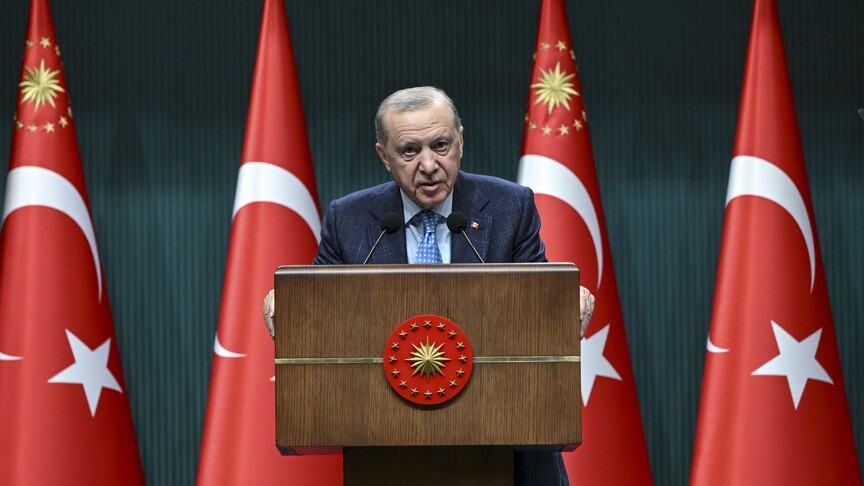
"Despite the cycle of instability surrounding us, we are continuing our development journey in stability and confidence without interruption," Erdogan said following a Cabinet meeting at the Presidential Complex in the capital Ankara.
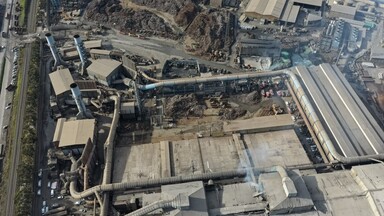
Erdogan announced oil discoveries in two additional fields in the country’s southeastern Gabar region, saying daily production in the region would exceed 100,000 barrels in the second half of 2027, with approximately 230 wells.
He said the production of 120,000 barrels per day would generate an estimated $4.4 billion in annual economic contributions at current prices.
The two newly discovered fields, named Gaziler and Cardakli, began production in October and have an estimated 135 million barrels of oil in place, according to initial assessments, Erdogan said.
He said Gabar had become a major oil production center, with daily output reaching 84,000 barrels from 184 wells, accounting for 8% of Türkiye's oil consumption.
The country has produced a total of 75.4 million barrels of crude oil in Gabar, contributing $6 billion toward reducing the current account deficit, he added.
Erdogan said production in the region would rise 30% through field development activities and the commissioning of new wells.
"We are producing Türkiye's highest-quality oil in Gabar, where terrorism, violence and fear once prevailed," he said.
He also highlighted progress in natural gas production, saying gas extracted from the Black Sea currently meets the needs of 4 million households.
The Osman Gazi floating production platform, which was sent to its operational location on Oct. 17, is expected to double production capacity and increase the number of households supplied to 8 million, he added.
On energy security, Erdogan said: “With our strategy of diversifying source countries, routes and forms, as well as our effective energy diplomacy, we have minimized the impact of these crises on our country.”
He stressed that mobilizing domestic oil and natural gas resources remains a priority as the country's energy demands continue to rise alongside population growth and rising prosperity.
Erdogan said Türkiye had grown by an average of 5.4% annually over the past 23 years and would maintain its growth momentum. He added that the country aims to increase exports to $300 billion and tourism revenues to more than $70 billion.
Türkiye's population is expected to exceed 88 million by 2030 and reach 94 million by 2050, further increasing energy demand, he said.
"We attach particular importance to meeting this demand in the safest, most stable, and most cost-effective way by diversifying our energy mix and increasing exploration and drilling activities," he said.
Citing Türkiye's exploration activities at home, at sea and abroad, Erdogan said the country had made significant discoveries despite obstacles.
He cited the Sakarya gas field in the Black Sea, oil production in Gabar, rare earth element reserves in Eskisehir, and achievements in Libya, Somalia, and the Eastern Mediterranean.
"We worked, made efforts, invested, and did not give up in the face of obstacles. Thankfully, we have added very significant discoveries to our country's gains," he said.
Turning to the "Terror-Free Türkiye" initiative, Erdogan said cities long affected by migration and insecurity will regain momentum once terrorism is fully eliminated.
"That is when Türkiye will make its greatest economic leap," he said.
Describing the initiative as more than a public security matter, Erdogan said his government is determined to complete the strategic project, which he called a driving force behind its vision of a great and strong Türkiye.
Erdogan also highlighted developments in Iraq's Sinjar region, which he said had long been referred to as "a second Qandil" – referring to the terrorist group PKK’s onetime headquarters – saying that a significant step had been taken toward establishing state authority there.
He said the integration of more than 4,000 members of the group into Iraqi security forces began the previous week, while positive developments are also taking place in the evacuation of caves.
"We are carefully advancing the process without compromising our security sensitivities. Regardless of what anyone says, we are looking ahead, focusing on our work, and seeking to resolve this issue permanently as soon as possible," Erdogan said.
He expressed confidence that the process would be completed through the efforts of security units and relevant officials, strong support from political institutions regardless of party affiliation, and the prayers of the Turkish people.
Erdogan said the global economy and politics are undergoing their most turbulent period since World War II, but Türkiye's export performance continues to improve despite pessimistic scenarios and what he described as smear campaigns.
He said Türkiye's exports in October rose 8.1% year-on-year to $25.9 billion, marking the third-highest monthly export figure in the country's history and its highest-ever October performance.
Exports this January-October climbed 5.5% to a record $236.8 billion, while annualized exports in October reached an all-time high of $285.6 billion, he added.
Erdogan said that at the beginning of 2026 Türkiye had set an annual target of $410 billion for goods and services exports, saying incoming data indicates that the target would be exceeded. He said total exports are expected to reach a new peak of $413 billion.
He also highlighted a record in medium-high and high-technology exports, which shot up 8.8% to $118.6 billion.
In the defense and aerospace sector, exports jumped 61% year-on-year in October to $1.14 billion, Erdogan said. On a 12-month basis, sector exports rose 37% to $11.357 billion.
He added that Türkiye's foreign trade deficit declined 11.4% in October, while the export-to-import coverage ratio increased by 3.4%.
Erdogan said Türkiye would continue its diplomatic efforts to address regional conflicts, mentioning how he hosted Ukrainian President Volodymyr Zelenskyy in Istanbul on Oct. 31.
"Türkiye wants the war to our north, which is about to enter its sixth year, to end as soon as possible with a just peace," he said, adding that Ankara will continue and intensify its efforts toward that goal.
He also said he had visited South Korea on Nov. 3-4 at the invitation of President Lee Jae-myung, marking the first visit by a Turkish president to the country in eight years.
Five new documents were signed during what he described as a productive visit, covering energy, investment, mining, scientific cooperation, and project financing.
Erdogan said Türkiye aims to advance its partnerships with South Korea in areas including the economy, trade, nuclear energy, investment, and the defense industry.
"We attach great importance to working more closely with Korea in advanced technologies such as artificial intelligence, semiconductors and battery production," he said, expressing hope that the visit would further strengthen relations between the two countries and their peoples.
Erdogan also cited his Sunday visit to Azerbaijan to mark the sixth anniversary of the Karabakh victory.
On his visit to the city of Shusha, he said he had witnessed a major reconstruction and revitalization campaign in Karabakh under the leadership of Azerbaijani President Ilham Aliyev.
"From Shusha to Khankendi, from Jabrayil to Khojaly, roads, buildings, underpasses, places of worship and homes are rapidly taking shape almost everywhere. The winds of peace and tranquility are now blowing across every corner of Karabakh," he said.
Reaffirming Türkiye's support for Azerbaijan under the principle of "one nation, two states," Erdogan paid tribute to those who lost their lives in the liberation of Karabakh and congratulated the Azerbaijani armed forces. He said Türkiye and the Turkish people would always stand by Azerbaijan.
On his other recent diplomatic engagements, Erdogan said he had hosted Kazakh President Kassym-Jomart Tokayev in Ankara on Oct. 28 and Uzbek President Shavkat Mirziyoyev on Oct. 29, when five new agreements were signed.
He said Türkiye also marked the 103rd anniversary of the founding of the Republic on Oct. 29, celebrating the occasion alongside representatives of the Turkic world.
"This year we experienced the enthusiasm of Republic Day in a different atmosphere than ever before, together with our brothers and sisters from the Turkic world," Erdogan said.
He said the opening of the Bestepe People's Forest had provided Ankara with a new recreational area and that the 13th Summit of the Organization of Turkic States (OTS) had been held at the Presidential Complex on Oct. 30.
He expressed hope that the decisions taken at the summit would strengthen unity and solidarity among Turkic states.
Erdogan also thanked representatives of the Turkic world for sharing in Türkiye's Republic Day celebrations.
Erdogan said Türkiye would maintain its diplomatic engagements, adding that he would travel to the southern city of Antalya on Tuesday to attend the COP31 UN Climate Change Conference, where more than 100 heads of state and government are expected.
He said he would hold talks and deliver speeches during a three-day program, discussing climate change and other international issues with participants from different parts of the world.
"We will continue working patiently to make Türkiye a leading country in its region and an influential actor in the world," he said.
news_share_descriptionsubscription_contact

contact_the_ombudsman
is_there_an_error_in_this_story