A temporary ceasefire between the US and Iran has created a narrow diplomatic opening, with upcoming talks in Pakistan set to test whether both sides can find a way out of the conflict.
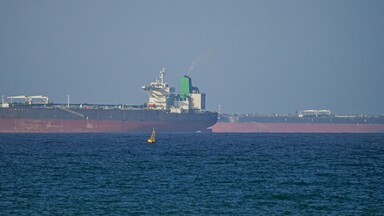
A two-week ceasefire was announced Tuesday, less than two hours before US President Donald Trump’s deadline for Iran to reopen the Strait of Hormuz was set to expire.
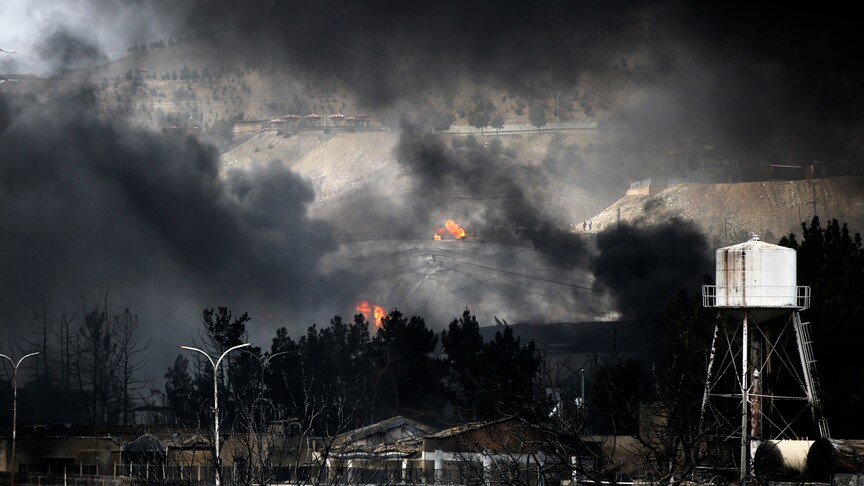
Washington later confirmed it would suspend attacks on Iran to allow diplomacy to move forward, pausing a war that since Feb. 28 has shaken Gulf security, disrupted oil flows and rattled global markets.
From the outset, analysts said the ceasefire was fragile, with warring parties accusing each other of violations.
And a new deadline now looms.
"With ongoing tensions and conflicting signals from different actors, any deal will depend on whether both sides see sufficient benefit in deescalation to overcome deep mistrust and competing strategic objectives," Sina Toossi, a senior fellow at the Center for International Policy, told Anadolu.
The upcoming talks come at a moment shaped as much by "the limits of military escalation as by diplomacy,” he added.
He said the US had been unable to fully weaken Iran, as Tehran continued to respond with attacks and use the Strait of Hormuz as leverage.
"The fact that both sides are returning to diplomacy after this phase of conflict shows that neither was able to achieve a decisive outcome on the battlefield,” he said.
The White House said Wednesday that Vice President JD Vance will lead a US delegation to Islamabad for negotiations with Iran this weekend.
Special envoy Steve Witkoff and senior adviser Jared Kushner will also be part of the US negotiating team, White House press secretary Karoline Leavitt said, adding that the first round of talks will take place Saturday morning local time.
On the Iranian side, Foreign Minister Abbas Araghchi and Parliament Speaker Mohammad Bagher Qalibaf are expected to participate.
Reports suggest the possibility of direct talks between senior officials from both countries – a rare development after years of indirect engagement.
Toossi said the core issues will likely include sanctions relief, particularly on oil exports, security guarantees and regional escalation, including maritime access and the Strait of Hormuz.
"Iran will be seeking tangible economic concessions and assurances that the cycle of pressure and conflict will not simply repeat," he said.
“The United States will aim to secure limits on Iran’s nuclear and missile programs and reduce the risk of further regional destabilization."
Kamran Bokhari, a senior fellow at the Middle East Policy Council, said US demands will likely include zero uranium enrichment, limits on ballistic missile development and curbs on Iran’s support for regional groups.
He said one key question is whether Iran could offer concessions in Lebanon, including the potential disarmament of Hezbollah, in exchange for broader agreements.
A 10-point proposal put forward by Iran was originally reported to be what Trump said was a “workable basis on which to negotiate.”
The plan includes removal of sanctions on Iran, the withdrawal of US troops from the Middle East, continued Iranian control over the Strait of Hormuz and an end to attacks on Iran and its allies
However, Trump later called the 10-point plan a “made up hoax,” and said they have “absolutely nothing to do with” the negotiation, which is taking place behind closed doors.
Analysts warn that continued violence and disputes over the scope of the ceasefire could undermine the talks.
While Pakistan initially said the ceasefire extended to Lebanon, Washington and Tel Aviv later said Lebanon is not covered by the agreement.
On Wednesday, at least 254 people were killed and 1,165 others injured in Israeli attacks across Lebanon, including Beirut, according to the Lebanese Civil Defense.
On Thursday, Iran’s ambassador to Pakistan Reza Amiri Moghadam said on social media platform X that despite skepticism among the Iranian public due to repeated ceasefire violations, the delegation would arrive later that night in Islamabad for “serious talks based on 10 points proposed by Iran.”
The post was later deleted.
Tehran on Wednesday also accused the US of violating three key clauses of Iran’s proposal, citing the Lebanon ceasefire breach, drone incursion into its airspace and denial of its right to enrichment.
In a statement on the US social media platform X, Qalibaf said Iran’s “deep historical distrust” toward the US stems from its “repeated violations of all forms of commitments – a pattern that has regrettably been repeated once again.”
Threats also continue from the US side.
On Thursday, Donald Trump posted on his social network that US troops and military assets would remain in the region until a permanent agreement is reached.
If there is no deal, he threatened Iran with “bigger, and better, and stronger” attacks “than anyone has ever seen before.”
Analysts say Pakistan has emerged as a key intermediary trusted by both Washington and Tehran.
Former ambassador Asif Durrani said Pakistan’s ties with regional and global powers, including Gulf states, China and Russia, helped facilitate the ceasefire.
"Pakistan has had a unique position in playing this role and more importantly, Iran, which in fact posed confidence in Pakistan and then of course the United States,” he said.
Analyst and journalist Kamran Yousaf said Pakistan intensified diplomatic efforts as the conflict escalated.
"When President Trump gave a final ultimatum, and that ultimatum was to expire on Wednesday morning, Pakistan launched perhaps the most intense diplomatic efforts since this conflict started," he said.
Yousaf said Pakistan pushed the warring parties to find middle ground, with Iran agreeing to temporarily reopen the Strait of Hormuz in exchange for US openness to discuss the 10-point plan.
"It was a tough night where I think Pakistan's military chief also played a key role and engaged in the final hours,” he added.
news_share_descriptionsubscription_contact