Mücahithan Avcıoğlu
30 April 2026•Update: 30 April 2026
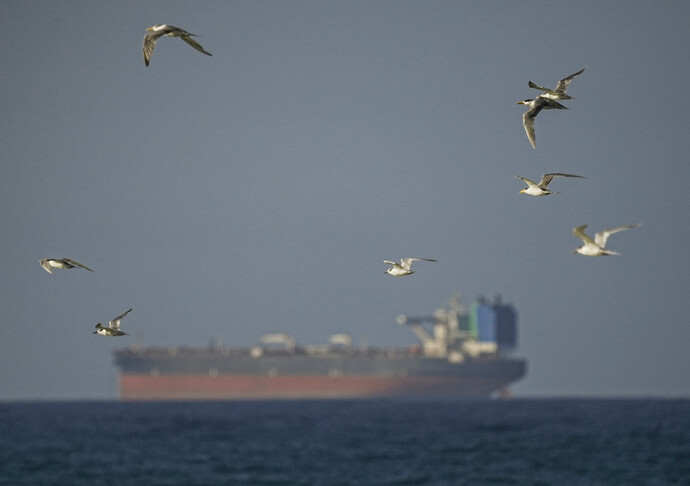
Commercial shipping traffic near the Strait of Hormuz remained sharply restricted on Thursday morning, with only 11 vessels seen moving in either direction amid the closure of the strait and the US blockade, according to ship tracking data compiled by Anadolu.
As of 0900GMT, east-to-west traffic near the strait included Black Maya, Selin, Rosalina, Sea Mikaeel, A Star, Momtaz 2, Amina, and Abtin 1 in the last 24 hours.
The data showed Black Maya, a bitumen tanker, in transit and heading to Sultan Qaboos Port in Oman. Selin was listed as a general cargo ship in transit with Sharjah in the United Arab Emirates as its destination.
Rosalina, a bulk carrier, was shown in transit and heading to Fujairah in the UAE, while Sea Mikaeel was listed as a landing craft, though no destination was displayed.
A Star, another bitumen tanker was shown as anchored. Momtaz 2 appeared as a general cargo ship in transit, with no destination shown.
Amina, a bulk carrier, and Abtin 1, a container ship, were both listed in transit and heading to Chah Bahar in Iran as their destination.
In the opposite direction, west-to-east traffic included Seaway, Ilda, and Al Batha.
Seaway was listed in transit as a chemical/oil products tanker carrying clean petroleum products. Ilda appeared as a general cargo ship in transit and heading to Bandar Abbas in Iran, while Al Batha was shown in transit as a landing craft.
At least two of the vessels in the selected list are sanctioned by the US Treasury Department’s Office of Foreign Assets Control (OFAC).
OFAC’s sanctions database lists Amina as an Iran-flagged bulk carrier on the Specially Designated Nationals list. Abtin 1 is also listed by OFAC as an Iran-flagged container ship. Both were listed as linked to the Islamic Republic of Iran Shipping Lines and subject to secondary sanctions.
The reviewed vessel list points to continued but limited two-way movement near the critical chokepoint, with the selected ships including oil products, dirty petroleum products, bitumen, dry bulk, container, and general cargo traffic.
Meanwhile, several other ships near Gulf ports and approaches to the Strait of Hormuz were shown as anchored, moored, or with undefined navigational status, underscoring the continuing disruption to commercial maritime flows in one of the world’s most important energy corridors.
The US Central Command said on Wednesday that the 42nd commercial vessel attempting to enter or exit Iranian ports has been redirected, adding that 41 oil tankers carrying a combined 69 million barrels remain unable to access Iranian ports due to the ongoing US blockade.
The Strait of Hormuz remains a key route for crude oil, petroleum products, and liquefied natural gas shipments from the Gulf to global markets. Any prolonged disruption in the waterway risks adding pressure to energy prices, freight costs, and insurance premiums.