Diyar Guldogan
27 April 2026•Update: 27 April 2026
Pakistan's ambassador to the UN on Monday warned that disruptions to global maritime routes, particularly the closure of the Strait of Hormuz, pose a serious threat to international peace, economic stability, and developing nations.
Speaking at a high-level open debate of the UN Security Council on maritime security, Asim Iftikhar Ahmad emphasized that safeguarding sea lanes is essential not only for trade, but also for broader development and security goals.
“Global maritime spaces are a key geostrategic arena where the challenges of the 21st century intersect. They are the lifeline of global commerce, bellwether of earth’s environment," he said, noting that modern economies depend heavily on uninterrupted seaborne trade.
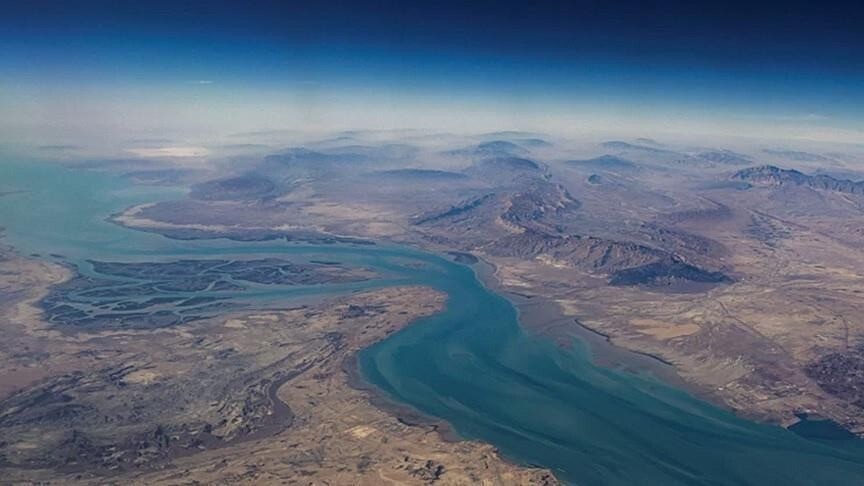
Ahmad pointed to the ongoing disruption in the Strait of Hormuz as a clear example of how maritime instability can cascade into global crises.
“Closure of the Strait of Hormuz and its cascading effects on food and energy security, and supply-chain disruption is a case in point,” he said.
He warned that initial shocks – such as rising costs for oil, gas, and fertilizers – could deepen into wider economic problems, including inflation, slowed growth, and balance-of-payments pressures, particularly for developing countries.
Reaffirming Pakistan’s diplomatic approach, Ahmad highlighted efforts to ease tensions between regional and global powers, including the US and Iran.
Efforts for de-escalation
The ambassador said Pakistan, alongside partners such as China, Saudi Arabia, Türkiye, and Egypt, is actively working toward de-escalation.
"In its ongoing efforts to facilitate an enduring resolution of this crisis, Pakistan remains firm in its faith in diplomacy and dialogue, and will continue to resolutely undertake all possible measures towards that end," he added.
Ahmad underscored that maritime security extends beyond protecting shipping routes, saying it also involves addressing challenges such as climate change, environmental protection, safeguarding underwater infrastructure, and ensuring human rights at sea.
He highlighted the importance of the United Nations Convention on the Law of the Sea (UNCLOS) as a cornerstone of global maritime order, urging all nations to uphold its principles.
Concluding his remarks, Ahmad called for renewed international cooperation to preserve peace and stability at sea.
“This is a sacred trust that history has placed upon us,” he said. “We cannot afford to fail – we must succeed together.”
Iran and the US held talks in Islamabad on April 11 but failed to reach an agreement to end the war that began on Feb. 28.
The negotiations followed a two-week ceasefire brokered by Pakistan on April 8, which was later extended by US President Trump.
Trump cancelled a planned trip to Pakistan this weekend by special envoys Steve Witkoff and Jared Kushner.
Efforts are underway to organize another round of talks, though key sticking points include the Strait of Hormuz, the US blockade of Iranian ports and the future of Iran's nuclear program.