Wassim Samih Seifeddine
27 May 2026•Update: 27 May 2026
In southern Lebanon’s border villages, Eid al-Adha once meant crowded homes, family visits and children moving between relatives’ houses. This year, for many residents, the Muslim holiday arrives amid displacement, uncertainty and the lingering impact of war.
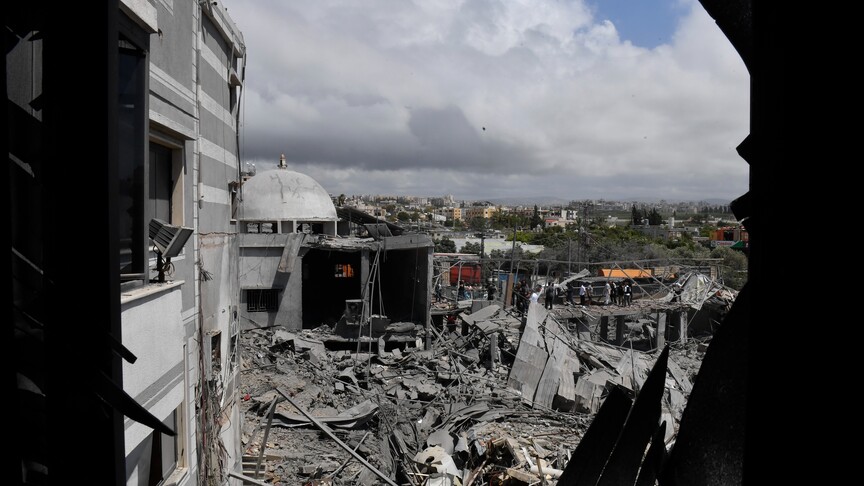
Across the Arqoub region in Lebanon’s Hasbaya district, continuing Israeli attacks and security fears have altered daily life and stripped the holiday of many of its familiar traditions.
In towns such as Shebaa, Kfarhamam and Marj al-Zouhour, schools have become shelters for displaced families, while many residents remain reluctant to return home despite the holiday season.
Others who stayed behind continue trying to preserve fragments of tradition, from preparing Eid sweets to gathering with the few family members who remain nearby.
-Displacement without end
Inside a school in Marj al-Zouhour that has been turned into a shelter, 34-year-old Nasreen Abdul Aal lives with her family after being displaced three times from Ain Arab village in southern Lebanon’s Marjayoun district.
She told Anadolu that her family briefly returned home during an earlier truce but remained only days before residents were again told to leave.
Repeated displacement has left deep psychological scars on families and children, she said.
“Families no longer gather, and children can no longer recognize the atmosphere of Eid,” Abdul Aal said.
She added that farmers had lost harvest seasons and livelihoods, while many families increasingly feared losing their homes entirely amid continued attacks.
-Holding on despite war
In Kfarhamam, Um Najib Fares, 60, has refused to leave her home despite intensified nighttime airstrikes and shelling.
She said explosions had become part of daily life and holidays that once brought together children and grandchildren had become occasions marked by absence.
“We remain in our homes despite everything,” she said.
Kfarhamam Mayor Mouad Rahhal said Eid al-Adha traditionally served as a social occasion reconnecting families and relatives.
Today, many displaced families hesitate to return even during religious holidays for fear of worsening security conditions, he said.
Around 110 families remain in the town despite the difficult conditions, Rahhal added, describing an unprecedented social emptiness across border villages.
-Keeping traditions alive
In Shebaa, 83-year-old Rasmiya Zoghbi still insists on preparing traditional Eid cookies despite an atmosphere overshadowed by anxiety.
She said holidays should remain a time for goodness and prayers that families may one day return home.
Since March 2, Israel has been conducting an expanded offensive on Lebanon, killing nearly 3,200 people, injuring over 9,600 and displacing over 1.6 million people, according to official figures.
The Israeli army has continued its daily attacks despite a US-mediated ceasefire that took effect on April 17 and was later extended to early July.
*Writing by Tarek Chouiref