Michael Hernandez
27 April 2016•Update: 28 April 2016
WASHINGTON
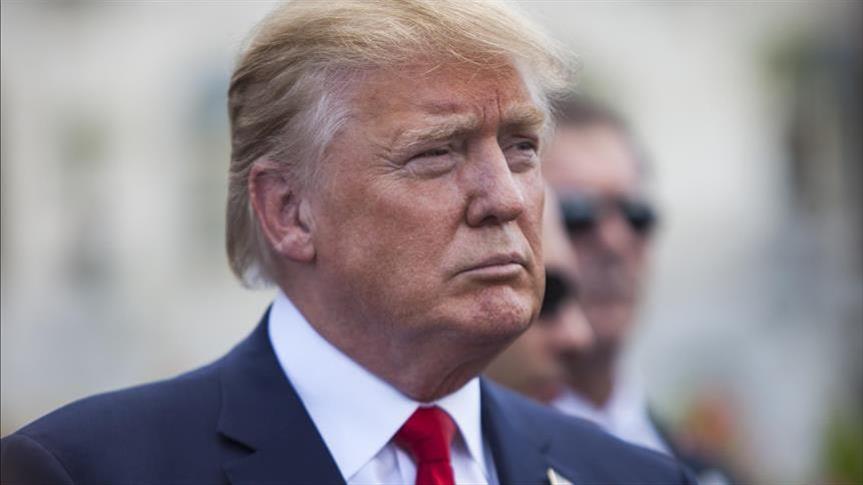
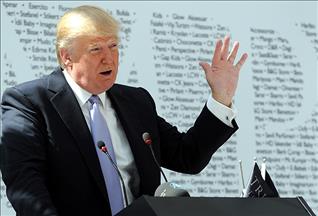
Republican presidential front-runner Donald Trump said Wednesday that he will pursue an “America first” foreign policy if he is elected to the White House.
“America first will be the major and overriding theme of my administration,” Trump said during a rare policy address in the nation’s capital.
That will include ensuring that America’s allies pay “their fair share”, he said, arguing, “many of them are simply not doing so."
“The countries we are defending must pay for the cost of this defense, and if not, the U.S. must be prepared to let these countries defend themselves,” he said. “We have no choice.”
Trump took special aim at President Barack Obama’s Middle East policies saying that the Obama administration’s legacy will be one of “weakness, confusion and disarray – a mess."
“We've made the Middle East more unstable and chaotic than ever before,” he said.
He criticized former Secretary of State and Democratic front-runner Hillary Clinton, whom he said poorly handled an attack on a U.S. facility in Benghazi, Libya, that killed four Americans there, including the U.S. ambassador.
“After Secretary Clinton's failed intervention in Libya, Islamic terrorists in Benghazi took down our consulate and killed our ambassador and three brave Americans,” he said.
“Our ambassador was murdered and our secretary of state misled the nation. And, by the way, she was not awake to take that call at 3 o'clock in the morning,” he said.
He further sought to distance himself from more hawkish presidential candidates and former President George W. Bush who led U.S. invasions of Iraq and Afghanistan saying that “war and aggression will not be my first instinct."
“You cannot have a foreign policy without diplomacy,” he said. “A superpower understands that caution and restraint are really truly signs of strength.”
Trump’s comments follow a night of sweeping primary victories in five northeastern states that prompted him to declare himself the Republican Party’s “presumptive nominee”.
He leads his nearest rival, Texas Sen. Ted Cruz, by 950 delegates ahead of July’s Republican Convention.
Trump needs 1,237 delegates to become the Republican presidential nominee.