HONG KONG
Pro-democracy demonstrators in Hong Kong have lost some of the territory they had controlled in clashes with hundreds of riot police that saw at least 40 arrested after student leaders’ calls to lay siege to government headquarters.
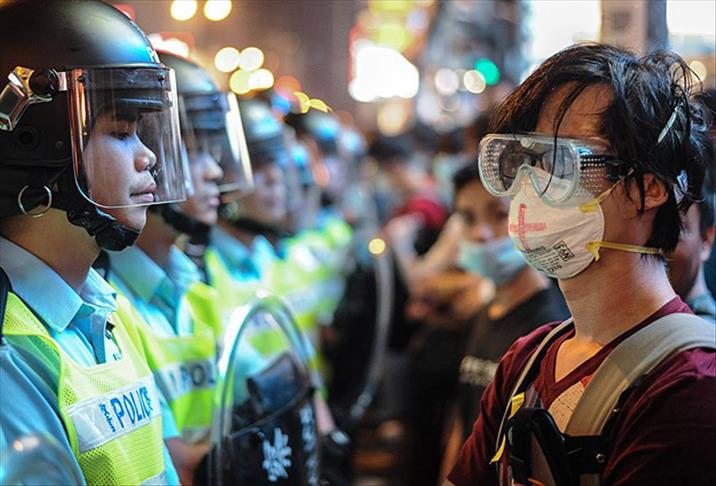
Police used pepper spray and conducted baton charges near the Admiralty encampment charges early Monday to prevent thousands of protesters -- many wearing hardhats, goggles and facemasks -- from expanding their encampment to include another major road.
Following the police action, officers taunted protesters by making offensive gestures with middle fingers, clapping mockingly and cutting protesters' banners, according to witnesses and local media reports.
"I can now understand why people are attracted to the more militant groups of protesters," protester Sandy Ho, a 21-year-old university student, told The Anadolu Agency.
Some saw the escalation as a limited success, however, as the government told some workers not to turn up for work Monday, after protesters barricaded the escalators leading to their offices.
Student leader Alex Chow said the escalation demonstrated that protesters had not lost heart and would not allow the government to wait out the protests, public broadcaster RTHK reported.
Chow added that protesters had not abandoned their principle of non-violence.
Pro-democracy lawmaker Lee Cheuk-yan expressed his respect for student leaders' attempt to escalate the protests, but said the costs incurred -- in terms of injuries and arrests -- had been too high.
Police said at least 40 people had been arrested while 11 officers were injured after demonstrators threw objects including eggs and water bottles.
Meanwhile, at least 40 people were hospitalized overnight, the South China Morning Post news site reported, citing Hospital Authority figures.
The violence came after a week in which protesters lost their other major camp in the district of Mong Kok, one of three sites where demonstrators have blocked roads since September 28.
According to the Government Information Service, a total of 518 people have been hospitalized since the movement began.
The protesters are seeking free elections in 2017 for the semi-autonomous territory's next chief executive. Beijing has said all candidates for the position would have to be approved by it first.
The movement is the biggest challenge to the Chinese Communist Party's grip on power since the bloody 1989 crackdown on pro-democracy student protests in and around Tiananmen Square in Beijing.
The protests attracted more than 100,000 at their peak. While numbers have fallen, they typically swell to several thousand at weekends and after violence is used against the demonstrators.
www.aa.com.tr/en