Amnesty International criticizes Jordan over executions
Human rights group says death penalty was wrong response to killing of captured pilot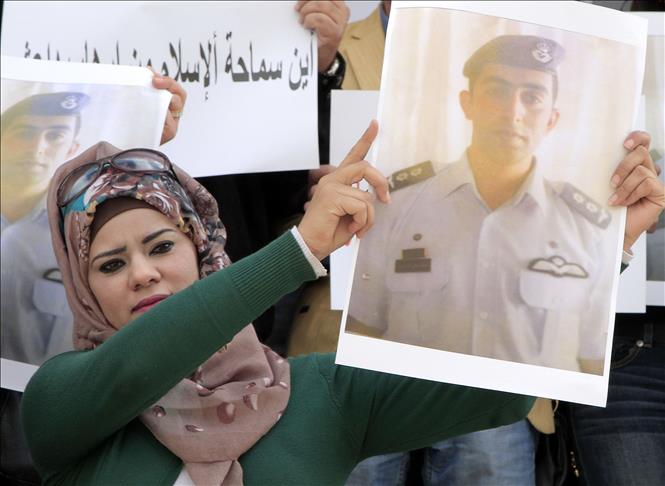
LONDON
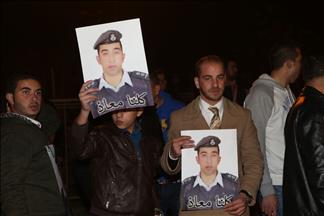
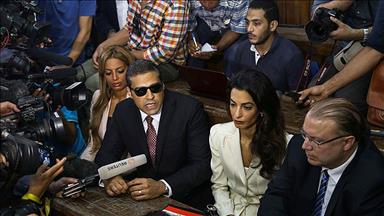
Amnesty International has criticized Jordan for executing two Iraqi prisoners in retaliation for the killing of Jordanian pilot, Muath al-Kasasba.
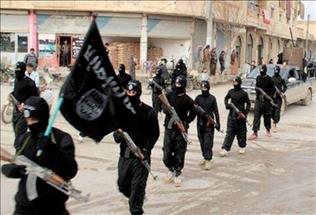
The reaction came Wednesday after Jordan put to death Sajida al-Rishawi and Ziyad al-Karbouli, calling the killings "revenge executions" after al-Kasasba was seen being burned alive in footage released by the Islamic State of Iraq and the Levant (ISIL) militant group.
Philip Luther, the Director of Amnesty International's Middle East and North Africa Program, said the video showing al-Kasasba being burned alive in a cage had "sent shockwaves across the world" and was "an atrocious attack against humanity."
But he added: "The Jordanian authorities are rightly horrified by this utterly reprehensible killing, but the response should never be to resort to the death penalty, which itself is the ultimate cruel, inhuman and degrading punishment."
"The death penalty should also not be used as a tool for revenge. The IS’s gruesome tactics must not be allowed to fuel a bloody cycle of reprisal executions" he added, using another abbreviation for the militant group.
Al-Kasasba was captured by ISIL militants after his fighter plane crashed in the Syrian city of Raqqa last December during an air raid on targets of the militant group.
Hotel bombings
Amnesty International reminded Jordan that, under international humanitarian law, "holding hostages is a war crime and all detainees should be treated humanely by their captors."
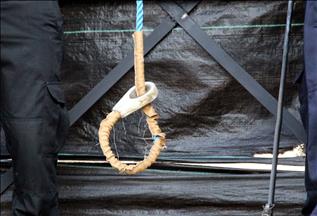
Sajida al-Rishawi and Ziyad al-Karbouli, both Iraqis linked to al-Qaeda, were hanged shortly after the murder of al-Kasasba by ISIL.
Al-Karbouli, a top aide of former al-Qaeda leader Abu Musab al-Zarqawi, was also hanged under a death sentence issued in 2007 following his conviction on terrorism charges.
ISIL had demanded the release of al-Rishawi -- an Iraqi woman sentenced to death in Jordan following a spate of deadly hotel bombings in Amman in 2005 -- in exchange for al-Kasasba's release.