By Roy Ramos and Hader Glang
ZAMBOANGA, Philippines
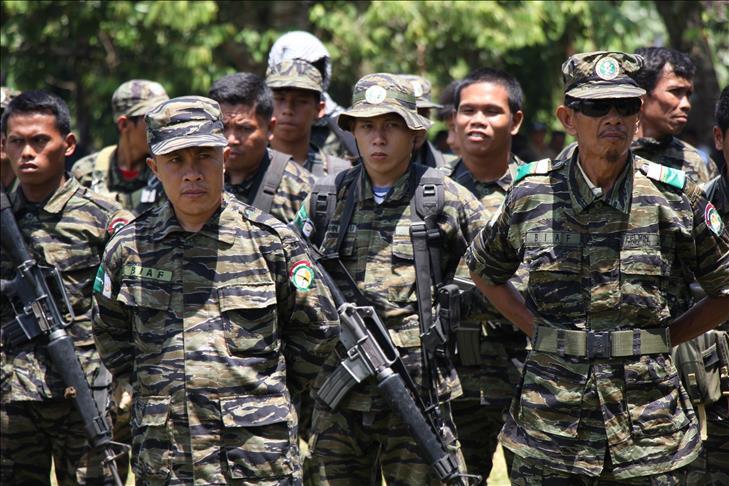
Security forces were on double alert Wednesday after three explosions rocked the southern Philippines overnight - two days before the arrival of Pope Francis to Manila.
Army's regional military spokesperson Capt. Jo-ann Petinglay told The Anadolu Agency that the 6th Infantry Division has ordered troops to secure all vital installations in central Mindanao following a bomb attack that toppled a power pylon and plunged most parts of North Cotabato and Maguindanao provinces into darkness around 9 p.m. (1500GMT) Tuesday.
Around the same time, a grenade attack destroyed road construction equipment in the remote town of Tipo-Tipo, a stronghold of the Abu Sayyaf, he said. Earlier, a grenade exploded near a house in Carmen town in North Cotabato, wounding a 43-year-old woman.
Although Pope Francis is only set to visit capital Manila and Leyte province, the area worst hit by 2013's Typhoon Yolanda, during his Jan. 15-19 visit, Lt. Gen. Rustico Guerrero, chief of Western Mindanao Command, has said that any indirect attack plots by the Abu Sayyaf group and its cohorts will dent the country’s security.
Military officials on Wednesday, however, declined to comment if the attacks were meant to send a warning from the areas many militant groups on the visit of Pope Francis.
Petinglay told AA that bombers had used three improvised explosive devices to topple the pylon causing a three-hour power outage in the two central provinces of North Cotabato and Maguindanao.
The areas are both strongholds of the rebel group the Bangsamoro Islamic Freedom Fighters (BIFF), which is opposed to a March 2014 peace deal between the government and the Muslim South's one-time largest rebel group the Moro Islamic Liberation Front.
Last week, BIFF warned it would intensify its harassment of peasant communities and military installations in Central Mindanao in retaliation to the army’s takeover Jan. 4 - after two days of ground and artillery offensives - of its stronghold in Maguindanao.
Petinglay said that a cellular phone was used in detonating the IEDs as evidenced by the cellphone parts, battery and mortar fragments recovered at the scene of the blast.
"The attack although it did not cause loss of lives is obviously intended to sabotage the normalcy and peaceful situation in the area. Its effect to the economic activities in the area could not be taken for granted," Petinglay said.
Gen. Pangilinan has also ordered troops to secure NGCP personnel trying to repair that damaged power pylon. The attack in Basilan destroyed some equipment of the Provincial Engineer's Office undertaking the construction of a circumferential road, a project funded by Saudi Arabia.
In November, Autonomous Region in Muslim Mindanao Governor Mujiv Hataman called for an “all-out offensive” against militant groups after six soldiers were killed while securing an area of the project.
Hataman had earlier expressed confidence that the multi-million-peso (dollar) effort, which runs around 80 kilometers (nearly 50 miles) and is designed to improve the livelihood of the local Muslim population by linking nearly half of Basilan’s main highways, would be completed soon.
Senior Insp. Gean Gallardo, Lamitan City police chief, told local media that the motive of the incident could be extortion as the Abu Sayyaf has demanded P900 million from the head of Basilan provincial engineering office, Nasser Abdulgani.
Maguindanao provinces into darkness around 9 p.m. (1500GMT) Tuesday.
Around the same time, a grenade attack destroyed road construction equipment in the remote town of Tipo-Tipo, a stronghold of the Abu Sayyaf, he said. Earlier, a grenade exploded near a house in Carmen town in North Cotabato, wounding a 43-year-old woman.
Although Pope Francis is only set to visit capital Manila and Leyte province, the area worst hit by 2013's Typhoon Yolanda, during his Jan. 15-19 visit, Lt. Gen. Rustico Guerrero, chief of Western Mindanao Command, has said that any indirect attack plots by the Abu Sayyaf group and its cohorts will dent the country’s security.
Military officials on Wednesday, however, declined to comment if the attacks were meant to send a warning from the areas many militant groups on the visit of Pope Francis.
Petinglay told AA that bombers had used three improvised explosive devices to topple the pylon causing a three-hour power outage in the two central provinces of North Cotabato and Maguindanao.
The areas are both strongholds of the rebel group the Bangsamoro Islamic Freedom Fighters (BIFF), which is opposed to a March 2014 peace deal between the government and the Muslim South's one-time largest rebel group the Moro Islamic Liberation Front.
Last week, BIFF warned it would intensify its harassment of peasant communities and military installations in Central Mindanao in retaliation to the army’s takeover Jan. 4 - after two days of ground and artillery offensives - of its stronghold in Maguindanao.
Petinglay said that a cellular phone was used in detonating the IEDs as evidenced by the cellphone parts, battery and mortar fragments recovered at the scene of the blast.
"The attack although it did not cause loss of lives is obviously intended to sabotage the normalcy and peaceful situation in the area. Its effect to the economic activities in the area could not be taken for granted," Petinglay said.
Gen. Pangilinan has also ordered troops to secure NGCP personnel trying to repair that damaged power pylon.
The attack in Basilan destroyed some equipment of the Provincial Engineer's Office undertaking the construction of a circumferential road, a project funded by Saudi Arabia.
In November, Autonomous Region in Muslim Mindanao Governor Mujiv Hataman called for an “all-out offensive” against militant groups after six soldiers were killed while securing an area of the project.
Hataman had earlier expressed confidence that the multi-million-peso (dollar) effort, which runs around 80 kilometers (nearly 50 miles) and is designed to improve the livelihood of the local Muslim population by linking nearly half of Basilan’s main highways, would be completed soon.
Senior Insp. Gean Gallardo, Lamitan City police chief, told local media that the motive of the incident could be extortion as the Abu Sayyaf has demanded P900 million from the head of Basilan provincial engineering office, Nasser Abdulgani.