By Lauren Crothers
PHNOM PENH, Cambodia
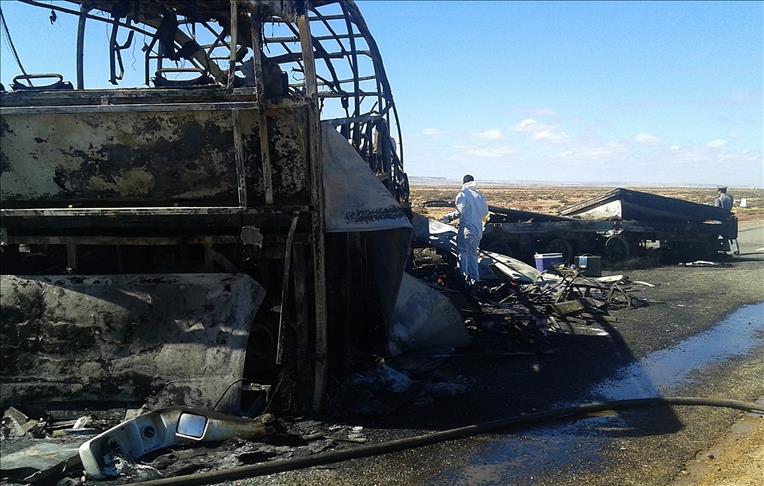
At least 18 garment and construction workers have died killed after a tourist bus ploughed into a van taking them to work -- an accident a labor rights advocate described as among the worst in the garment industry.
Local newspaper Koh Santepheap reported that the crash happened at around 7 a.m. (0100GMT) Tuesday in Svay Rieng province, near the Vietnamese border.
Pictures and video footage showed that the workers’ van was crumpled beyond recognition, with bodies pulled from the wreckage lying scattered on the ground.
Local newspapers have been reporting varied death tolls.
Koh Santepheap said at least 20 had been killed with another 10 suffering what were understood to be likely fatal injuries, while the Cambodia Daily quoted police officials and a doctor as saying that between 21 and 25 people had died.
The Phnom Penh Post, meanwhile, reported that 16 people were killed while more than 20 others were injured.
Dave Welsh, country director of the U.S.-based Solidarity Center, told Anadolu Agency that he understood 18 people to have been killed in the “unjustifiable” tragedy, after he travelled out to Svay Rieng and met with officials there.
“The workers were employed by a factory called Kingmaker Fashion, but it’s difficult to confirm what brands,” he said by phone, adding later that he had been told the workers were employed at four to five different factories.
“There are at least four international brands [at Kingmaker], but we need to confirm that.”
Welsh said officials from the National Social Security Fund -- which has to legally compensate the families of workers who are injured or killed on the job -- were on site.
“Our position is it should not be seen as just another traffic accident,” Welsh stressed.
“It should be in the context of one of worst workplace accidents in the garment industry in Cambodia. The Labor Law guarantees liability for workers’ safety from the moment they leave their houses to when they return home.”
He said the compensation would be based on the number of dependents and the salaries of those affected. The minimum wage for garment workers in Cambodia is $128, and was set late last year after a series of strikes, during which five people were shot dead by security forces.
The journey to-and-from work for workers in Cambodia’s $5.7-billion garment industry is largely unregulated and dependent on drivers who ferry workers about, crammed into vans and open-topped trucks.
“This is unjustifiable,” Welsh said. “There’s enough money in the industry and enough minor incidents and near misses. This is clearly a problem. It shouldn’t be difficult to regulate or guarantee worker safety.”