Benjamin Tavener
28 September 2015•Update: 28 September 2015
By Ben Tavener
SAO PAULO
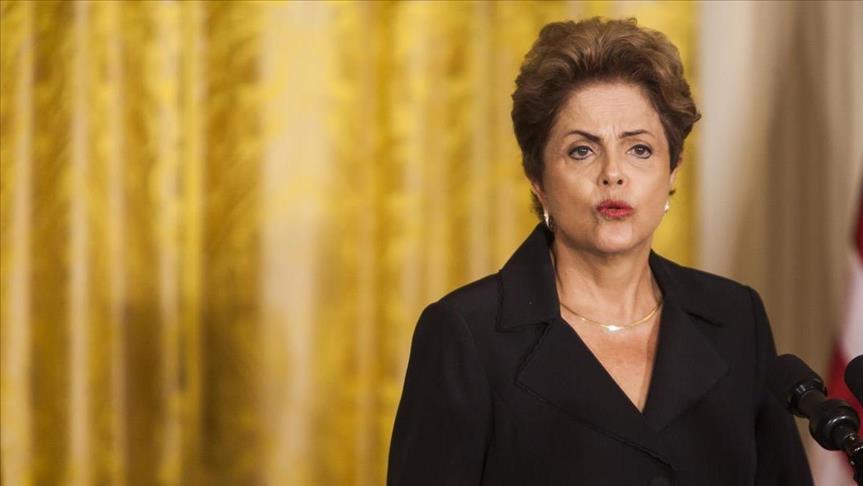
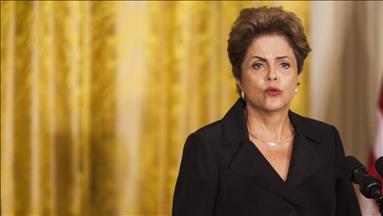
President Dilma Rousseff told world leaders on Monday that it was "absurd" to try to stop people from migrating – a sharp criticism of European handling of the refugee crisis.
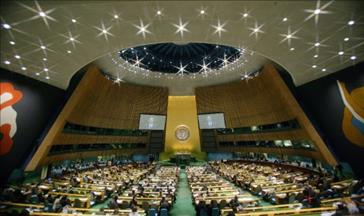
"In a world where trade, money, information and ideas circulate freely, it is absurd to impede the free movement of people," Rousseff said in her opening speech at the UN's 70th General Assembly in New York.
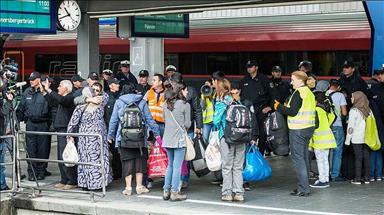
Hundreds of thousands of migrants and refugees have fled conflict zones in the Middle East and North Africa in recent months, to travel to Europe where they have met hostility from some European countries and a lack of unity over their distribution among host nations.
The Brazilian president, the incumbent of which has traditionally opened the UN's general debate since 1947, reminded the Assembly that "multiethnic" Brazil was "a welcoming country made of refugees" that had learned to "live with its differences."
"We have welcomed Syrians, Haitians, men and women from all over the world," she said, restating the Latin American country's offer to "welcome refugees with open arms ... as we have done for over a century for Europeans, Arabs and Asians."
Rousseff’s Bulgarian father arrived in Brazil in the 1930s.
The Brazilian leader also urged the "immediate creation" of a Palestinian state, and defended the expansion of the UN's Security Council, for which Brazil is vying for a permanent seat, to include a larger number of permanent and non-permanent members.
Rousseff also praised the diplomatic agreement struck on Iran's nuclear program and the thaw in bilateral relations between the United States and Cuba, urging an end to the trade embargo on the Caribbean island.
She used her platform to try to reassure global markets that Brazil's troubled economy did not have "grave structural flaws" but was rather in a "moment of transition to another cycle of economic expansion," despite entering a deep recession and battling inflation above 9 percent, and the highest level of unemployment in years.
Rousseff defended the Brazilian economy as "stronger, more solid and resilient" than it was years ago, as it tries to stave off further downgrades by ratings agencies after Standard & Poor's recently revised down the country's debt rating to "junk" status.
A central bank survey of more than 100 economic institutions forecast Monday that Brazil's GDP would shrink 2.8 percent this year, as well as contracting 1 percent in 2016.
The Brazilian leader ended her speech by extending a global invite to next year’s Summer Olympic and Paralympic Games in Rio de Janeiro.