Biriz Özbakır
24 June 2026•Update: 24 June 2026
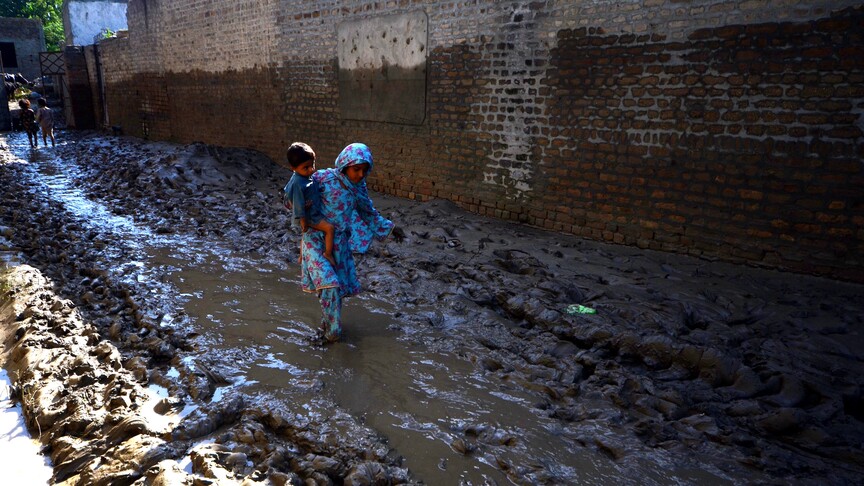
Climate-related disasters are the leading cause of displacement worldwide, and the concept of the climate migrant must be formally recognized by the United Nations (UN), according to a Turkish climate scientist.
Prof. Dr. Murat Turkes, board member of Bogazici University's Climate Change and Policy Research Center, told Anadolu that climate-related migration will become one of the most important items on the global agenda in the years ahead.
"According to data from 2008 to 2023, around 73.5% of people forced to migrate globally were displaced by weather- and climate-related disasters. By comparison, conflict, disorder and violence accounted for 17.5% of displacement, while geophysical disasters, ranging from earthquakes to landslides, accounted for only 9%," he said.
Turkes noted that he and two young researchers have co-authored a scientific article to present the subject from a comprehensive perspective.
Migration from low-income countries to developed countries is driven by multiple pressures, including climate-related displacement, Turkes said, identifying Southeast Asia, sub-Saharan Africa and Central America as among the most at-risk regions.
Migration routes
Turkes said 45.8 million people were internally displaced globally in 2024, adding that 99% of this displacement was linked to climate-related disasters. Floods were the leading trigger at 54.5%, followed by storms at 42%, with the impact of wildfires and drought also increasing.
He noted that extreme weather events linked to climate change are expected to further accelerate migration in the future.
"Current migration route maps show significant movements into the United States across the U.S.-Mexico border, as well as migration flows from Africa, the Middle East and, more broadly, Southwest Asia through Türkiye toward wealthier European countries.
When we analyze global migration data comparatively, we see that countries such as Honduras, Somalia and the Philippines have exceptionally high levels of climate-related migration and displacement relative to their populations," he said.
Turkes stressed that the most fragile people in the climate crisis are not those who can migrate, but those left behind in disaster zones due to a lack of financial, social and political capital.
Climate change could drive internal migration in Türkiye’s Central Anatolia
Turkes said that after 2050, most parts of Türkiye, except for the Black Sea region and northeastern Anatolia, are expected to see hotter and drier conditions as a result of climate change, potentially putting significant pressure on agricultural production.
Pointing out the declining rural populations and shrinking arable land, Turkes said: "We need to anticipate the possibility of internal migration from Central Anatolia toward Türkiye’s coastal and Black Sea regions."
"Legal definition of climate migrant should be established and recognised"
Turkes warned that climate-related displacement and migration will intensify unless urgent and effective steps are taken to reduce global greenhouse gas emissions.
"It is projected that by 2050, 216 million people could be forced to move within their own countries due to the impacts of climate change. In worst-case scenarios, this figure could rise to 1 billion by 2100," he added.
He called on UN bodies, the European Union and other regional organisations to urgently develop legal frameworks and multilateral agreements addressing current and future climate migration, stressing that a universally accepted, UN-level definition of a climate migrant must be established.
* Writing by Ada Seko