BENI, Democratic Republic of Congo
In the eastern part of the Democratic Republic of Congo, a charity is reintegrating former child soldiers via its driver-mechanics training program.
"In only a few weeks, I will finally have my certificate," Mafua, a 16-year-old former child soldier, told Anadolu Agency. "I was one of those who were rescued from the rebel groups who taught me how to harm others."
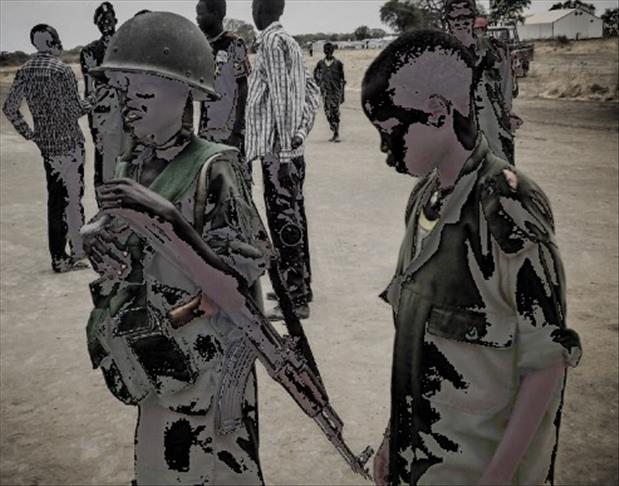
In North Kivu, eastern DRC, the Allied Democratic Forces (ADF), a Ugandan rebel group, have a bad reputation because of their attacks on villages, killing of civilians and recruitment of hundreds of child soldiers.
After the death of his parents, the Center for the Professional Training of Mechanics Drivers (CFPMC) offered Mafua a driver-mechanics training course.
CFPMC is a charity that looks after former child soldiers in the town of Beni by training them and finding them potential jobs.
Placide Basubi, a former child soldier himself, founded the CFPMC in 2000. UNICEF and a host of NGOs support the center in its work.
Mafua is part of the ongoing training program alongside another 154 former child soldiers.
The center has already trained nearly 2,000 former child soldiers into driver-mechanics. With only six teachers, they are taught how to drive and repair cars.
"I know what it's like to be a kadogo [child soldier in Swahili]. At the time, I needed someone to pull me out of the stream. When that happened, I promised myself that I will do the same for many kadogos," Basubi told Anadou Agency.
After obtaining their certificates at the training center, the children have a range of job opportunities in front of them, such as becoming taxi or bus drivers.
"We welcome these initiatives. These are the kind of ideas that we need," Rachel Mathe, a logistician at the Concrete Actions for Child Protection (ACOPE), told Anadolu Agency.
ACOPE is an NGO working for the rescue of child soldiers in partnership with CFPMC.
Mathe also said that it is useless to rescue child soldier from rebel groups and then leave them without any training or jobs.
"The problem we have with kadogos is that if we manage to rescue them from where they are, monitoring them afterwards is unfortunately rarely assured. Things are now changing gradually with such initiatives," Jimmy Kighoma Kasereka, president of the Urban Youth Council of Beni, told Anadolu Agency.
A recent DRC parliament report into the children of Beni found that some 550 children are still in the ranks of armed groups.