EXPLAINER – Hungary elections: What to know about crucial vote
About 8M voters set to vote in Sunday's contest as Premier Orban faces one of most closely contested elections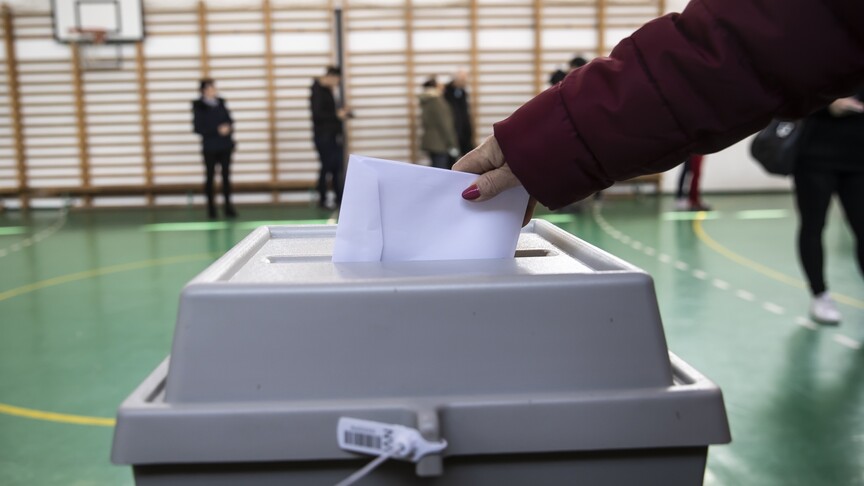
- 106 members of parliament are elected in single-member constituencies, 93 from national party lists, with a 5% threshold for parliamentary entry
- Orban’s Fidesz party remains a central force, but opposition leader Peter Magyar’s Tisza party leads in many polls
Hungary heads to the polls on Sunday in a vote that could redefine the country’s political trajectory, as Prime Minister Viktor Orban faces one of the most closely contested elections of his long tenure.
After more than a decade in power, Orban and his ruling nationalist-populist Fidesz party enter the 2026 parliamentary elections amid mounting economic pressures, shifting voter sentiment, and a more consolidated opposition landscape than in previous cycles.
More than 8 million eligible voters are expected to cast their ballots, deciding the composition of the country’s 199-seat National Assembly under a mixed electoral system that combines constituency races with proportional representation.
Of the 199 seats, 106 are elected in single-member constituencies, while 93 are distributed via national party lists, with a 5% threshold required to enter parliament.
New challengers emerge
For years, Orban has dominated Hungarian politics, reshaping institutions and promoting what he has called an “illiberal state.”
But this election introduces a more competitive dynamic.
Rising living costs, inflationary pressures, and lingering concerns over public services have placed economic management at the center of the campaign.
In this atmosphere, the opposition Tisza Party, led by Peter Magyar, has rapidly gained momentum, positioning itself as a reform-oriented and pro-European alternative.
A projection released by polling agency Median suggests Tisza Party is on track to secure a two-thirds parliamentary majority, a result that would allow it to amend the constitution and overhaul key legislation.
The survey places support for Tisza at 58%, compared to 33% for Orban’s ruling Fidesz party, marking a significantly wider gap than in earlier polls.
It estimates that Tisza could secure between 138 and 143 seats in parliament, while Fidesz is projected to suffer a heavy defeat, winning between 49 and 55 seats and securing only limited victories in individual constituencies.
Several other parties are also participating in the election, although Hungary’s 5% parliamentary threshold makes it challenging for them to secure representation in the National Assembly.
These include the Hungarian Two-Tailed Dog Party (MKKP), known for its satirical and anti-establishment messaging, particularly among younger and urban voters.
The LMP, Hungary's Green Party, focuses on environmental protection, sustainability, and anti-corruption policies. Although it has previously secured parliamentary representation, its support base has fluctuated.
The Momentum Movement, a liberal-centrist party popular among pro-European and urban voters, has also faced challenges maintaining momentum since its initial rise.
Meanwhile, Jobbik, once a major far-right force that has since repositioned itself toward the center-right, has seen its influence decline, with its electoral strength now uncertain.
Europe, US watching closely
Beyond Hungary’s borders, the vote is being closely followed across the EU.
Relations between Budapest and Brussels have been strained in recent years over rule-of-law concerns, judicial independence, and media freedom.
At the same time, Hungary’s stance on issues such as Ukraine, sanctions on Russia, and migration policy has often diverged from the EU mainstream.
On EU integration, opposition leader Magyar stated he is not “a big fan of this federal European superstate, so I believe in strong member states and a strong EU.”
He has also said he would join the European Public Prosecutor’s Office, the EU body tasked with investigating fraud against the bloc’s budget.
However, Tisza has signaled limits to its pro-European shift, particularly on issues tied to national sovereignty.
The party has expressed opposition to the EU’s Migration Pact, which requires member states to either accept relocated asylum seekers or make financial contributions to countries under migratory pressure.
The party, which is leading Fidesz in most independent polls, has said it would abandon what it describes as the current government’s “inflated” use of veto power within the EU.
At the international level, the election has also drawn attention from Washington.
US President Donald Trump voiced strong support for Orban, urging Hungarian voters to back him in the upcoming vote.
“He fights tirelessly for, and loves, his Great Country and People, just like I do for the United States of America,” Trump said on his social media platform Truth Social.
Trump added that Orban had worked to protect Hungary’s national interests while maintaining law and order, noting that relations between the US and Hungary reached “new heights” during his presidency.
Party positions and EU-Ukraine dimension
Foreign policy remains an important but secondary dimension of Hungary’s electoral debate, alongside domestic economic issues.
A survey conducted by the European Council on Foreign Relations (ECFR) found that 77% of respondents support Hungary’s continued membership in the European Union, while 75% express trust in EU institutions.
The same survey shows that 68% of respondents prefer reform of Hungary’s relationship with the EU rather than withdrawal.
Still, voters aligned with Fidesz tend to be more skeptical of EU policies, while supporters of Tisza are more likely to place their trust in European institutions and the broader project of integration.
This divide becomes even more pronounced on the issue of Ukraine.
Supporters of Fidesz show markedly greater skepticism toward EU financial and military backing for Kyiv, while those backing Tisza are more inclined to see Ukraine as a partner and support continued European engagement.
“There will be no war under the Tisza government, and there will be no conscription. Anyone who claims otherwise is lying,” Magyar said in January.
Turnout and electoral participation
Turnout has remained relatively high in Hungary compared with many European countries.
In the 2022 parliamentary election, official results showed turnout at approximately 69%.
According to data from IFES (International Foundation for Electoral Systems), turnout levels have generally fluctuated between 60% and 70% in recent parliamentary cycles.
Yet turnout is uneven across the country.
Analysts say the constituency races, particularly in competitive urban districts, could prove decisive in determining the final balance of power.
Urban centers such as Budapest have tended to favor opposition parties, while rural regions remain strongholds for Orban’s Fidesz-KDNP alliance.