Israel’s Oct. 27 parliamentary election has highlighted several shifts in the country’s political landscape, from record voter participation and renewed mobilization among Palestinian citizens to changes in the balance between right-wing parties and the opposition.
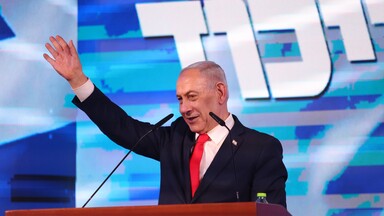
With vote counting still ongoing, Israeli Prime Minister Benjamin Netanyahu’s bloc was projected to win 54 seats in the 120-member Knesset, seven short of a governing majority, with 84.5% of votes counted in Israel’s parliamentary elections, according to Israeli media.
The opposition bloc led by Gadi Eisenkot was projected to secure 49 seats, while predominantly Arab parties were projected to win 17 seats, according to The Times of Israel newspaper, citing the Central Elections Committee.
The election is seen as pivotal in determining the country’s political direction amid the Gaza genocide and the war with Iran.
It also came after years of political instability, including five parliamentary elections between April 2019 and November 2022, and tested whether Netanyahu could maintain the coalition arrangements that returned him to office four years ago.
The most striking developments so far are the highest turnout in decades, a potential record for Arab-led parties, a reorganization of opposition alliances and signs of pressure on some of Netanyahu’s ultra-Orthodox and far-right partners.
As vote counting continues, the results remain uncertain, but several key trends have emerged.
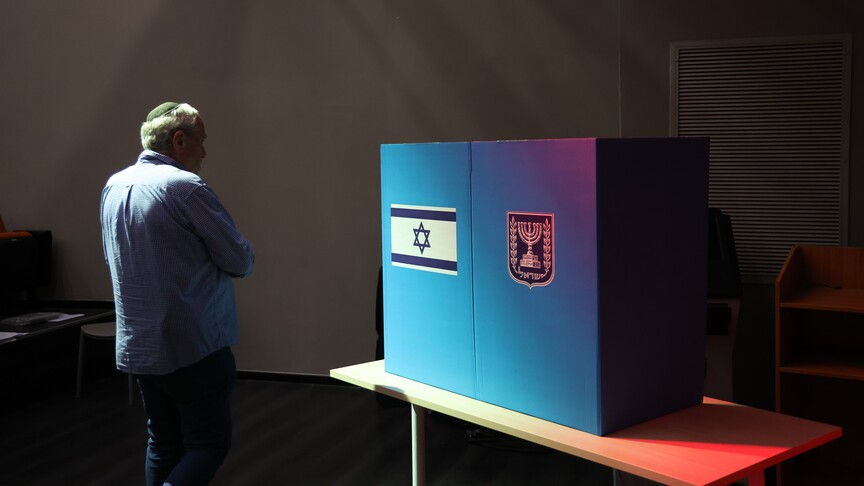
Voter participation reached 77.7%, with around 5.7 million voters casting ballots, according to Israel’s Central Elections Committee, the highest level since the 1999 parliamentary election.
The figure was 7.1 percentage points above the 70.6% recorded in 2022 and exceeded turnout in each of the five elections held between 2019 and 2022.
Historical figures show turnout of 68.5% in April 2019, 69.8% in September 2019, 71.5% in 2020 and 67.4% in 2021.
The military separately reported turnout of 79.9% among soldiers, higher than in 2022.
The rise comes after a period of repeated elections, political deadlock and growing divisions over the government’s policies. The Gaza war, security concerns, military service exemptions and disputes over democratic institutions have all featured in the campaign.
According to latest reports, the predominantly Arab Joint List was projected to win 11 seats, while the United Arab List (Ra’am) was expected to secure six.
If confirmed, the result would exceed the 15 seats won by the Joint List in 2020, when Ra’am was part of the alliance. The two parties hold 10 seats in the outgoing Knesset.
Turnout rose sharply in several Arab communities. Ynet reported participation of 86.8% in Sakhnin and 82% in Rahat, a Bedouin city in southern Israel. These are local figures, not a final nationwide turnout rate for Arab voters.
Channel 12 separately reported participation of around 80% among Arab voters.
For comparison, Israel Democracy Institute research puts participation in Arab and Druze localities at 44.6% in 2021 and 53.2% in 2022.
The mobilization comes amid concerns over occupier violence, housing demolitions and the extremist policies of far-right National Security Minister Itamar Ben-Gvir.
Jewish voters supporting Arab-led parties is an established phenomenon, particularly around Hadash, which has long included Jewish politicians and supporters. The more distinctive development this year is within Ra’am, Israel’s Islamic party.
Ra’am placed Yoav Segalovitz, a Jewish former lawmaker from the centrist Yesh Atid party, a Zionist and a former senior police official, second on its candidate list. His prominence represents a significant effort to broaden the party’s constituency and its acceptance as a governing partner.
The Joint List also sought Jewish support through a Hebrew-language campaign launched in Tel Aviv on Oct. 5. Chairman Yousef Jabareen estimated it could attract 10,000-15,000 Jewish voters, while Ahmad Tibi appealed to voters opposing Israel’s wars and occupation.
Another important comparison concerns Shas and United Torah Judaism, the two principal ultra-Orthodox parties and longstanding partners of Netanyahu.
They won 18 seats between them in 2022: 11 for Shas and seven for United Torah Judaism. Early Wednesday exit poll updates reported by The Jerusalem Post put their combined strength at 12-13 seats, suggesting a potentially substantial reduction.
The forecasts come amid a dispute over military service by ultra-Orthodox men.
These parties have resisted efforts to expand conscription, while other Israelis have demanded a wider sharing of service obligations during years of war.
The election reflects a transformation that began well before 2022: the traditional left no longer dominates Israeli politics as it once did, while centrist parties and leaders have become important alternatives for voters who oppose Netanyahu without necessarily identifying with the left.
The 1999 election illustrates that fragmentation is not new. Fifteen lists entered the Knesset, and Ehud Barak’s One Israel won 26 seats. His success in the direct prime ministerial vote did not translate into a unified parliamentary bloc, requiring cooperation among parties with differing interests.
In the latest election, former Prime Ministers Naftali Bennett and Yair Lapid contested the election on a joint list, Together, while former military chief Gadi Eisenkot led Yashar. Labor and Meretz, meanwhile, joined forces under Yair Golan’s Democrats.
These arrangements seek to reduce the risk of votes being wasted when small parties fail to cross Israel’s 3.25% electoral threshold. In 2022, Meretz and Balad failed to enter parliament despite receiving a combined total of nearly 290,000 votes.
More than half a million young Israelis became eligible to vote for the first time in this election, according to pre-election reporting by The Times of Israel. Their political experiences include the coronavirus pandemic, protests against the judicial overhaul and the Gaza war.
A Channel 12 survey published on Sept. 23 found that 74% of young respondents identified as right-wing or center-right. Yet 16% said they would vote for Eisenkot’s Yashar, compared with 14% for Likud, according to the Jewish Telegraphic Agency and The Times of Israel.
The findings suggest that identifying with the right does not necessarily translate into support for Netanyahu personally. Security, the cost of living and concerns about the country’s future also featured among young voters’ priorities, local media reported.
news_share_descriptionsubscription_contact

contact_the_ombudsman
is_there_an_error_in_this_story