By Roy Ramos
ZAMBOANGA CITY, Philippines
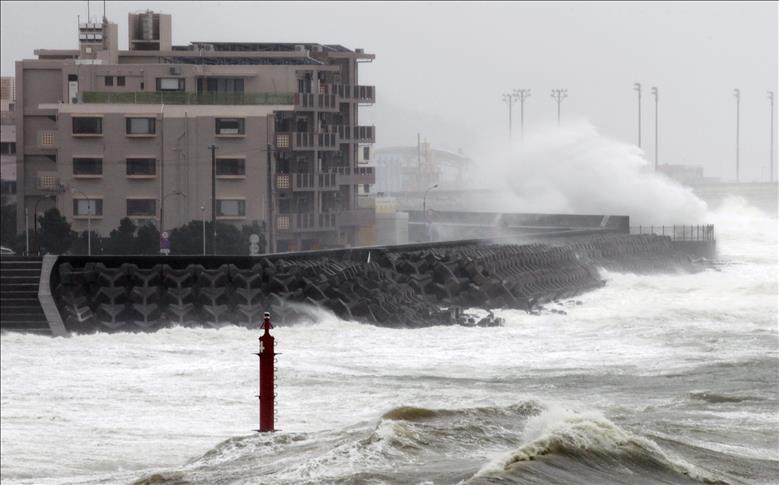
People across central and southern Philippines were preparing for the arrival of Typhoon Hagupit Friday – the same region hit by a super typhoon that caused thousands of deaths last year.
The typhoon is due to reach land late Saturday and tens of thousands of Filipinos were stocking up on essential supplies and seeking adequate shelter in anticipation of the typhoon’s destructive appearance.
Hagupit, which means whiplash in the local Tagalog language but has been renamed Ruby it the Philippines, is not expected to be as powerful as last year’s Typhoon Yolanda, which left more than 6,300 dead with a further 1,000 still missing, but has led to the evacuation of coastal and hilly areas amid warnings of high waves, heavy rain and landslides.
Long queues formed at shops and gas stations, schools and government offices were closed and business owners put up shutters in towns and villages in the typhoon's projected path.
Flights in central and southern Philippines were cancelled and ports on the eastern seaboard closed.
In Tacloban City, the epicenter of Yolanda, residents took shelter in the Tacloban Astrodome while others flocked to schools and churches around the region. Many people are still living in temporary shelter more than a year after the last typhoon.
Yolanda, the most powerful typhoon ever recorded on land and known internationally as Haiyan, left more than 4 million people homeless, according to government figures.
Across Albay province, where Tacloban is situated, 500,000 people are to be evacuated, the province’s disaster management council said Friday.
"It's better to evacuate early… We don't want to experience what we went through during Yolanda," Gigi Calne, one of 3,000 sheltering at a school in Basey, Samar province, told the GMA News website. "It was difficult to save our family and ourselves because we moved too late."
A public storm warning has been issued for at least 36 areas in Luzon, the Visayas and Mindanao as Hagupit moves west-northwest toward Samar province at 8 miles per hour (13 kph), the Philippines weather service reported.
Forecaster Lenny Ruiz said an estimated 20 millimeters of rain could fall hourly within Hagupit’s 435 mile (700 kilometer) diameter.
He said that as of 11.00 local time (03.00 GMT), Hagupit was 255 miles (410 km) off the eastern coastal city of Borongan with sustained winds of 134 mph (215 kph) at its center and gusts of up to 155 mph (250 kph).
The U.S. military’s Joint Typhoon Warning Center had classified Hagupit as a super typhoon but downgraded it Friday. It is still the strongest storm to hit the Philippines this year.
The country’s disaster agency said 27 Navy ships and 12 military aircraft were on stand-by to deliver humanitarian aid and disaster relief. The military has been placed on full alert to assist local disaster response units if needed.
The Catholic Church’s social arm has started preparations. In a statement, the agency said it has initially released 2 million Philippine pesos ($44,000) from emergency funds to buy relief goods and position them in typhoon-threatened areas.
The UN’s Office for the Coordination of Humanitarian Affairs estimated that more than 5 million families will be affected by the typhoon.
The Philippines government has set aside 4.69 billion pesos ($105 million) to respond to Hagupit, a statement from the Department of Budget and Management said earlier this week.
Typhoons and tropical storms are types of cyclones classified by wind speed. Typhoons have a sustained wind speed of 74 mph (119 kph) or greater while tropical storms rotate at 39 to 73 mph (63 to 118 kph).
www.aa.com.tr/en